
A mortgage broker is defined as a licensed intermediary who connects homeowners with lenders, manages the application process, and negotiates loan terms on your behalf. Understanding the role of broker in refinancing process is the difference between a smooth loan switch and weeks of frustrating back-and-forth with lenders you have never dealt with before. Brokers access wholesale lending channels unavailable at retail banks, which means you get options your bank will never show you. The standard industry term for this role is "mortgage broker," and in Australia, brokers must hold an Australian Credit Licence or operate as a credit representative under one. In 2026, with refinancing activity rising sharply across the country, knowing exactly what a broker does for you matters more than ever.
How do brokers support homeowners during the refinancing process?
A broker's involvement in refinancing covers every stage, from your first conversation to settlement. The process is more structured than most homeowners expect, and a good broker keeps it moving on your behalf.
Here is how broker involvement in refinancing typically unfolds:
- Initial financial assessment. Your broker reviews your income, expenses, existing loan details, credit history, and equity position. This profiling shapes which lenders and products suit your situation.
- Lender shopping across wholesale channels. Brokers can shop your profile across 20 to over 100 wholesale lenders simultaneously. That reach is simply not possible when you apply directly to a single bank.
- Application preparation and document collection. Your broker compiles payslips, tax returns, bank statements, and property documents. They format the application to meet each lender's specific requirements, reducing the chance of rejection.
- Liaison with your existing and new lender. The broker manages discharge paperwork with your current lender and coordinates the new loan setup. You do not need to chase either party yourself.
- Underwriting and appraisal coordination. Refinancing typically takes 30–45 days, with underwriting alone lasting 1–3 weeks. Your broker tracks every stage and flags issues before they become delays.
- Settlement and post-settlement review. Once the loan settles, a good broker confirms your new repayments, checks the rate is correct, and schedules a review for the following year.
Pro Tip: Appraisal delays are the most common reason refinancing misses its 30-day target. Ask your broker upfront which appraisers they work with and whether they can order the appraisal on day one of the application.
Brokers act as project managers throughout the refinance, coordinating appraisers, title companies, underwriters, and lenders to keep everything on schedule. That coordination role is what separates a broker from simply filling out a form online.

What are the key benefits of using a mortgage broker for refinancing?
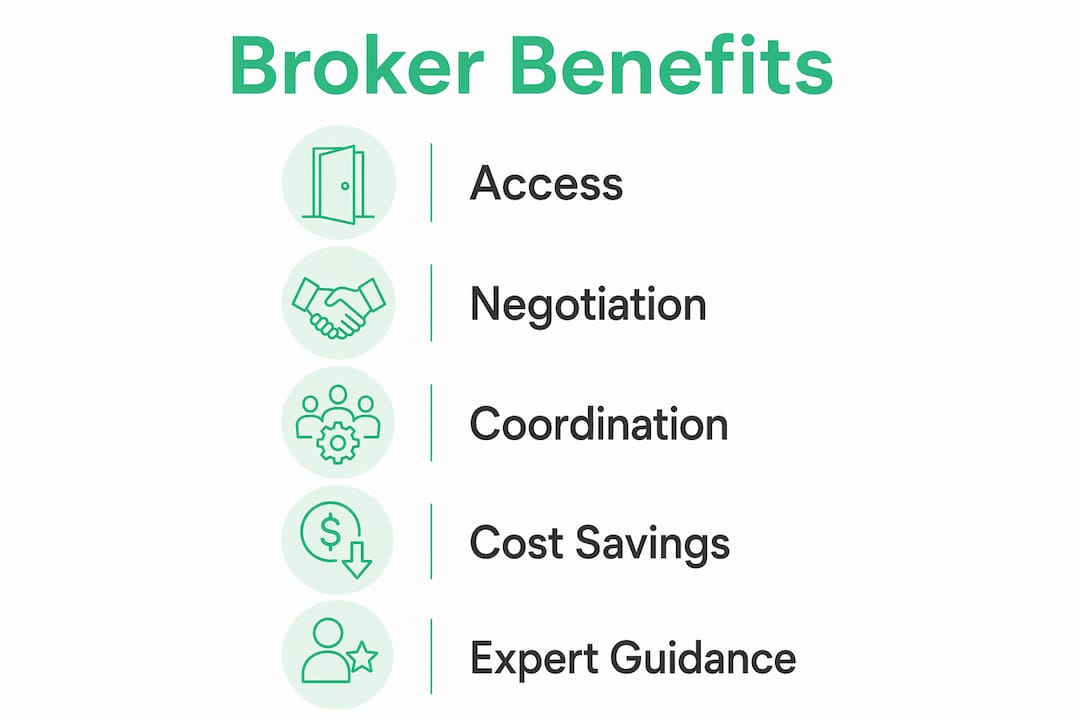
The benefits of using a broker go well beyond convenience. They translate directly into better financial outcomes for you.
- Access to more lenders. Brokers connect you with 20 to 100+ wholesale lenders, including those with flexible guidelines and alternative documentation options unavailable at retail banks.
- Better negotiated terms. Brokers often secure lower rates and fees for borrowers with good credit and loan-to-value ratios of 80% or less. That negotiation power comes from the volume of business brokers bring to lenders.
- No direct cost to you. Broker commission is disclosed on your Loan Estimate but is typically paid by the lender, not by you. You get professional representation without an upfront fee.
- Time savings. Your broker handles lender communications, document chasing, and application formatting. You spend your time reviewing options, not filling out forms.
- Strategic refinance structuring. Brokers focus on strategic timing and structures to help homeowners with high-interest debt save more effectively. That means looking at offset accounts, loan splits, and fixed versus variable combinations, not just the headline rate.
Refinancing with a mortgage broker also gives you a single point of contact for what is otherwise a multi-party process. That alone reduces stress significantly for most homeowners.
Pro Tip: Ask your broker to show you the total interest saving over the life of the loan, not just the monthly repayment reduction. A lower rate with high establishment fees can cost you more in year one than staying put.
What costs and considerations should homeowners know?
Broker services in refinancing are not entirely without costs, even when the broker's commission is lender-paid. Understanding the full picture protects you from surprises.
Closing costs on refinancing generally range from 2% to 5% of the total loan amount. These cover lender fees, appraisal costs, title insurance, and discharge fees from your existing lender. On a $600,000 loan, that is $12,000 to $30,000 in potential costs. That figure makes comparing total refinance costs, not just interest rates, the most important calculation you will do.
Brokerage fees for refinancing are disclosed on your Loan Estimate document. In most cases, the lender pays the broker's commission directly. However, some brokers charge a separate service fee, particularly for complex applications. Always ask upfront whether any fee applies to you directly.
Choosing the right broker requires due diligence. Verify your broker's credibility through independent reviews and disclosure documents before you sign anything. A good resource for understanding how to evaluate a broker's reliability is this advisor guide on broker selection, which covers the key questions to ask before committing.
Key questions to ask your broker before proceeding:
- How many lenders do you have on your panel?
- Are you paid differently by any lender on your panel?
- What are the total costs of this refinance, including discharge and establishment fees?
- What is the break-even point where my savings exceed my refinancing costs?
- How will you keep me updated throughout the process?
A potential conflict of interest exists when a broker earns a higher commission from one lender than another. Mitigate this by asking for written comparisons of at least three loan options, including the commission earned on each.
Is using a broker right for your refinance situation?
Not every homeowner needs a broker, but most benefit from one. The decision comes down to your financial complexity and how much time you can realistically invest in the process.
Brokers add the most value when your financial profile is complex. Self-employed borrowers, those with multiple income streams, or homeowners with a loan-to-value ratio above 80% often need access to wholesale channels with guideline exceptions that retail banks do not offer. If your situation is straightforward and you already have a strong relationship with your bank, a direct refinance may be faster. But even then, you will not know what you are missing without a broker's comparison.
| Factor | With a broker | Direct lender |
|---|---|---|
| Lender access | 20–100+ wholesale lenders | One institution |
| Rate negotiation | Broker negotiates on your behalf | You negotiate directly |
| Application effort | Broker prepares and submits | You complete all paperwork |
| Cost transparency | Full disclosure on Loan Estimate | Varies by lender |
| Complex profiles | Guideline exceptions available | Standard criteria only |
| Timeline | 30–45 days with broker coordination | Similar, but no dedicated coordinator |
Preparing your documents and credit health before approaching a broker shortens the process considerably. Pull your credit report, gather 3 months of bank statements, and confirm your current loan balance and remaining term. The refinance application process becomes much smoother when you arrive organised.
Brokers also help you understand when to refinance by calculating the break-even point. That is the month when your cumulative savings exceed your total refinancing costs. Without that calculation, you risk refinancing at the wrong time and paying more than you save.
Key takeaways
A mortgage broker's core value in refinancing is access, negotiation, and coordination across a process that most homeowners cannot manage as effectively alone.
| Point | Details |
|---|---|
| Broker access advantage | Brokers connect you with 20–100+ wholesale lenders unavailable through retail banks. |
| No direct cost to borrower | Broker commission is typically paid by the lender, not deducted from your pocket. |
| Full process management | Brokers coordinate appraisers, underwriters, and lenders across a 30–45 day timeline. |
| Total cost comparison matters | Closing costs of 2%–5% of the loan amount must be weighed against your interest savings. |
| Break-even analysis is critical | Calculate the month your savings exceed refinancing costs before committing to a switch. |
What I have learned about brokers and refinancing after years in the industry
The conversation around refinancing almost always starts with rate. Homeowners want to know if they can get a lower number. That instinct is understandable, but it misses the bigger picture.
The brokers who genuinely help their clients are not rate shoppers. They are financial strategists. They look at your full debt position, your cash flow, your property equity, and your medium-term plans before recommending a single product. I have seen homeowners refinance to a lower rate and end up worse off because the loan structure was wrong for their situation. A broker who only chases rate is not doing the full job.
The break-even analysis is the most underused tool in the refinancing conversation. Brokers identify the right window to refinance and help homeowners understand exactly when their savings overtake their costs. Without that number, you are guessing. Most homeowners who go direct to a lender never get this calculation at all.
The other thing I would flag is lender panel quality. Not all brokers have the same access. A broker with a narrow panel of lenders is not giving you a true market comparison. Before you engage anyone, ask how many lenders they work with and whether any are excluded from their panel. That question alone tells you a great deal about the advice you are about to receive.
— Allen
How Zenrgfinance supports your refinancing goals
Refinancing is one of the most financially significant decisions you will make as a homeowner. Getting the right guidance from the start changes the outcome.

Zenrgfinance operates as a mortgage relationship manager, not just a transaction broker. That means you get a dedicated expert who understands your full financial picture, shops your profile across a wide lender panel, and stays with you through every stage of the process. There is no direct cost to you for broker services. Zenrgfinance's team specialises in refinancing strategies that go beyond rate, including loan structuring, debt consolidation, and timing analysis. If you are thinking about refinancing in 2026, explore the real advantages of refinancing and then reach out to discuss your specific situation.
FAQ
What does a mortgage broker do during refinancing?
A mortgage broker assesses your financial profile, shops your application across multiple wholesale lenders, prepares your documents, and manages all communications between lenders, appraisers, and underwriters until your loan settles.
Does using a broker cost more when refinancing?
Broker commission is typically paid by the lender, not by you directly. It is disclosed on your Loan Estimate, so you can see exactly what the broker earns from the transaction.
How long does refinancing take with a broker?
Refinancing typically takes 30–45 days, with underwriting lasting 1–3 weeks. A broker actively coordinates all parties to keep the process on track and reduce delays.
How many lenders can a broker access for my refinance?
A single broker can access 20 to over 100 wholesale lenders, providing loan comparisons across a far wider range than you could access by applying directly to individual banks.
How do I verify a broker is trustworthy before I start?
Check the broker's Australian Credit Licence on the ASIC Connect register, read independent client reviews, and ask for written disclosure of their lender panel and commission structure before signing anything.