
Refinancing a home loan is the process of replacing your existing mortgage with a new one, ideally on better terms. The best time to refinance is when your new interest rate and loan conditions save you enough money to recover the upfront costs within a short period. This guide covers the break-even calculation, rate drop thresholds, personal financial factors, and the full process timeline. Tools like the Zenrgfinance loan comparison calculator and resources from Canstar and Commbank can help you run the numbers before you commit.
What costs and fees affect your refinancing break-even point?
Closing costs for a refinance typically range from 2% to 6% of the loan amount. On a $600,000 loan, that means paying between $12,000 and $36,000 upfront before you see a single dollar of savings.
The break-even point is the month when your cumulative savings equal those upfront costs. A break-even period under 12 months is considered ideal. Proceed with caution if your break-even stretches beyond 24 months, because life changes quickly and you may sell or refinance again before you recoup the expense.
Loan balance size matters enormously here. A $200,000 loan and a $700,000 loan can carry similar closing costs in percentage terms, but the dollar figures are very different. The larger loan generates bigger monthly savings from the same rate reduction, so it reaches break-even faster.
| Loan balance | Closing costs (3%) | Monthly saving (0.75% rate drop) | Break-even |
|---|---|---|---|
| $300,000 | $9,000 | ~$188 | ~48 months |
| $500,000 | $15,000 | ~$313 | ~48 months |
| $700,000 | $21,000 | ~$438 | ~48 months |
| $700,000 | $21,000 | ~$656 (1.25% drop) | ~32 months |
Pro Tip: Ask your lender about a no-cost refinance option. The lender covers closing costs in exchange for a slightly higher rate. This works well if you plan to sell or refinance again within 24–36 months, because you avoid the upfront hit entirely.
How much should your interest rate drop before refinancing?
A rate reduction of 0.5% to 1.0% is the threshold most experts recommend before refinancing makes financial sense. That range is a starting point, not a rule. Your loan balance changes the equation significantly.

On a loan above $500,000, even a 0.5% rate drop generates substantial monthly savings. On a smaller loan of $250,000, you may need a full 1.0% reduction to justify the costs. Always calculate your specific break-even before deciding.
Comparing rates also requires looking at the right number. APR reflects total loan cost including fees and points, not just the headline interest rate. Two loans with identical interest rates can have very different APRs if one carries higher fees. Rate chasing based on the nominal rate alone leads to poor outcomes.
Beyond rate drops, several other triggers justify refinancing:
- Shortening your loan term. Moving from a 30-year to a 15-year loan builds equity faster and cuts total interest paid, even if the monthly repayment rises.
- Debt consolidation. Rolling high-interest personal loans or credit card debt into your mortgage at a lower rate reduces your overall interest burden.
- Removing lenders mortgage insurance (LMI). Once your equity crosses 20%, refinancing can eliminate LMI premiums from your repayments.
- Switching from fixed to variable. If your fixed-rate period is ending, refinancing before the revert rate kicks in can lock in a competitive variable rate.
- Accessing equity. Refinancing to access home equity for renovations or investment can justify a move even without a large rate reduction.
What personal financial factors influence the right time to refinance?
Your credit score is the single biggest lever you control before applying. Credit score improvement over 3–6 months significantly affects the rate a lender will offer you. A score that moves from 650 to 720 can shift you into a better pricing tier and save thousands over the life of the loan.
Loan term choice is the second major decision. Shortening your loan term during a refinance accelerates equity building and reduces total interest paid. The trade-off is a higher monthly repayment. Use the Zenrgfinance reverse mortgage calculator to check whether a shorter term fits your monthly budget before committing.
Monthly repayment capacity is a firm constraint. Your total housing costs should not exceed 30% of your gross monthly income. Refinancing into a lower rate but a longer term can reduce monthly payments, which helps cash flow but costs more in total interest over time.
Key personal factors to assess before you apply:
- Home equity position. Most lenders require at least 20% equity to refinance without LMI. Check your current property value against your outstanding balance.
- Employment stability. Lenders assess income consistency. A recent job change or move to self-employment can complicate approval.
- Loan seasoning rules. Government-backed loans like VA IRRRL require a minimum seasoning period of 7 months before you can refinance. Australian government-backed schemes have their own eligibility conditions.
- Financial goals alignment. Refinancing to reduce monthly payments serves a different goal than refinancing to pay off debt faster. Know which outcome you are targeting.
Pro Tip: Pull your credit report at least 3 months before you plan to apply. Dispute any errors, pay down revolving balances, and avoid new credit applications. These steps alone can lift your score enough to qualify for a meaningfully better rate.
What is the typical refinance process timeline and how to prepare?
The average refinance takes about 48 days from application to settlement. That timeline can stretch if your documentation is incomplete or your property valuation is delayed. Preparation cuts weeks off the process.
The refinance application process follows a predictable sequence. Knowing what to expect at each stage reduces stress and prevents avoidable delays.
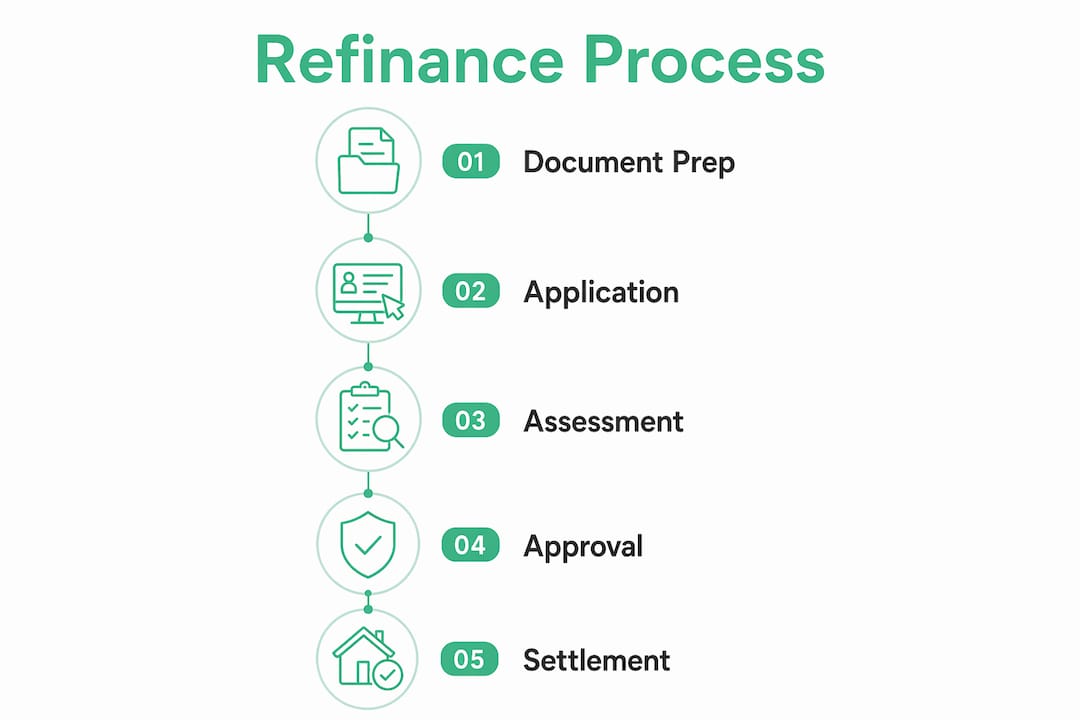
| Process step | Typical timeframe |
|---|---|
| Document preparation | 1–2 weeks before application |
| Loan application submission | Day 1 |
| Lender credit assessment | 5–10 business days |
| Property valuation | 3–7 business days |
| Conditional approval | Day 15–20 |
| Formal approval | Day 20–30 |
| Loan documents issued | Day 30–35 |
| Settlement | Day 40–48 |
Documents you need to gather before applying include recent pay slips covering at least 2 months, your last 2 years of tax returns if self-employed, current mortgage statements, council rates notices, and a recent credit card or loan statement for any existing debts.
Refinancing with your current lender, sometimes called a loan variation or internal refinance, is faster than switching. Your lender already holds your financial history and property details. The trade-off is that you may not get the most competitive rate on the market. Switching lenders takes longer but often yields better pricing, especially if you have improved your credit profile since your original loan.
Common mistakes that delay settlement include applying for new credit cards or personal loans during the assessment period, failing to disclose all existing debts, and submitting documents with inconsistent income figures. Avoid all three.
What common mistakes should you avoid when refinancing?
Refinancing too soon after your original loan approval is a costly error. Lenders view a very recent mortgage as a risk signal, and your credit score takes a hit from the hard enquiry. Wait at least 12 months from your original settlement before applying, and longer if your equity position is thin.
Rate chasing without calculating total costs is the most common mistake homeowners make. A lender advertising a rate 0.3% lower than your current loan sounds attractive. But if the closing costs push your break-even to 36 months and you plan to sell in 2 years, you lose money. Always calculate the break-even first.
- Avoid multiple credit applications. Each hard enquiry from a lender drops your credit score by a small amount. Multiple applications in a short window compound the damage. Use a mortgage broker to compare options without triggering multiple enquiries.
- Do not ignore the revert rate. Some lenders offer a sharp introductory rate that reverts to a much higher rate after 12–24 months. Check the revert rate before signing.
- Do not refinance just before selling. If you plan to sell within 12 months, the closing costs almost certainly will not be recovered through savings.
- Consider no-cost refinancing carefully. A no-cost refinance avoids upfront fees by accepting a slightly higher rate. This suits homeowners who expect to refinance or sell again within 24–36 months. It is a poor choice for those staying long-term.
Pro Tip: Before you sign anything, calculate two numbers: your monthly saving and your break-even month. If the break-even falls after your expected move or next refinance date, the deal does not work in your favour regardless of how low the rate looks.
Key takeaways
The right time to refinance your home loan is when your break-even period falls under 12 months and the new loan aligns with your financial goals.
| Point | Details |
|---|---|
| Break-even is the key metric | Refinancing makes sense when upfront costs are recovered within 12 months of lower repayments. |
| Rate drop threshold | A reduction of 0.5% to 1.0% typically justifies refinancing, with larger loans needing less of a drop. |
| Credit score preparation | Improving your credit score over 3–6 months before applying secures a better rate offer. |
| Non-rate triggers matter | Equity access, LMI removal, debt consolidation, and term shortening all justify refinancing independently. |
| Process takes about 48 days | Preparing documents in advance and avoiding new credit applications keeps the timeline on track. |
My honest view on refinancing timing
Refinancing is one of those financial decisions that looks simple on paper but gets complicated fast once you factor in your actual life. I have seen homeowners chase a 0.5% rate drop, pay $15,000 in closing costs, and then sell the property 18 months later. They lost money. The maths was never in their favour, but the rate looked good and that was enough to convince them.
The break-even calculation is not optional. It is the one number that tells you whether a refinance is genuinely worth doing. Experts consistently point to long-term financial fit as the deciding factor, not just the rate. I agree completely. A lower rate that extends your loan term by five years can cost you more in total interest than your current deal.
Credit management before applying is underrated. Most homeowners apply for a refinance the moment rates drop, without spending 3 months tidying up their credit file. That is a missed opportunity. A better credit score at application time can shift your rate by more than the market movement you were waiting for.
My practical advice: review your mortgage every 12 months. Check your current rate against the market, recalculate your break-even with current closing costs, and assess whether your financial goals have shifted. Refinancing is not a one-time decision. It is a regular part of managing your largest financial asset. The homeowners who treat it that way consistently come out ahead.
— Allen
How Zenrgfinance can help you refinance with confidence
Knowing the right time to refinance is one thing. Getting the right deal for your specific situation is another. Zenrgfinance works with homeowners across Australia to assess refinancing options that genuinely fit their financial goals, not just the headline rate.

The team at Zenrgfinance includes experienced mortgage relationship managers who can run a full break-even analysis for your loan, compare lenders without triggering multiple credit enquiries, and guide you through the documentation process from start to settlement. Whether you are looking to reduce your rate, access equity, or shorten your loan term, the advice is tailored to your numbers. You can also use the Zenrgfinance home refinancing overview to understand your options before booking a conversation.
FAQ
When should I refinance my mortgage?
Refinance when your new rate saves enough each month to recover closing costs within 12 months. Also consider refinancing when your fixed-rate term ends, your equity crosses 20%, or your financial goals change.
How much does a rate need to drop to justify refinancing?
A rate reduction of 0.5% to 1.0% is the standard threshold. On loans above $500,000, a smaller drop can still justify the costs due to higher monthly savings.
How long does the refinance process take?
The average refinance takes approximately 48 days from application to settlement. Preparing your documents in advance and avoiding new credit applications during assessment can shorten this timeline.
Can I refinance without paying upfront costs?
Yes. A no-cost refinance lets you avoid upfront fees by accepting a slightly higher interest rate. This suits homeowners who plan to refinance or sell again within 24–36 months, but costs more over the long term.
Does my credit score affect my refinance rate?
Your credit score directly affects the rate a lender will offer. Improving your score over 3–6 months before applying can qualify you for a significantly better rate and reduce your total loan cost.