
Refinancing is defined as replacing your existing mortgage with a completely new loan, which is precisely why refinancing resets your loan term. The new loan starts its own repayment schedule from the date of settlement, not from when you first took out your original mortgage. This happens because refinancing is a full loan replacement, not a modification of your current debt. Understanding this distinction helps you make smarter decisions about term length, total interest, and your long-term financial position before you sign anything.
Why refinancing resets the loan term: the mechanics explained
Refinancing replaces your mortgage rather than adjusting it. Your lender pays out the old loan in full, and a new loan is created with its own amortisation schedule starting at day one. This is not a lender policy choice. It is the fundamental nature of how a new loan transaction works.

The amortisation schedule is the repayment plan that determines how much of each payment goes toward interest versus principal. In the early years of any mortgage, the majority of your repayment covers interest, with only a small portion reducing the actual loan balance. When you refinance, that schedule resets entirely, putting you back at the beginning of this interest-heavy phase regardless of how far into your original loan you were.
The timing of your refinance within your original loan lifecycle matters enormously. If you are five years into a 30-year mortgage and you refinance into another 30-year loan, you are now looking at 35 years of total repayments instead of 25. The reset effect is most impactful when you refinance late into your original mortgage, because you may undo years of principal repayment progress that took considerable time to build.
- Your new loan starts a fresh amortisation clock at settlement
- Early payments on the new loan are again weighted heavily toward interest
- The further into your original loan you are, the greater the potential cost of resetting
- Refinancing is never a loan modification. It is always a new loan transaction
Pro Tip: Before refinancing, check your current loan's amortisation schedule online or ask your lender. Knowing exactly how much principal you have paid down helps you calculate the true cost of resetting.
What term options do you have when refinancing?
The good news is that the term reset is not fixed at 30 years by default. Term length after refinancing is a choice you make at the time of application, and most lenders offer a range of options. You can select a term that matches your remaining loan life, shortens it, or extends it depending on your goals and financial position.
Most lenders offer term options ranging from 10 to 30 years, with common choices at 15, 20, 25, and 30 years. This flexibility means you can refinance into a 20-year loan if you have 22 years remaining on your original mortgage, keeping your payoff date roughly on track while still accessing a better interest rate.
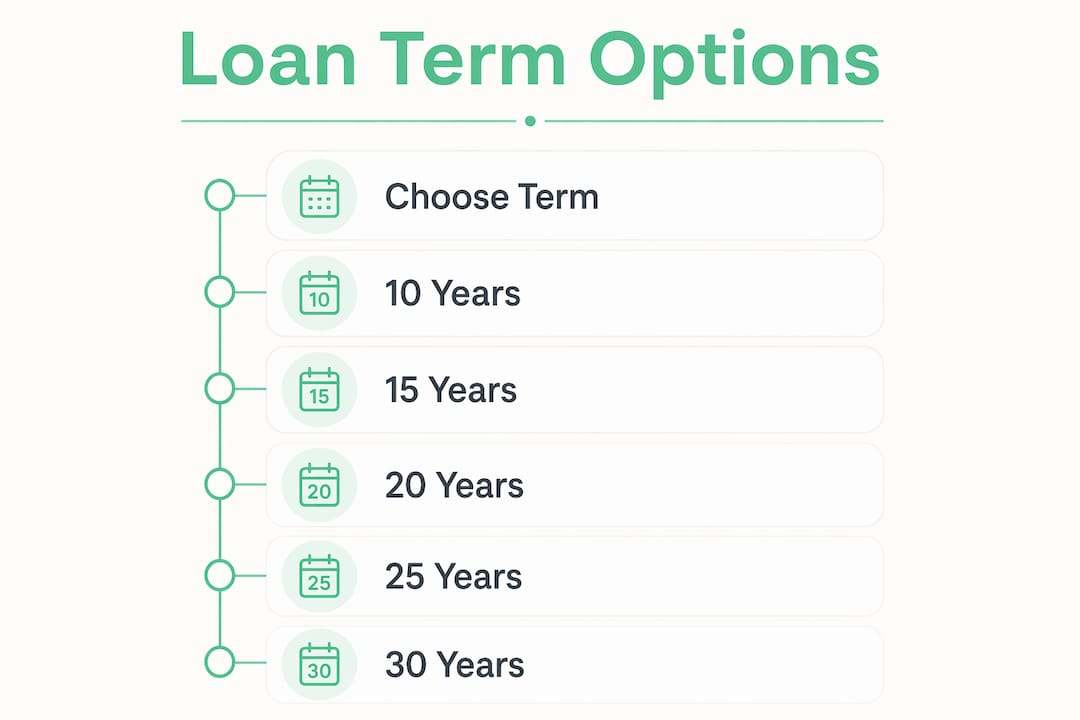
Here is how the main term choices compare:
| Term choice | Monthly payment | Total interest impact | Best suited for |
|---|---|---|---|
| Shorter term (e.g. 15 years) | Higher | Significantly lower | Homeowners wanting to pay off faster |
| Similar term (matches remaining years) | Moderate | Neutral to slightly higher | Homeowners wanting rate savings without extending debt |
| Longer term (e.g. 30 years) | Lower | Substantially higher | Homeowners needing immediate cash flow relief |
The decision comes down to your financial priorities right now. If your primary goal is reducing monthly repayments, a longer term achieves that. If your goal is minimising total interest paid over the life of the loan, a shorter or matched term is the smarter path. The key refinancing benefits depend heavily on which term you select, not just the interest rate you secure.
- Matching your new term to your remaining loan years avoids extending your total debt period
- A 15-year refinance can dramatically reduce total interest even if the monthly payment rises
- A 30-year refinance offers the lowest monthly payment but the highest long-term cost
- Your creditworthiness affects which terms and rates lenders will offer you
How does resetting the loan term affect total interest paid?
This is where the real financial impact of refinancing becomes clear. Resetting to the early phase of amortisation means your repayments are again mostly interest for several years. Even if your new interest rate is lower, restarting the amortisation schedule can increase total interest paid if you extend the loan term significantly.
Consider a practical example. You are 10 years into a 30-year mortgage at a higher rate. You refinance into a new 30-year loan at a lower rate. Your monthly payment drops, which feels like a win. But you have just committed to another 30 years of repayments, and those first several years of the new loan are again weighted toward interest rather than principal. The total interest you pay over the combined 40 years of debt could easily exceed what you would have paid by staying on your original loan.
The data reinforces this risk. 43% of borrowers extend their loan term when refinancing, which increases total interest paid over the life of the loan. That statistic means nearly half of all refinancers inadvertently make their mortgage more expensive in total cost terms, even while reducing their monthly payment.
You can use a loan comparison calculator to model the difference between your current loan trajectory and various refinancing scenarios. Running these numbers before committing to a term is one of the most practical steps you can take.
Pro Tip: Ask your mortgage broker to show you the total interest payable figure for each term option, not just the monthly repayment. That single number often changes the decision entirely.
| Scenario | Monthly payment | Total interest over loan life |
|---|---|---|
| Stay on original 30-year loan (20 years remaining) | Moderate | Based on remaining balance only |
| Refinance to new 30-year loan | Lower | Higher due to extended term |
| Refinance to 15-year loan | Higher | Significantly lower |
| Refinance to 20-year loan | Moderate | Moderate, close to original trajectory |
Practical strategies to manage the loan term reset
Knowing that refinancing resets your loan term is only useful if you act on it strategically. The following steps give you a clear framework for making the term reset work in your favour rather than against you.
-
Match or shorten your term. Refinancing into a shorter term such as a 15-year loan avoids extending your total repayment timeline and minimises additional interest costs. If you are 8 years into a 30-year loan, refinancing into a 20-year loan keeps your payoff date close to the original schedule.
-
Make extra repayments after refinancing. Even if you refinance into a 30-year loan for cash flow reasons, making additional principal payments accelerates your progress through the amortisation schedule. Paying an extra $200 per month on a $500,000 loan can shave years off the term and save tens of thousands in interest. Check your home loan offset calculator to model the impact of extra repayments.
-
Calculate your break-even point. Closing costs typically range from 2 to 6% of the loan amount and must be factored into your total savings calculation. Divide your total closing costs by your monthly savings to find how many months it takes to break even. If you plan to sell before that point, refinancing may not be worth it.
-
Factor in your financial timeline. If you plan to retire in 15 years, refinancing into a 30-year loan creates debt that outlasts your working income. Align your loan term with your personal financial milestones, not just the lowest available monthly payment.
-
Review your amortisation position first. Use an interest-only mortgage calculator to understand how much of your current repayments are going to interest versus principal. If you are already well into the principal-heavy phase of your loan, resetting the clock carries a higher cost.
-
Consider the long-term financial impact on your overall financial health, including how a new loan term interacts with your credit profile, savings goals, and property investment plans.
Key takeaways
Refinancing resets your loan term because it replaces your existing mortgage with a new loan that starts a fresh amortisation schedule, and choosing the right term at refinancing determines whether you save or spend more over the life of your debt.
| Point | Details |
|---|---|
| Term reset is structural | Refinancing creates a new loan, so a new repayment schedule always starts from settlement date. |
| Term length is your choice | Lenders offer 10 to 30-year options; matching your remaining term avoids extending total debt. |
| Interest cost is the real risk | Resetting to the interest-heavy early phase can increase total interest even with a lower rate. |
| Extra repayments offset the reset | Making additional principal payments after refinancing accelerates amortisation progress. |
| Break-even analysis is non-negotiable | Closing costs of 2 to 6% must be recovered through savings before refinancing delivers net benefit. |
The trap most homeowners walk straight into
I have spoken with hundreds of homeowners who refinanced for the right reasons but chose the wrong term. They locked in a lower rate, felt relieved about the smaller monthly payment, and did not realise until years later that they had added a decade to their mortgage. The monthly saving felt real. The extra interest cost was invisible until it was not.
The biggest misconception I see is treating refinancing as a rate decision when it is actually a term decision. The rate matters, but the term determines how long you are paying that rate. A 0.5% rate reduction on a 30-year reset can easily cost more in total interest than staying on your original loan with 18 years remaining.
My honest advice: never refinance without running the total interest payable comparison across at least three term scenarios. The 15-year option will surprise you. Yes, the monthly payment is higher, but the total interest saving is often staggering, sometimes six figures on a standard Australian mortgage. If your budget can absorb the higher repayment, the 15-year refinance is almost always the better financial outcome.
The homeowners who get refinancing right are the ones who treat it as a full mortgage review, not just a rate swap. They look at their remaining term, their financial goals, and their retirement timeline before they pick a number. That approach turns a potential trap into a genuine financial win.
— Allen
Ready to refinance with confidence? Zenrgfinance can help
Choosing the right loan term when you refinance is one of the most important financial decisions you will make as a homeowner. At Zenrgfinance, our Mortgage Relationship Managers walk you through every term option, model the total interest cost across scenarios, and help you align your refinancing decision with your actual financial goals.

We work with homeowners across Australia to make refinancing decisions that genuinely improve their financial position, not just their monthly payment. Whether you want to shorten your term, reduce your rate, or simply understand your options, our team provides personalised guidance without the jargon. Reach out to Zenrgfinance today and get a clear picture of what refinancing could actually mean for your mortgage.
FAQ
Why does refinancing reset the loan term?
Refinancing replaces your existing mortgage with a completely new loan, which starts its own repayment and amortisation schedule from the settlement date. This reset happens because refinancing is a full loan replacement, not a modification of the original debt.
Can I refinance without extending my loan term?
Yes. Term length is your choice at the time of refinancing, and you can select a term that matches your remaining years or is even shorter to avoid extending your total repayment period.
Does a lower interest rate always save money when refinancing?
Not always. If you refinance into a longer term, the total interest paid over the life of the loan can exceed what you would have paid on your original mortgage, even at a lower rate. Always compare total interest payable, not just monthly repayments.
What is the biggest risk of resetting the loan term?
The biggest risk is returning to the interest-heavy early phase of amortisation, which means more of each repayment goes to interest rather than reducing your principal balance. This is especially costly if you are already well into your original loan.
How do closing costs affect the refinancing decision?
Closing costs typically range from 2 to 6% of the loan amount and must be recovered through monthly savings before refinancing delivers a net benefit. Divide total closing costs by your monthly saving to calculate how long it takes to break even on the refinance.