
A mortgage is defined as a loan secured against a property, giving the lender a legal interest in that home until the debt is fully repaid. This financing arrangement is the foundation of property acquisition for most Australians. Understanding the role of mortgage in property ownership means recognising two separate things at once: your right to live in and use the property, and the lender's right to reclaim it if you stop making repayments. These two things coexist, and confusing them is one of the most common and costly mistakes buyers make. Zenrgfinance works with buyers at every stage to make this distinction clear from day one.
How does a mortgage affect legal ownership of a property?
The deed determines who owns a property. The mortgage determines who owes money on it. These two documents are separate, and the names on each do not have to match. A parent might be listed on a mortgage to help a child qualify for a loan, without appearing on the title deed at all. That parent carries debt but holds no ownership rights.
This distinction matters enormously for estate planning and family disputes. If you are on the deed but not the mortgage, you own the property but carry no legal debt. If you are on the mortgage but not the deed, you owe money on a home you do not legally own. Neither situation is automatically wrong, but both require careful legal advice before you sign anything.
The lender's interest is called a security interest or charge over the property. It does not make the lender an owner. It gives the lender the right to force a sale if repayments stop. Once you repay the loan in full, that security interest is discharged and you hold the property free and clear.
Common misconceptions buyers carry into the process:
- Believing that being on the mortgage means you own the home
- Assuming the person who pays the mortgage automatically owns the property
- Thinking the lender co-owns the home during the loan term
- Overlooking the deed when planning for inheritance or separation
Pro Tip: Before signing any loan documents, ask your solicitor to confirm exactly whose names appear on the title deed and what that means for your ownership rights, especially if a family member is helping you qualify.
What impact does a mortgage have on financial planning and home affordability?
A mortgage shapes your entire budget, not just your monthly repayment. It determines how much you can borrow, what price range you can consider, and how much cash you need upfront. Getting this picture clear before you start house hunting saves enormous stress later.
Your deposit size has a direct and lasting effect on your costs. A 3% versus 20% deposit changes your monthly repayment by $175 and your total interest paid by $34,788 over a 30-year loan. That is not a small difference. A larger deposit also reduces your loan-to-value ratio, which often unlocks better interest rates. Zenrgfinance's guide on deposit size and rates explains exactly how this works in the Australian market.
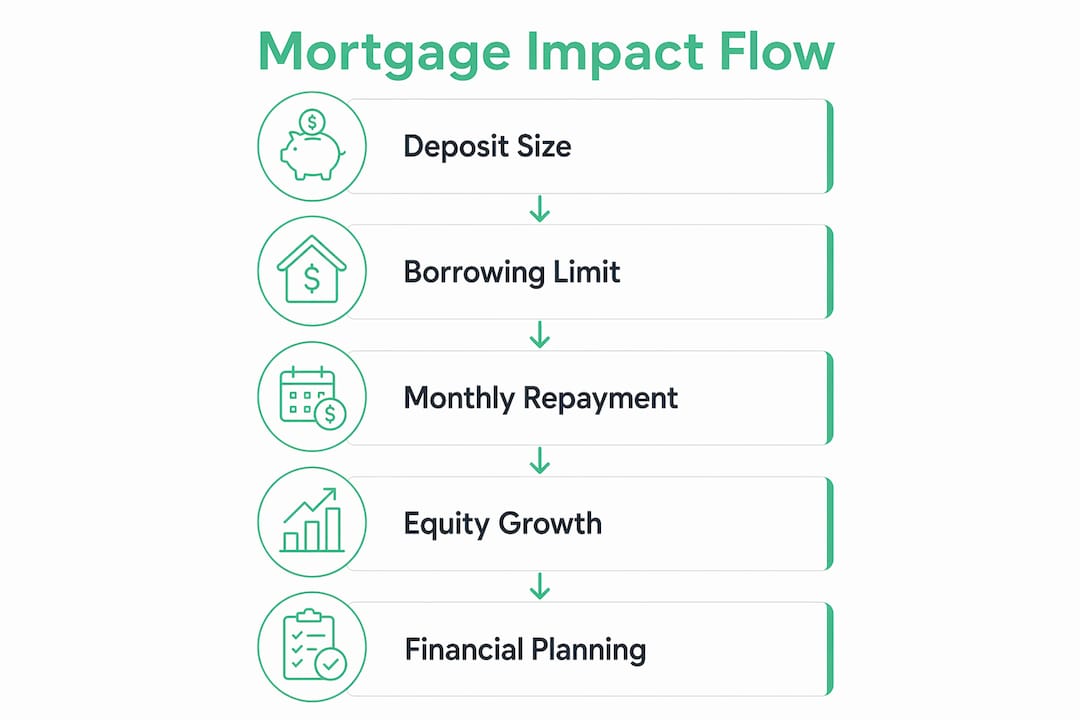
Your debt-to-income ratio is the number lenders scrutinise most. It compares your total monthly debt obligations to your gross monthly income. Lenders use this figure to decide whether you can comfortably manage repayments. Debt-to-income was cited in 35% of loan rejections in 2024, up from 29% in 2018. That rise reflects how rising interest rates push more borrowers over acceptable thresholds, even when their income has not changed.
Here is a practical sequence for getting your finances mortgage-ready:
- Calculate your debt-to-income ratio. Add all monthly debt repayments and divide by gross monthly income. Most lenders prefer this figure below 43%.
- Assess your deposit. Aim for at least 20% to avoid lenders mortgage insurance, which adds thousands to your costs.
- Review your credit file. Errors on your credit report can cost you approval. Check it at least three months before applying.
- Map your monthly budget. Work backwards from your target repayment to confirm you can sustain it alongside living costs.
- Get pre-approval. This confirms your borrowing capacity and strengthens your position when making an offer.
Mortgage repayments also function as forced savings. Every repayment reduces your loan balance and builds equity in the property. That equity becomes a financial asset you can draw on later, whether for renovations, investment, or retirement. Renting builds no such asset.
How do mortgages influence the property market and homeownership opportunities?
Mortgages do not just affect individual buyers. They shape the entire housing market. When interest rates rise, lending standards tighten and fewer buyers qualify. Mortgage denial rates rose from 12.2% to 15.7% between 2022 and 2023. In 2024, lenders rejected over 526,000 home purchase applications, roughly one in six. That is a significant portion of would-be buyers removed from the market.
Rising rates also trap existing homeowners in their current properties. Many owners locked in very low fixed rates during 2020 and 2021. Selling now would mean taking on a new mortgage at a much higher rate. This "rate lock" effect reduced home supply and contributed to price increases even as demand softened. Rate lock explained 40% of the gap between forecast price drops and actual price rises between 2021 and 2023.
"Mortgage rate lock creates a situation where homeowners who want to move simply cannot afford to. The result is fewer homes listed for sale, which keeps prices elevated even when buyer demand falls. This is one of the least-discussed forces in housing affordability."
First-time buyers face the sharpest end of these dynamics. Mortgage credit constraints cascade into higher costs and narrower loan options for buyers without an existing property to leverage. Repeat buyers can use equity from a previous home as a deposit. First-timers must build that deposit from scratch while competing in a market with limited supply.
| Market condition | Effect on buyers |
|---|---|
| Rising interest rates | Higher monthly repayments, more rejections |
| Rate lock among existing owners | Fewer homes listed, prices stay elevated |
| Tighter lending standards | Fewer buyers qualify, especially first-timers |
| Strong equity growth | Repeat buyers gain deposit advantage over newcomers |
The wealth gap between homeowners and renters reflects these dynamics over time. Homeowners typically hold 30 to 50 times more wealth than renters. Buyers who enter the market at 30 have a 22.5% greater net worth at 50 than those who delay. Earlier entry compounds the benefits of both appreciation and principal paydown. For practical tips on managing these pressures, Savings Grove's money tips for homeowners covers budgeting strategies that work alongside a mortgage.
What practical steps can buyers take to get better mortgage outcomes?
Getting a mortgage is not just about finding a lender willing to say yes. It is about finding the right loan structure for your situation and entering the market at the right time with the strongest possible application.
Key steps that improve your position:
- Improve your credit score early. Pay down existing debts, avoid new credit applications in the months before you apply, and correct any errors on your credit file. Zenrgfinance's credit score guide for first-home buyers walks through exactly what lenders look for.
- Choose the right loan product. Fixed rates offer repayment certainty. Variable rates can fall when the cash rate drops. Split loans give you both. Your choice should reflect your income stability and risk comfort.
- Manage your debt-to-income ratio. Pay off personal loans and reduce credit card limits before applying. Even unused credit limits count against you in some lenders' calculations.
- Work with a mortgage broker. Brokers like Zenrgfinance access a wide panel of lenders and can match your profile to the products most likely to approve you. This matters more when your situation is complex, such as self-employment or a smaller deposit.
- Plan for equity growth. Understand that each repayment builds ownership. Over time, that equity supports further property investment and wealth transfer to the next generation.
Pro Tip: If you are worried about rate rises affecting your repayments, read Zenrgfinance's guide on managing rate hike pressure before you commit to a loan structure.
Getting pre-approval before you start inspecting properties is one of the most underused advantages in the buying process. It tells sellers you are serious, and it tells you exactly what you can spend. A mortgage broker can arrange this quickly and at no cost to you.
Key takeaways
A mortgage is the primary tool that converts homeownership from an aspiration into a legal, financial reality, and understanding it fully protects your ownership rights, budget, and long-term wealth.
| Point | Details |
|---|---|
| Deed vs mortgage | The deed holds ownership rights; the mortgage holds the debt. These documents are separate. |
| Deposit size matters | A larger deposit reduces total interest paid and often unlocks lower interest rates. |
| Debt-to-income ratio | Lenders rejected 35% of 2024 applications citing debt-to-income, so managing existing debt is critical. |
| Rate lock reduces supply | Existing owners locked into low rates are reluctant to sell, keeping prices elevated for buyers. |
| Early entry builds wealth | Homeowners hold 30 to 50 times more wealth than renters, and earlier entry compounds that advantage. |
Why I think most buyers misunderstand what a mortgage actually does
After working with hundreds of buyers across different life stages, the single most common misunderstanding I see is treating the mortgage as the ownership document. People talk about "getting a mortgage on a house" as if the loan is what gives them the home. It does not. The deed does that. The mortgage is the price you pay for the financing that makes the purchase possible.
That confusion leads to real problems. Buyers focus entirely on the interest rate and ignore the loan structure. They overlook the deed when adding a partner or planning their estate. They underestimate how their debt-to-income ratio will limit their options years later when they want to upgrade.
The buyers who do best are the ones who treat the mortgage as a long-term financial instrument, not just a hurdle to clear. They think about equity from day one. They choose loan products that match their income trajectory, not just their current situation. They get into the market earlier rather than waiting for the "perfect" time, because the data on wealth accumulation is clear: time in the market beats timing the market.
My honest advice is this: get your finances in order, understand what the deed and the mortgage each mean for your rights, and work with someone who will explain the full picture rather than just push you toward approval. That is the difference between buying a home and building genuine financial security.
— Allen
How Zenrgfinance helps you get mortgage-ready
Buying a property is one of the biggest financial decisions you will make. Getting the mortgage right from the start protects your ownership, your budget, and your future.


Zenrgfinance's mortgage relationship managers work with you one-on-one to assess your borrowing capacity, match you with the right lenders, and structure a loan that fits your long-term goals. Whether you are a first-time buyer building your deposit or an investor looking at your next acquisition, Zenrgfinance tailors the approach to your situation. If you want to improve your approval chances before you apply, the team can walk you through exactly what lenders want to see. Reach out today and get clarity on your options.
FAQ
What is the role of a mortgage in property ownership?
A mortgage finances the purchase of a property by securing a loan against the home. The borrower holds ownership rights through the deed, while the lender holds a security interest until the loan is repaid.
Does having a mortgage mean the bank owns your home?
No. The bank holds a security interest, not ownership. The deed names the owner. The lender can force a sale only if repayments stop.
How does a mortgage affect my financial planning?
A mortgage determines your borrowing capacity, monthly repayments, and deposit requirements. Debt-to-income ratio is the key figure lenders assess, so managing existing debts before applying directly improves your options.
Can the names on a mortgage differ from the property deed?
Yes. Names on a mortgage and deed do not have to match. This is common in family arrangements but can create estate planning and legal complications if not managed carefully.
How do rising interest rates affect mortgage approval?
Rising rates push borrowers' debt-to-income ratios above lender thresholds, increasing rejections. Mortgage denial rates rose from 12.2% to 15.7% between 2022 and 2023 as rates climbed.