
Yes, you can often refinance with a bad credit history, provided you've got sufficient equity in your property or a compensating factor like a solid recent repayment record. It's rarely a straight rejection, but it does come with conditions.
Before you go further, run three quick checks:
- Pull your credit reports and check for errors or outdated black marks.
- Estimate your loan-to-value ratio (LVR) by comparing your loan balance to your property's current value.
- Confirm your last 12 months of mortgage repayments were on time, with no missed or late payments.
If those checks come back reasonable, keep reading. Expect higher rates, higher fees, and a good chance you'll need a specialist lending pathway rather than a mainstream bank.
Key Takeaways
Refinancing with a bad credit history usually comes down to equity, recent repayment behaviour, and DTI outweighing the score itself.
| Point | Details |
|---|---|
| Score isn't everything | Equity, DTI, and recent payment history can offset a low credit score in a lender's assessment. |
| Fix errors before applying | Disputing report errors can trigger a rapid rescore within weeks, improving your odds fast. |
| Specialist lenders cost more | Non-conforming lenders approve more applications but charge higher rates and origination fees. |
| Run the break-even math | Closing costs of 2 to 5% mean a refinance only pays off if the rate saving outweighs the fees. |
| Get a tailored assessment | Zenrgfinance matches your file to mainstream, specialist, or programmatic lenders that actually fit. |
Table of Contents
- How lenders assess your application when your credit is impaired
- What are your refinancing options with bad credit?
- How can you improve your application before you apply?
- What will refinancing cost, and how long will it take?
- When should you wait instead of refinancing now?
- How does ZENRG Finance help borrowers with bad credit refinance?
- What actually happens once you start this process
- Why talk to ZENRG Finance about refinancing?
- Frequently asked questions
- Sources
How lenders assess your application when your credit is impaired
Payment history usually carries the most weight of anything on your file. A single 30-day slip from three years ago matters far less than a 60 or 90-day delinquency in the last six months, because lenders read recent behaviour as the best predictor of future risk.
Credit score thresholds still act as a rough guide. Many lenders informally treat something like 620 as a workable line for conventional refinancing, though this varies widely between lenders and loan products. That number is a starting point, not a verdict. Canstar notes that a low score doesn't rule you out on its own, because lenders also weigh your payment history, equity position, and debt-to-income (DTI) ratio together.
Mortgage rejection rates hit a decade high in 2024, with credit-score deterioration flagged as a major driver, according to National Mortgage Professional. That's the market you're applying into, and it's why your equity buffer matters more than ever.
What else gets checked:
- Verified income and employment history, not just your quoted salary.
- Savings or cash reserves that show you can absorb a rate rise.
- Equity or LVR, since strong equity can offset a patchy score.
- DTI ratio, comparing your total debt repayments against income.
Some pathways relax these rules altogether. Fannie Mae and Freddie Mac's updated guidelines removed rigid minimum credit scores in late 2025, shifting toward a broader risk assessment instead. Government-backed and streamline-style programs can also work around a weak score if you've kept up your repayments. Our guide to refinancing eligibility requirements breaks down how these factors interact in practice.
What are your refinancing options with bad credit?
Several paths exist, and which one suits you depends on your equity, your income stability, and how urgently you need to move.
- Restructure with your current lender. Ask directly about a rate review, a repayment holiday, or a loan variation. Lenders often prefer keeping a paying customer over losing one, so this conversation costs nothing and sometimes gets you a better deal without a full refinance.
- Specialist or non-conforming lenders. These lenders accept applications that mainstream banks decline, but you'll pay for the flexibility through higher rates and fees. They're often described as a stepping stone, a way to rebuild your file for a year or two before moving back to a mainstream lender, according to a specialist lending guide from Loan Market Euroa.
- Debt consolidation or cash-out refinance. Rolling high-interest debts into your mortgage can lower your monthly outgoings, but it stretches that debt over a much longer term, which usually means more interest paid overall. This only works if you have enough equity to support the larger loan.
- Co-borrower or guarantor. Adding someone with a stronger credit file can unlock better terms, but both parties carry legal exposure. The guarantor's own borrowing capacity gets tied up, and if you default, they're liable.
- Private lending. Short-term, asset-based loans from private lenders sit at the pricier, riskier end of the spectrum. Treat this as a last resort, a bridge to a specialist or mainstream refinance once your position improves, not a long-term solution.
Mozo's guide to refinancing with bad credit covers these same five paths and is worth reading alongside your own numbers.
Pro Tip: Ask any specialist lender upfront how you can exit their loan later. A genuine stepping-stone lender will tell you exactly what repayment record earns you a review after 12 to 18 months.
How can you improve your application before you apply?
Start with your credit reports. Pull all three and check every entry for errors, wrong balances, or accounts that aren't yours. Disputing a mistake can trigger a rapid rescore, and Experian notes that correcting misreported balances can shift an outcome within weeks, not months.
- Fix errors first. This is the fastest lever you have, and it costs nothing.
- Reduce your DTI. Pay down high-interest debt or consolidate smaller balances before applying, not after.
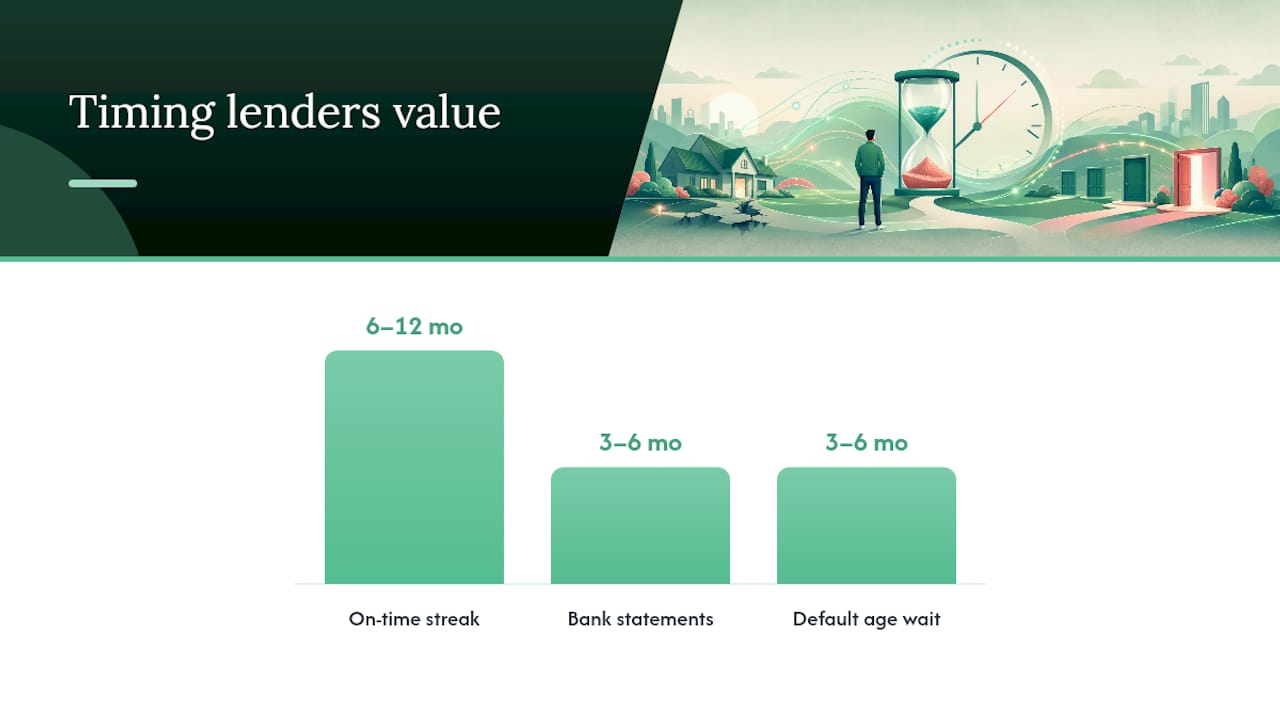
- Build a visible on-time streak. Six to twelve months of clean mortgage repayments carries real weight with underwriters.
- Gather your paperwork early. Recent payslips, three to six months of bank statements, and a written hardship explanation if you had a rough patch.
- Time it carefully. If your file has a recent default, waiting three to six months for it to age can matter more than any other single change.
Our credit score role in refinancing guide and this credit score improvement checklist both walk through the dispute process in more detail.
Pro Tip: A recent, well-documented hardship letter (job loss, illness, divorce) explaining a past default often carries more weight with underwriters than you'd expect. Keep it factual and brief.
What will refinancing cost, and how long will it take?
Closing costs on a refinance typically run a few percent of the loan amount, and Canstar's research confirms borrowers with weaker credit often face higher origination fees layered on top. A lower score can also push your interest rate up by a percentage point or more, which on a large loan balance adds up to thousands over the life of the loan.
- Application to settlement usually takes four to eight weeks with a mainstream lender.
- Specialist lenders can move faster, sometimes two to three weeks, but charge more for that speed.
- Some streamline-style programs require a seasoning period, often six to twelve months of clean repayments, before you're eligible.
Run the maths before committing. Our break cost worked examples show how fees stack up against potential savings, and the Loan Comparison Calculator does the same sums for your own numbers.
When should you wait instead of refinancing now?
Refinancing is not always the right move, even when you technically qualify.
- If the rate saving barely covers the fees, wait. Run the break-even math first.
- If you're moving within two years, the upfront costs may never pay off.
- If your equity is thin, rebuilding it for six months might unlock materially better terms.
- If a hardship arrangement or repayment modification with your current lender solves the problem, try that before a full refinance.
A broker who works with specialist lenders daily can tell you within one conversation whether you're ready now or better off waiting.
How does ZENRG Finance help borrowers with bad credit refinance?
Zenrgfinance builds a tailored assessment around your actual file, not a generic checklist. That means matching you to lenders (mainstream, specialist, or programmatic) who genuinely fit your equity, income, and repayment history, then handling the paperwork and lender negotiation on your behalf.
- A free initial assessment of your credit file, equity, and DTI.
- Access to specialist and non-conforming lenders outside the mainstream bank shortlist.
- Support preparing income evidence, bank statements, and hardship documentation.
- A home refinancing strategy session to map out realistic next steps.
Bring your last six months of statements and your most recent credit report to get the most out of that first conversation.
What actually happens once you start this process
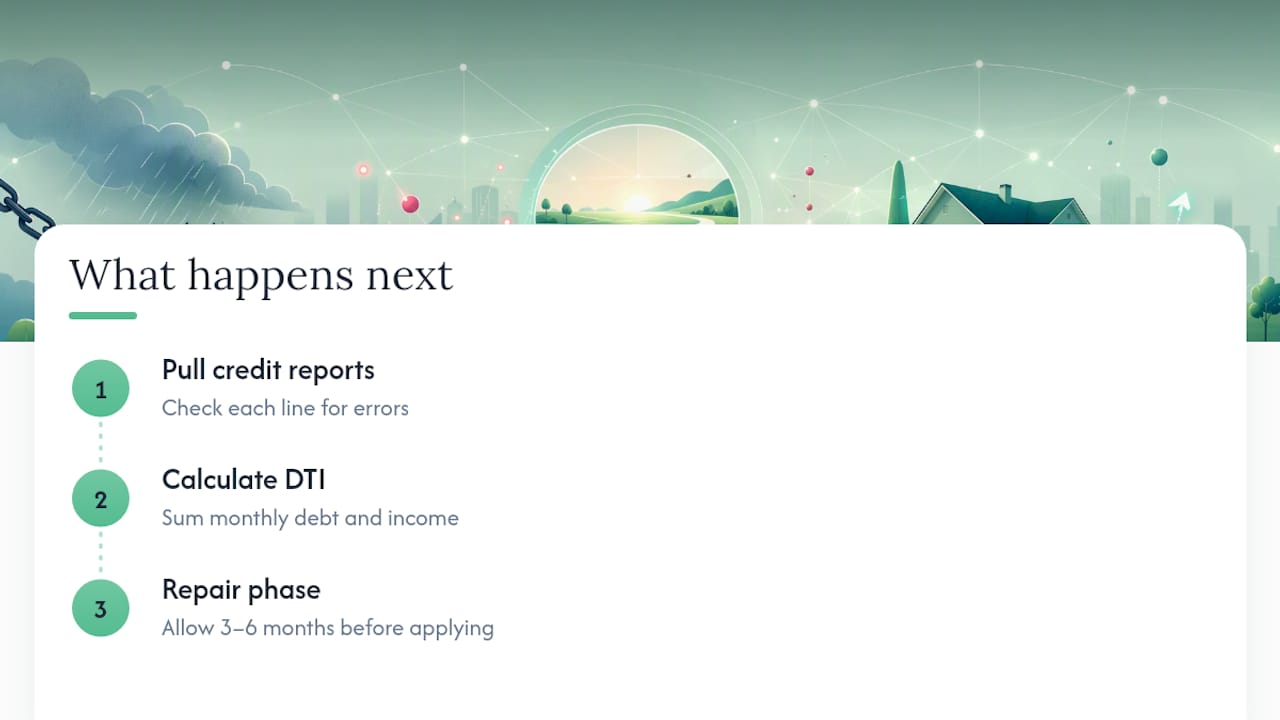
Most homeowners underestimate how long the credit repair phase alone can take. Give yourself three to six months if there's an error to dispute or a DTI ratio to bring down, because rushing an application with a fixable problem usually means a worse rate than waiting would have got you.
Two things worth doing today: pull your credit reports and check them line by line, and add up your total monthly debt repayments against your income to see your real DTI.
Why talk to ZENRG Finance about refinancing?
Zenrgfinance gives impaired-credit borrowers something most mainstream lenders won't: a broker who already knows which specialist and programmatic lenders will actually look past a low score, so you're not wasting months on applications that were never going to succeed. Rather than guessing which bank might say yes, you get one assessment that maps your equity, DTI, and repayment history against the lenders most likely to approve you, including stepping-stone options that can move you back to mainstream rates within a year or two.

The process starts with a straightforward conversation, not a hard credit check. A Mortgage Relationship Manager will walk through your file, flag anything worth fixing first, and outline which lenders suit your situation. If you're ready to see where you stand, book a session through the home refinancing page and bring your recent statements and credit report along.
Frequently asked questions
Can I refinance with bad credit at all? Yes, in most cases, but expect conditions: sufficient equity, a clean recent repayment record, or a specialist lender willing to work outside standard score thresholds.
What credit score disqualifies me from refinancing? There's no universal cutoff. Many mainstream lenders informally look for something around 620, but strong equity or a specialist lender can work with scores well below that.
How soon can bad credit refinancing happen after fixing an error? Correcting a misreported balance or error can trigger a rapid rescore within weeks, though full loan settlement still typically takes four to eight weeks with a mainstream lender.
Should I wait before applying? If a recent default is close to ageing off your file, or your DTI is genuinely fixable within a few months, waiting often earns you a materially better rate than applying now.
This article is general information, not a substitute for advice from a qualified financial advisor. Consult a qualified financial professional about your own circumstances before acting on anything here.
Sources
- Credit score to get a home loan | Canstar
- Refinancing a home loan with bad credit | Mozo
- How to refinance a mortgage with bad credit | Experian