
Your credit score is the single number lenders use to decide whether you qualify for refinancing and what interest rate you will pay. Think of it as your financial report card. A strong score opens the door to lower rates and better loan terms. A weak one can cost you thousands over the life of a loan. Understanding the role of credit score in refinancing is the first step toward making a smarter mortgage decision, whether you are looking to reduce your repayments, access equity, or switch to a better deal.
How does your credit score affect refinancing terms?
Lenders use credit scores as the primary tool for measuring borrower risk. The higher your score, the less risk you represent, and the better the deal you are likely to receive. This practice is called risk-based pricing, and it is the foundation of how Australian and international mortgage lenders set interest rates.
Lenders set interest rates based on risk-based pricing, charging higher APRs to borrowers with lower credit scores due to default risk. That means two homeowners applying for the same loan amount on the same day can receive very different rates simply because of their credit scores.

Credit score is not the only factor lenders weigh. Loan-specific factors such as loan type, term, and repayment plan also influence interest rates beyond credit score alone. Still, your score carries more weight than almost any other single variable in the assessment.
Lenders also pull what is known as a tri-merge credit report during the refinancing process. Mortgage lenders pull tri-merge credit reports incorporating data from all three major bureaus, Experian, Equifax, and TransUnion, for refinancing decisions. Scores can vary between bureaus and scoring model versions, so the number you see on a free app may differ from what your lender sees.
Key factors lenders assess alongside your credit score include:
- Debt-to-income ratio: The percentage of your monthly income that goes toward debt repayments.
- Loan-to-value ratio: How much you owe compared to your property's current value.
- Employment history: Consistent income signals lower default risk.
- Repayment history: Late payments on your existing mortgage weigh heavily against you.
What do different credit score ranges mean for your refinancing options?
Credit score ranges translate directly into the interest rates and loan conditions you can access. Understanding where your score sits helps you set realistic expectations before you apply.
The average mortgage interest rate for borrowers with a 700 credit score is 6.91% in june 2026. That figure highlights just how much your score shapes your borrowing cost. A score of 760 or above is typically needed to access the best available interest rates on the market.
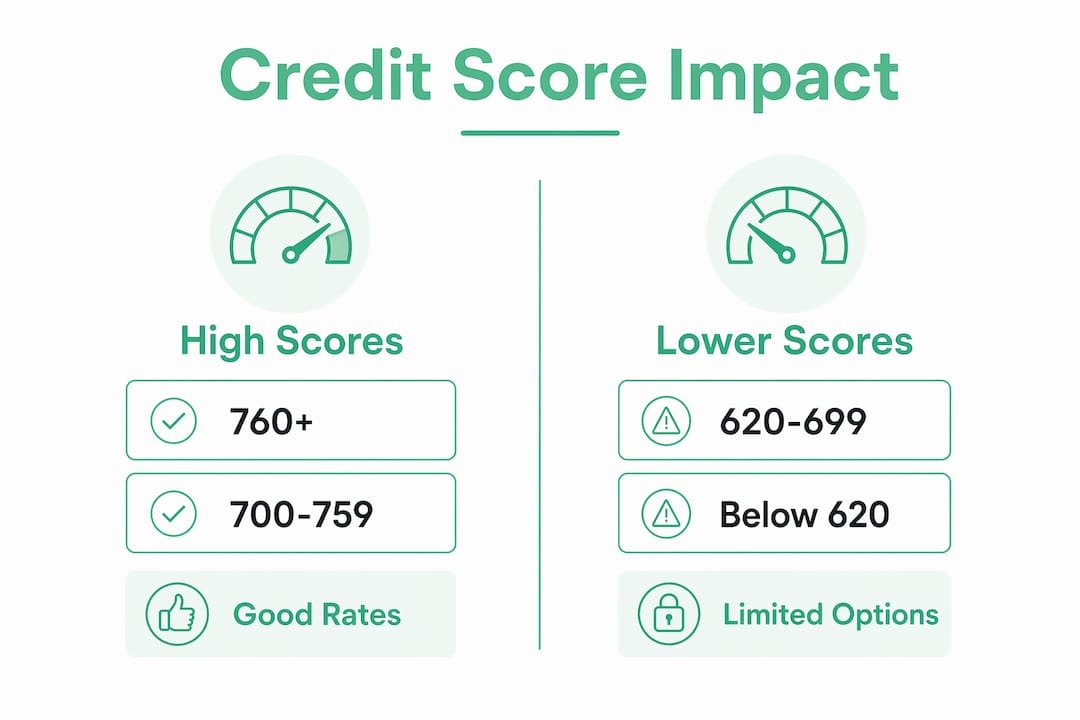
The table below shows how credit score bands generally correspond to refinancing outcomes:
| Credit score band | Typical refinancing outcome |
|---|---|
| 760 and above | Best available rates, full loan options, lowest fees |
| 700–759 | Competitive rates, minor fee differences |
| 620–699 | Higher rates, stricter conditions, possible LMI |
| Below 620 | Limited options, specialist lenders, highest rates |
Borrowers in the 620–699 range often face additional conditions such as a lower maximum loan size, higher upfront fees, or a requirement to demonstrate a longer period of consistent repayments. Falling below 620 does not automatically disqualify you, but it narrows your choices significantly.
One thing many homeowners do not expect is that the act of refinancing itself can temporarily lower your credit score. Refinancing applications cause hard credit inquiries that may temporarily reduce credit scores, though scores typically recover with timely payments. The dip is usually small and short-lived, but timing matters if you are planning other credit applications.
Pro Tip: If you are shopping around for refinancing rates, submit all your applications within a 14 to 45-day window. Most scoring models treat multiple mortgage inquiries in that period as a single inquiry, which limits the impact on your score.
Can you refinance with poor credit?
Refinancing with poor credit is possible, but the path is narrower and the costs are higher. Knowing your options before you apply saves time and protects your credit from unnecessary hard inquiries.
Minimum credit scores for conventional refinancing are usually 620, while government-backed loan programmes have lower or no fixed minimums. FHA and VA loan programmes allow refinancing with scores as low as 500 in certain cases. In Australia, the equivalent government-supported lending options and specialist lenders serve a similar purpose for borrowers who fall outside standard bank criteria.
Here are the practical steps to consider when refinancing with a lower credit score:
- Check your eligibility for government-backed options. These programmes carry more flexible score requirements and can be a genuine path forward for borrowers who do not qualify with mainstream lenders.
- Consider a co-borrower. Adding a co-borrower with a stronger credit profile can improve the overall application and unlock better rates.
- Delay and improve. If your score is close to a key threshold, spending three to six months paying down debt and correcting report errors can push you into a better band before you apply.
- Weigh up cash-out refinancing carefully. Cash-out refinancing allows you to access home equity, but it carries real risks for borrowers with low credit scores, including potential foreclosure if repayments are missed. The benefit of accessing equity must be weighed against the higher rate you will pay.
- Work with a mortgage broker. A broker who understands your credit profile can match you with lenders whose criteria fit your situation, rather than sending your application to lenders who are likely to decline it.
Pro Tip: Before applying anywhere, request a copy of your credit report from Equifax, Experian, and illion (the three bureaus operating in Australia). Check for errors. Incorrect defaults or outdated listings can suppress your score unfairly, and disputing them costs nothing.
You can also read Zenrgfinance's guide on refinancing eligibility requirements for a detailed breakdown of what lenders look for in 2026.
Practical steps to improve your credit score before refinancing
Improving your credit score before refinancing improves your chances of lower interest rates, larger loans, and better loan terms. Paying down debt, correcting errors, and making timely payments are the three most effective strategies. None of them are complicated, but they do require consistency over time.
The steps that deliver the most reliable results are:
- Pay every bill on time. Repayment history is the largest single factor in most credit scoring models. Even one missed payment can set you back months of progress.
- Reduce your credit card balances. Keeping your credit utilisation below 30% of your available limit signals responsible credit management to lenders.
- Dispute errors on your credit report. Incorrect listings, such as defaults that were paid or accounts that do not belong to you, can be disputed directly with each bureau at no cost.
- Avoid opening new credit accounts. Each new application creates a hard inquiry and reduces your average account age, both of which can lower your score.
- Keep existing accounts open. Closing old accounts reduces your available credit and can increase your utilisation ratio, which works against you.
Credit score improvement is not instant. Most borrowers see meaningful movement within three to six months of consistent effort. If your target is the 760-plus band needed for the best refinancing rates, starting early gives you the best chance of getting there before you apply.
Zenrgfinance works with borrowers at every stage of credit preparation. Their team can help you understand where your profile stands today and what steps will have the most impact before you submit a refinancing application. For practical guidance on building your credit file, Zenrgfinance has a dedicated resource worth reading before you start.
Understanding how credit scores affect financial decisions more broadly can also help you see the bigger picture beyond just your mortgage.
Key takeaways
Your credit score determines both your eligibility to refinance and the interest rate you will pay, making it the most important number to manage before you apply.
| Point | Details |
|---|---|
| Risk-based pricing is real | Lenders charge higher rates to lower-score borrowers, so every point counts. |
| 760-plus unlocks the best rates | Borrowers above 760 access the most competitive refinancing interest rates available. |
| Poor credit still has options | FHA, VA, and specialist lenders offer refinancing pathways for scores below 620. |
| Inquiries have a short-term impact | Multiple applications within 14–45 days count as one inquiry under most scoring models. |
| Preparation pays off | Paying down debt and correcting errors before applying can shift you into a better rate band. |
Credit scores in 2026: what I have learned from watching borrowers get this wrong
The most common mistake I see homeowners make is treating their credit score as a fixed fact rather than a number they can actively manage. They check it once, feel discouraged or relieved, and then do nothing with the information. That passivity costs them real money.
The second mistake is timing. Borrowers apply for refinancing right after taking out a new car loan or opening a credit card, then wonder why their application comes back with a higher rate than expected. The credit score impact of those decisions is not always obvious in the moment, but lenders see it clearly.
What I have found genuinely useful is thinking about credit score management as a six-month project, not a last-minute task. The borrowers who get the best refinancing outcomes are the ones who checked their reports early, fixed what needed fixing, and arrived at the application with a clean, stable credit profile. They did not necessarily have perfect scores. They just had no surprises.
Working with an adviser like Zenrgfinance makes a real difference here. Not because brokers have magic access to better rates, but because they know which lenders will look favourably at your specific profile. That knowledge alone can save you from a string of declined applications that each leave a hard inquiry on your report. If you are serious about refinancing in 2026, credit preparation is not optional. It is the work you do before the work.
— Allen
Zenrgfinance and your refinancing credit strategy
Getting your credit profile right before refinancing is the kind of preparation that pays for itself many times over. Zenrgfinance helps homeowners understand exactly where their credit stands and which refinancing options suit their situation.

Whether you are looking to reduce your rate, access equity, or switch loan types, the team at Zenrgfinance builds a picture of your full financial profile before recommending a path forward. That means no wasted applications and no surprises at settlement. Their mortgage relationship manager service is designed for borrowers who want expert guidance matched to their credit profile and goals. You can also explore Zenrgfinance's full home refinancing options to see what is available for your situation right now.
FAQ
What is the minimum credit score needed to refinance?
Conventional refinancing typically requires a minimum score of 620, while government-backed programmes such as FHA loans can allow scores as low as 500 in certain cases.
How does credit score affect my refinancing interest rate?
A higher credit score signals lower default risk to lenders, which results in a lower interest rate. Borrowers with a 700 score were paying an average mortgage rate of 6.91% in june 2026, while those above 760 accessed better rates.
Will applying to refinance hurt my credit score?
Yes, but only temporarily. Hard credit inquiries from refinancing applications can lower your score slightly, though scores typically recover quickly with consistent repayments.
What is the best credit score for refinancing?
A score of 760 or above is the threshold for accessing the best available refinancing rates. Scores in the 700–759 range still attract competitive offers, but the top tier rates are reserved for borrowers above 760.
Can I refinance with a poor credit score in Australia?
Yes. Specialist lenders and certain government-backed programmes offer refinancing options for borrowers with lower scores. Working with a mortgage broker helps you identify which lenders are most likely to approve your application without unnecessary hard inquiries on your report.