
Financial goals are the foundation of every sound refinancing decision. Without them, you are guessing. The role of financial goals in refinancing is to ensure every mortgage move you make directly supports your personal wealth and cash flow targets. Whether you want to cut your monthly repayments, pay off your home faster, or free up equity for renovations, your goals determine which refinancing strategy actually works for you. Homeowners who set clear financial goals are significantly more likely to save consistently and build wealth over time. Getting this alignment right from the start saves you thousands.
What role do financial goals play in refinancing decisions?
Financial goals act as the filter through which every refinancing option should pass. A lower interest rate sounds attractive in isolation, but it only makes sense if it moves you closer to a specific outcome. The industry standard for goal setting is the SMART framework: goals that are Specific, Measurable, Achievable, Relevant, and Time-bound. Applying SMART criteria to refinancing means you define exactly what you want, by when, and how you will measure success.
Homeowners typically fall into one of several goal categories when they consider refinancing:
- Reduce monthly repayments. Lowering your rate or extending your loan term frees up cash each month. This suits homeowners whose budget is stretched or who want to redirect funds toward investments or savings.
- Pay off the loan faster. Shortening your loan term, say from 30 years to 15 years, means higher monthly repayments but far less interest paid overall. This fits homeowners focused on wealth building and debt elimination.
- Access home equity. Cash-out refinancing lets you borrow against the equity you have built. Common uses include home improvements, investment property deposits, or consolidating high-interest debt.
- Switch loan type for stability. Moving from a variable rate to a fixed rate removes the uncertainty of rate fluctuations. This is a risk management goal that suits homeowners who value predictable budgeting.
- Consolidate debt. Rolling high-interest personal loans or credit card balances into a lower-rate mortgage can reduce total interest costs, provided you address the spending behaviour that created the debt.
Each goal calls for a different refinancing structure. Treating them as interchangeable is where many homeowners go wrong.
How do you calculate whether refinancing fits your goals?

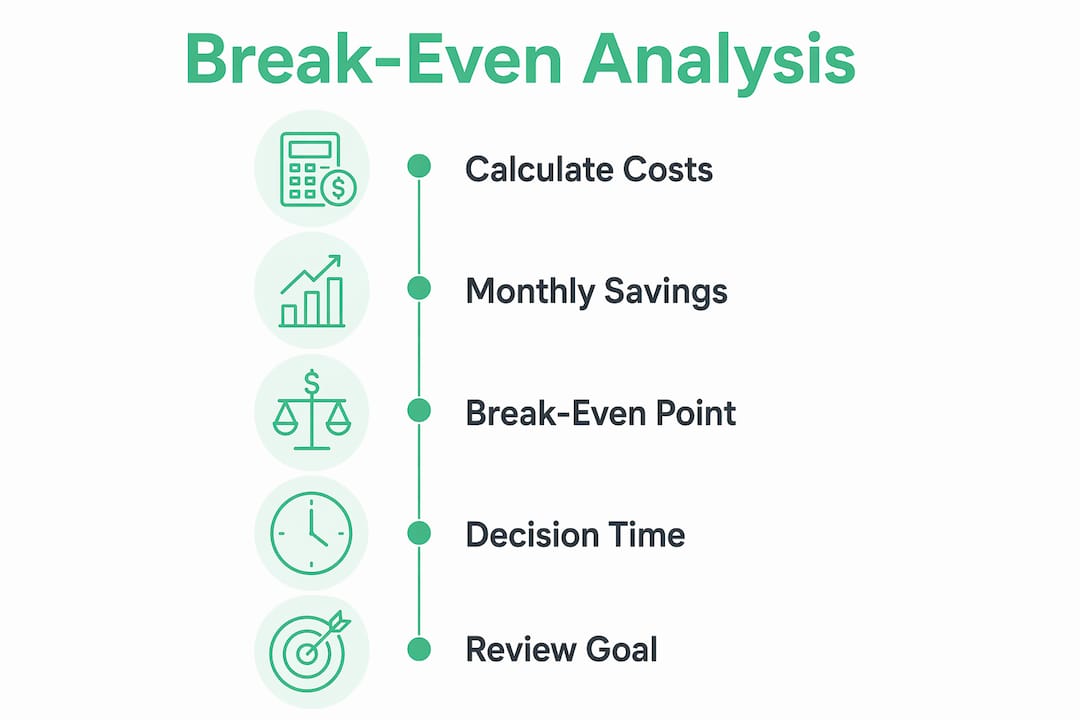
The most reliable method for evaluating a refinance is break-even analysis. The break-even point is the month at which your cumulative monthly savings equal the total closing costs you paid upfront. If you plan to sell or move before that point, refinancing costs you money rather than saving it.
Closing costs typically range from 2% to 6% of the new loan amount. They include origination fees, title charges, prepaid interest, and escrow funding. Many homeowners underestimate these costs by focusing only on the origination fee. The full picture changes the calculation significantly.
Here is a practical comparison of two common refinancing scenarios:
| Scenario | Loan balance | Rate reduction | Monthly saving | Closing costs | Break-even |
|---|---|---|---|---|---|
| Moderate rate drop | $400,000 | 0.5% | $130 | $6,000 | 46 months |
| Larger rate drop | $400,000 | 1.0% | $260 | $8,000 | 31 months |
| Short-term owner | $400,000 | 0.5% | $130 | $6,000 | Not reached |
The third scenario illustrates the core risk. If you plan to sell within three years, a 46-month break-even means you exit before recovering your costs. Matching your loan term to your ownership plans is as important as chasing the lowest rate.
Pro Tip: Use the Zenrgfinance loan comparison calculator to model your specific break-even point before you commit to any refinancing offer.
Total interest cost is the figure most homeowners overlook. A lower monthly repayment achieved by extending your loan term can cost you tens of thousands more in interest over the life of the loan. Always compare total interest paid, not just the monthly figure.
What refinancing strategies best fit common financial goals?
Different goals call for different refinancing approaches. Matching the strategy to the goal is what separates a beneficial refinance from a costly one.
Rate-and-term refinancing is the most straightforward approach. You keep the same loan balance but negotiate a lower interest rate, a shorter term, or both. Refinancing to a lower rate can save $200–$400 per month for homeowners whose original loan was written at rates above 7.5%. That saving is meaningful if you stay in the property long enough to pass the break-even point.
Shortening the loan term suits homeowners whose primary goal is wealth building. Switching from a 30-year to a 15-year mortgage builds equity faster and reduces total interest paid by a significant margin, despite the higher monthly commitment. If your income has grown since you took out the original loan, this strategy accelerates your path to owning the property outright.
Cash-out refinancing carries the most risk and requires the clearest goal. Using equity for a planned home renovation that adds property value is a sound use. Using it to consolidate debt without changing the spending habits that created that debt is not. Equity reduced through cash-out refinancing lowers your net worth if the funds are not deployed productively.
Switching from variable to fixed rate is a stability strategy. It suits homeowners who are budgeting tightly or who anticipate rate rises and want certainty in their repayments. The trade-off is that you may miss out if rates fall further.
When shopping for refinancing offers, apply to multiple lenders within a 14 to 45-day window. Credit scoring models treat multiple mortgage enquiries in that window as a single enquiry, so your credit score takes minimal impact while you compare genuine offers from several lenders.
How do unclear goals lead to costly refinancing mistakes?
Refinancing without a clear goal is one of the most common and expensive mistakes Australian homeowners make. The most frequent error is focusing only on the monthly repayment reduction without analysing total interest cost. Resetting a 25-year loan back to 30 years to lower monthly repayments feels like a win in the short term. Over the life of the loan, you pay significantly more interest.
Focusing solely on monthly payments without total interest cost consideration commonly leads to long-term losses. This is not a fringe outcome. It is the predictable result of treating refinancing as a transaction rather than a financial strategy.
"Refinancing is not just a transaction. It is a purposeful financial strategy that must be tested against specific goals for cash flow and wealth impact."
Cash-out refinancing without a plan is another common trap. Equity used without correcting the root cause of high-interest consumer debt converts a secured asset into unsecured-type risk. Your net worth declines, and the underlying problem remains.
The homeowners who get the best outcomes treat refinancing as active debt portfolio management. They review their loans regularly, align decisions to life changes such as a new job, growing family, or approaching retirement, and test every option against their stated goals. A refinance triggered by a life event with a clear target outcome is almost always more beneficial than one triggered purely by a rate advertisement.
The fix is straightforward. Before you contact a lender, write down your goal in one sentence. State the outcome, the timeframe, and how you will measure success. That single step filters out most of the refinancing options that would cost you money.
Key takeaways
Clear financial goals are the single most important factor in determining whether refinancing improves or harms your long-term financial position.
| Point | Details |
|---|---|
| Goals drive strategy | Your financial goal determines which refinancing type, rate, and term actually suits your situation. |
| Break-even analysis is non-negotiable | Calculate closing costs against monthly savings to confirm you will stay long enough to benefit. |
| Total interest beats monthly payment | Always compare total interest paid over the loan life, not just the monthly repayment figure. |
| Cash-out requires a clear plan | Using equity without a productive purpose reduces net worth and increases financial risk. |
| Regular reviews improve outcomes | Treating your mortgage as active debt management and reviewing it at life-stage events produces the best results. |
Why I think most homeowners refinance for the wrong reason
From my experience working with Australian homeowners, the most common trigger for refinancing is a rate advertisement, not a financial goal. Someone sees a headline rate, calls a broker, and starts the process without ever asking what they actually want to achieve. That backwards approach is why so many refinances feel disappointing six months later.
The homeowners I have seen get genuinely great outcomes always start with a timeline. They know whether they are staying in the property for three years or fifteen. They know whether their priority is cash flow now or equity later. That clarity makes every subsequent decision faster and better.
I also think the SMART goal framework gets underused in mortgage conversations. People apply it to career planning and savings targets but rarely to their biggest financial liability. Writing down "I want to reduce my total interest cost by $40,000 over the next ten years by refinancing to a 20-year term at a rate below 5.5%" is a completely different starting point than "I want a lower rate." The specificity changes what you shop for and what you accept.
My honest advice: review your mortgage every two years or after any significant life change. Rates shift, your income changes, your goals evolve. A loan that was perfect three years ago may now be costing you money. Proactive reviews, aligned to where you are in life, are what separate homeowners who build wealth through property from those who simply carry debt. You can read more about taking control of your finances to build that habit.
— Allen
How Zenrgfinance can align your refinancing with your goals
Refinancing is most effective when it is built around your specific financial targets, not a generic rate offer.

Zenrgfinance works with Australian homeowners to build refinancing strategies that match their actual goals, whether that is reducing repayments, shortening their loan term, or accessing equity for the right reasons. The Zenrgfinance Mortgage Relationship Manager service provides a personalised review of your current loan, your financial goals, and the refinancing options that genuinely fit your situation. You get clear analysis, honest advice, and a plan you can act on with confidence. If you are considering home refinancing and want to make sure it actually works for you, a conversation with the Zenrgfinance team is the right place to start.
FAQ
What is the role of financial goals in refinancing?
Financial goals define what you want refinancing to achieve, whether that is lower repayments, faster debt elimination, or equity access. Without a clear goal, you cannot evaluate whether a refinancing offer actually benefits you.
How do I calculate the break-even point for refinancing?
Divide your total closing costs by your monthly saving after refinancing. The result is the number of months you need to stay in the property before the refinance pays for itself.
What are the risks of cash-out refinancing?
Cash-out refinancing reduces your home equity and increases your loan balance. If the funds are not used productively, your net worth declines and you carry more debt without a corresponding financial gain.
How often should I review my mortgage against my financial goals?
Review your mortgage every two years or after any major life change such as a new job, a growing family, or approaching retirement. Regular reviews ensure your loan structure stays aligned with your current goals and market conditions.
Does applying to multiple lenders hurt my credit score?
Applying to multiple mortgage lenders within a 14 to 45-day window counts as a single credit enquiry for scoring purposes. This lets you compare genuine offers without meaningful damage to your credit score.