
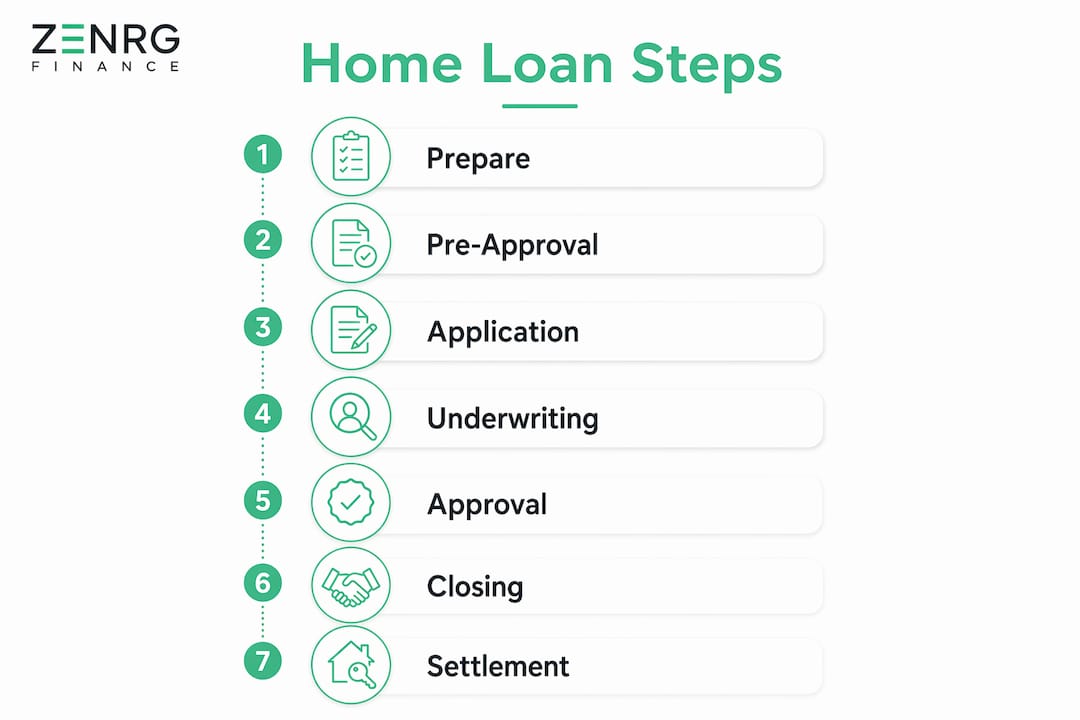
A home loan application is a structured process involving credit assessment, pre-approval, formal submission, underwriting, and settlement. Most buyers underestimate how much preparation shapes the outcome before they ever speak to a lender. This guide walks you through each stage of the home loan application step by step, so you know exactly what to do, what to gather, and what to expect. Zenrgfinance works with first-time buyers every day to make this process feel manageable rather than stressful. By the end, you will have a clear mortgage application checklist and the confidence to move forward.
What financial documents and credit checks do you need before applying?
Preparation is the stage that most first-time buyers rush, and it is the one that causes the most delays. Lenders assess your income, savings, debts, and credit history before they offer you a cent. Getting these in order before you apply puts you in a much stronger position.
Key documents to gather
Start by collecting the following:
- Proof of income: Recent payslips (last two to three months), tax returns for the past two years, and a letter of employment confirming your role and salary.
- Bank statements: Three to six months of statements across all accounts, including savings and transaction accounts.
- Photo identification: Passport or driver's licence.
- Proof of assets: Statements for any shares, superannuation, or other property you own.
- Proof of liabilities: Credit card statements, personal loan agreements, and HECS-HELP balances.
Your mortgage application checklist should include all of the above before you book your first lender appointment.
Credit score and serviceability requirements

Minimum credit scores commonly start at 620, with down payments ranging from 3% to 20%. Deposits below 20% typically trigger Lenders Mortgage Insurance (LMI), which adds cost to your loan. Pull your credit report from a free provider before applying so you can correct any errors.
Australian lenders also apply a 3% serviceability buffer on top of the current interest rate to test whether you can still afford repayments if rates rise. This buffer is not optional. It is a regulatory requirement designed to protect you from overcommitting. Understanding serviceability calculations before you apply helps you set a realistic borrowing target.
Pro Tip: Reviewing your credit and spending patterns before applying is more effective than relying solely on a lender's maximum borrowing capacity. The Consumer Financial Protection Bureau confirms that thorough preparation before applying directly improves long-term housing affordability.
| Prerequisite | Typical requirement |
|---|---|
| Minimum credit score | 620 for conventional loans |
| Deposit amount | 3%–20% of property value |
| Serviceability buffer | 3% above current interest rate |
| Income evidence | 2 years of tax returns plus recent payslips |
| Savings history | 3–6 months of bank statements |
Why and how should you get pre-approval before searching for a property?
Pre-approval, formally called conditional approval, is a lender's written confirmation that they are willing to lend you up to a specified amount, subject to conditions. It is not a guarantee of finance, but it is the clearest signal you can give a vendor that you are a serious buyer.
Benefits of getting pre-approved
- You know your exact budget before you start inspecting properties.
- Real estate agents and vendors take your offers more seriously.
- You avoid the heartbreak of falling in love with a home you cannot actually afford.
- You can move quickly when you find the right property, which matters in competitive markets.
- You identify any credit or document issues early, with time to fix them.
Pre-approval letters typically remain valid for 60–90 days. After that, you will need to reapply, which means another credit check.
How to apply for pre-approval
Submit the same documents listed in the preparation stage to your chosen lender or mortgage broker. The lender will assess your income, expenses, credit history, and the serviceability buffer. They will then issue a conditional approval letter stating the maximum loan amount they are prepared to offer.
Pre-approval explained in detail shows that the conditions attached to pre-approval usually include a satisfactory property valuation and no material change to your financial situation. A job change, a new car loan, or a large credit card purchase between pre-approval and settlement can all affect your final approval.
Pro Tip: Avoid applying for any new credit during your pre-approval period. Each credit application creates a hard enquiry on your file, which can lower your score and raise lender concerns.
How to formally submit your home loan application and what to expect during underwriting?
Once your offer on a property is accepted, the formal loan application begins. Speed matters here. Submitting your full application within 24–48 hours of offer acceptance helps you secure your interest rate lock and meet the contractual timelines in your contract of sale. Delays at this stage can cost you your rate and, in some cases, the property itself.
Steps to submit your formal application
- Confirm your chosen lender and loan product with your mortgage broker.
- Complete the formal loan application form, either online or in person.
- Provide all updated supporting documents, including a signed contract of sale.
- Authorise the lender to order a property valuation.
- Review and sign the lender's privacy consent and credit authority forms.
- Confirm your rate lock request if interest rates are volatile.
What happens during underwriting?
Underwriting is the lender's internal review of your application. An underwriter verifies your income, employment, assets, and the property valuation. The home loan process generally takes 30–60 days from application to closing, with underwriting alone taking 1–3 weeks on average. Some lenders approve in as few as 15 days under ideal conditions.
Underwriters frequently request additional documents to clarify unusual deposits or large transfers in your bank statements. Responding to these requests on the same day speeds up approval. Delays in responding are the single most common reason settlements are pushed back.
Pro Tip: Keep a dedicated folder, digital or physical, with every financial document from the past two years. When the underwriter asks for something specific, you can respond within hours rather than days.
Common documents requested during underwriting include:
- Explanation letters for large or irregular bank deposits
- Updated payslips if your previous ones are more than 30 days old
- Rental ledgers if you own an investment property
- Evidence of genuine savings separate from gifted funds
- Council rates notices or body corporate statements for the property being purchased
What happens during loan approval, closing disclosure review, and settlement?
Unconditional approval means the lender has assessed everything and is satisfied. They will issue a formal loan offer document, which you must read carefully before signing. This document sets out your interest rate, loan term, repayment schedule, and all fees.
Understanding the loan estimate and closing disclosure
Lenders must provide a Loan Estimate within three business days of receiving your application, and a Closing Disclosure at least three business days before settlement. These two documents protect you by locking in the key terms of your loan before you sign anything final.
Comparing the Closing Disclosure to the Loan Estimate is one of the most important steps buyers skip. Any differences in interest rate, fees, or loan amount require a written explanation from your lender before you proceed. Do not sign until you understand every line.
Pro Tip: Bring both documents to your solicitor or conveyancer before settlement day. They can flag discrepancies you might miss and ask the lender to clarify in writing.
Key documents and timelines during closing
| Document | When you receive it | What to check |
|---|---|---|
| Loan Estimate | Within 3 business days of application | Rate, fees, loan amount |
| Conditional approval letter | During underwriting | Conditions attached |
| Unconditional approval | After all conditions met | Loan offer terms |
| Closing Disclosure | 3 business days before settlement | Compare to Loan Estimate |
| Settlement statement | On settlement day | Final figures and costs |
Preparing for settlement day
Settlement day is when ownership of the property transfers to you and the loan funds are released to the vendor. Your solicitor or conveyancer handles the legal transfer. You need to have your deposit and any remaining funds ready in your nominated account. Conduct a final inspection of the property in the 24 hours before settlement to confirm its condition matches the contract.
For buyers interested in how the broader property market affects timing, the property market update from Zenrgfinance provides useful context on current conditions.
International buyers or those comparing lending criteria across markets may also find value in reviewing home loan steps from a global lending perspective, which highlights how Australian lender requirements compare to other markets.
Key takeaways
A successful home loan application depends on thorough preparation, prompt document responses, and careful review of every loan document before signing.
| Point | Details |
|---|---|
| Prepare documents early | Gather payslips, tax returns, bank statements, and ID before approaching any lender. |
| Know your credit score | A minimum score of 620 is the common threshold; check your report before applying. |
| Get pre-approval first | Conditional approval valid for 60–90 days gives you a firm budget and buyer credibility. |
| Respond to underwriting fast | Same-day responses to document requests prevent settlement delays. |
| Compare loan documents carefully | Always check the Closing Disclosure against the Loan Estimate before signing. |
What I have learned from watching buyers get this wrong
After working through hundreds of home loan applications, the pattern is clear. Buyers who struggle are almost never undone by the property market or interest rates. They are undone by their own preparation, or the lack of it.
The most common mistake I see is treating the pre-approval stage as a formality. Buyers get conditional approval, then open a new credit card or buy a car on finance before settlement. That single decision has derailed more purchases than I can count. A pre-approval letter is an estimate, not a guarantee, and lenders will re-assess your position right up until settlement.
The second mistake is underestimating how much the underwriting stage tests your patience. Underwriters are not being difficult when they ask for explanation letters or extra bank statements. They are doing their job. The buyers who sail through underwriting are the ones who respond within hours, not days, and who have kept their finances clean and consistent for at least six months before applying.
My honest advice is to treat the six months before you apply as a financial audit period. Pay down credit card balances, avoid new debts, and build a savings pattern your statements can prove. The Zenrgfinance insights hub has practical guidance on exactly this kind of preparation. When you walk into a lender's office with clean financials and a full document pack, you are not hoping for approval. You are expecting it.
— Allen
Ready to take the next step with Zenrgfinance?
The home loan process has a lot of moving parts, and getting the details right from the start saves you time, money, and stress. Zenrgfinance works with first-time buyers across Australia to build a clear loan strategy tailored to your financial situation.

Our mortgage relationship managers guide you from document preparation through to settlement day, with personalised advice at every stage. Whether you are still building your deposit or ready to submit a formal application, Zenrgfinance can help you move forward with confidence. Reach out today to book your first conversation.
FAQ
What credit score do I need for a home loan in Australia?
Most lenders require a minimum credit score of 620 for conventional loans. A higher score improves your chances of approval and access to better interest rates.
How long does the home loan application process take?
The process generally takes 30–60 days from formal application to settlement. Underwriting alone typically takes 1–3 weeks, depending on how quickly you respond to document requests.
What is a serviceability buffer and why does it matter?
A serviceability buffer is an additional 3% added to the current interest rate when lenders assess your borrowing capacity. It tests whether you can still afford repayments if rates rise, and it is a regulatory requirement in Australia.
Can my pre-approval be cancelled before settlement?
Yes. A pre-approval letter is conditional and can be affected by changes to your financial situation, such as a new job, new debts, or a drop in income between approval and settlement.
What is the difference between a Loan Estimate and a Closing Disclosure?
A Loan Estimate is issued within three business days of your application and outlines the expected loan terms. A Closing Disclosure is provided three business days before settlement and confirms the final figures. You should compare both documents carefully before signing.