
A mortgage discharge fee is an administrative charge your lender applies when you close out a home loan, whether you're selling, refinancing, or paying it off entirely. In Australia, lenders typically charge between $150 and $500, with Finder reporting an average of $307. That's separate from state government registration fees, which apply on top.
TL;DR:
- Discharge fees in Australia generally range from $150 to $500, with an average close to $307, but additional state registration costs can significantly increase expenses.
- The discharge process can take several weeks and involves submitting a formal authority, receiving a payout quote, and registering the discharge with land titles.
- Break costs for fixed-rate loans can greatly exceed discharge fees, sometimes reaching thousands of dollars, and should be carefully compared before refinancing.
- Lenders may waive discharge fees for internal refinances or if the mortgage is transferred to a new property, especially when timed closely with settlement.
- Homeowners should obtain current payout figures, confirm fee estimates, and coordinate with solicitors early to prevent delays and unexpected costs.
Table of Contents
- What does "discharge of mortgage" mean in Australia?
- When do you need to discharge a mortgage?
- How much do discharge fees actually cost?
- How long does the discharge process take?
- Discharge fees versus fixed-rate break costs
- Ways to reduce or avoid discharge fees
- Pre-settlement checklist: what to confirm before you sign anything
- A broker's view: what actually matters when you're exiting a loan
- Let Zenrgfinance calculate your true exit costs before you commit
- Where to check the exact figures
- Sources
What does "discharge of mortgage" mean in Australia?
Paying off your loan balance and discharging the mortgage are two different things. Repaying the debt clears what you owe the bank. Discharging the mortgage is the legal step that removes the lender's interest from your property title, and it doesn't happen automatically the moment your balance hits zero.
Your lender (or their representative) lodges what's called a "discharge of mortgage" with your state's land registry, often electronically through PEXA, the platform most states now use for property settlements. Until that dealing is registered, the mortgage still shows on title, which can hold up a sale or a new loan from settling. Because each state and territory runs its own land titles system, both the paperwork and the fees differ depending on where the property sits, which is why a generic national figure only gets you so far.
When do you need to discharge a mortgage?
Three scenarios trigger the need for a formal discharge, and recognising them early gives you time to sort the paperwork before it becomes a bottleneck.
- Selling your property: the existing mortgage has to be removed from title before settlement can proceed, since a buyer can't take on a property with someone else's lender still registered against it.
- Refinancing to a new lender: switching banks or products means your current lender needs to release its interest so the new one can register theirs.
- Paying out the loan in full: this includes split loans, where each portion may need its own discharge, and it's worth noting that some sales allow "substitution of security" instead, where the mortgage moves to a new property rather than being discharged outright.
How much do discharge fees actually cost?
Lender discharge fees in Australia typically sit in the $150 to $500 range, and Finder's analysis puts the average closer to $307. Macquarie, for example, explains that its discharge fee covers preparing the paperwork and attending settlement, and folds the cost into your final payout statement rather than billing it separately.
State registration fees come on top of whatever your lender charges, and they vary by jurisdiction:
| State | Fee type | Amount |
|---|---|---|
| Western Australia | Discharge registration (per mortgage) | $216.60 |
| Victoria | Discharge application and lodgement | Published rates vary by dealing type |
A few things worth flagging before settlement:
- Government fee schedules change periodically, so check the current figure with your state's land registry rather than relying on a figure from last year.
- If your title carries more than one mortgage or a caveat, each one can attract its own separate registration fee.
- Some lenders will waive the discharge fee outright, particularly if you're refinancing internally or as part of a retention offer.
How long does the discharge process take?
Most discharges take several weeks from start to finish, typically a few weeks, though delays can occur if paperwork is rushed or payout figures expire. Here's the typical sequence:
- You (or your solicitor/broker) submit a discharge authority to your current lender.
- The lender prepares your payout statement, confirming the exact amount owing and any fees.
- Once funds are received, the lender lodges the discharge with the relevant Land Titles Office.
- The registry processes and registers the discharge, formally removing the lender from title.
Pro Tip: Submit your discharge authority as early as possible and confirm the expiry date on your payout figure. Delays here are one of the most common causes of settlement hold-ups, and a stale payout quote can mean starting the whole process again.
Discharge fees versus fixed-rate break costs
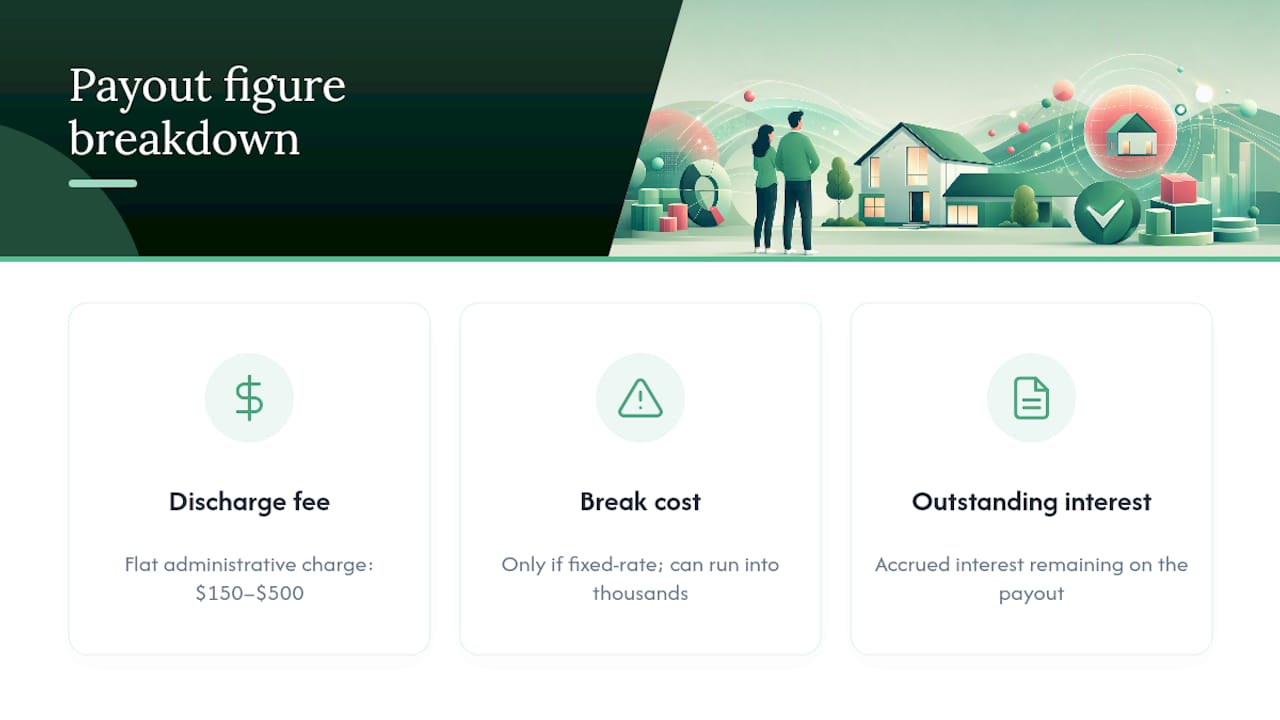
Don't confuse a discharge fee with a break cost. A discharge fee is a flat administrative charge for closing the loan account. A break cost applies only if you're on a fixed rate and exit before the fixed term ends, and it's calculated on how interest rates have moved since you locked in. Break costs can run into the thousands, dwarfing the $150 to $500 you'd pay for the discharge itself.

When you request a payout figure, ask your lender to itemise it. You want the discharge fee, any break cost, and outstanding interest listed as separate lines, not bundled into one number. Our worked examples on refinancing break costs show how wildly these figures can swing depending on how much of your fixed term is left. This is exactly the kind of detail a broker checks before recommending you refinance at all. If the break cost outweighs your projected savings, staying put for now might be the smarter move.
Ways to reduce or avoid discharge fees
You've got more room to negotiate here than most homeowners realise.
- Ask your lender for a fee waiver, especially if you're refinancing internally or moving to a product with the same bank.
- Look for lenders that advertise no discharge fee upfront if you're choosing a new loan and want to avoid this cost down the track.
- Time your discharge to align with your settlement date closely, so you're not paying extra daily interest while waiting on paperwork.
- Combine your discharge with other settlement tasks where possible to limit how many separate transactions attract fees.
If avoiding fees altogether is the priority, our guide to what a no-cost refinance actually involves is worth a look before you commit to a new lender.
Pre-settlement checklist: what to confirm before you sign anything
A few confirmations now save a lot of stress later.
- Get an up-to-date payout figure and check its expiry date, since these quotes are only valid for a set window.
- Request written discharge authority confirmation from your lender.
- Ask for a clear fee estimate covering both the discharge fee and any break costs.
- Confirm who's responsible for paying state registration fees at settlement.
- Make sure your solicitor or settlement agent has formal lodgement instructions ready to go.
Our timing best practices guide covers this in more depth if you're juggling a sale and a refinance at the same time.
A broker's view: what actually matters when you're exiting a loan
Most homeowners fixate on the discharge fee because it's the number with a name attached. In practice, it's rarely the number that hurts. Break costs and stale payout figures cause far more financial pain and far more settlement delays than a $300 admin charge ever will.
At Zenrgfinance, we look at discharge fees, break costs, and state registration costs together as one total exit figure, because that's the number that actually determines whether refinancing makes sense. Get in touch early, before you've locked in a settlement date, and there's usually more room to negotiate a waiver or restructure the timing than homeowners expect.
— Allen
Let Zenrgfinance calculate your true exit costs before you commit
Working out whether refinancing actually saves you money means adding up the discharge fee, the state registration cost, and any break costs, then weighing that total against what you'd save on a new rate. That's not a back-of-envelope job, and getting it wrong can mean paying thousands more than you needed to.

Zenrgfinance calculates your full exit cost picture and compares it against realistic refinance savings, so you're deciding with real numbers rather than guesswork. If you're weighing up a refinance, our Mortgage Relationship Manager service is the place to start, ideally before you request a payout figure from your current lender. Reach out now and we'll walk through your numbers together, well before settlement pressure forces a rushed decision.
Where to check the exact figures
- Landgate land transaction fees (Western Australia)
- Finder's guide to home loan discharge fees
- Ratebuster on discharge fees and break costs
- Loan portability explained for home buyers
This article is general information, not a substitute for advice from a qualified financial advisor. Consult a qualified financial professional about your own circumstances before acting on anything here.
Sources
- Land transaction fees | Landgate
- How home loan discharge fees work in Australia | Finder
- Mortgage Discharge Fees and How Much Will They Cost You | Ratebuster