
Advertised SMSF loan rates in Australia currently sit roughly from the mid‑6% mark to the low‑8% mark p.a., with comparison rates running a little higher once fees are factored in. That's generally above standard home loan pricing, because SMSF lending carries extra compliance and security requirements for lenders. The immediate move for any trustee shopping around is simple: stop comparing headline rates alone, check the comparison rate and full fee schedule side by side, or get a specialist broker to do that legwork for you.
TL;DR:
- Most SMSF loan interest rates cluster around 6.7% to 8%, but the actual cost depends heavily on fees, LVR, and product features.
- The majority of competitive SMSF lending now comes from non-bank lenders, which often have stricter eligibility and less brand recognition.
- Borrowers should compare both advertised and comparison rates, including fees and features like redraw or interest-only options, before choosing a lender.
- Higher LVR requirements mean trustees need to contribute more equity, often between 20% and 40%, to secure better rates.
- Proper documentation and structuring are critical since poor trust deed wording or incomplete paperwork can cause delays or legal issues that outweigh minor rate differences.
Table of Contents
- Current SMSF loan interest rates: the market snapshot
- What actually moves the rate on an SMSF loan?
- What is the ATO's LRBA interest-rate table and why does it matter?
- How to compare SMSF loan offers without getting caught out
- What deposit, fees and other costs should trustees budget for?
- Applying for an SMSF loan: documents and timing
- When SMSF borrowing makes sense, and where trustees trip up
- Why the safe-harbour rate confuses more trustees than it helps
- Get tailored SMSF lending support from ZENRG Finance
- Sources
- FAQ
Current SMSF loan interest rates: the market snapshot
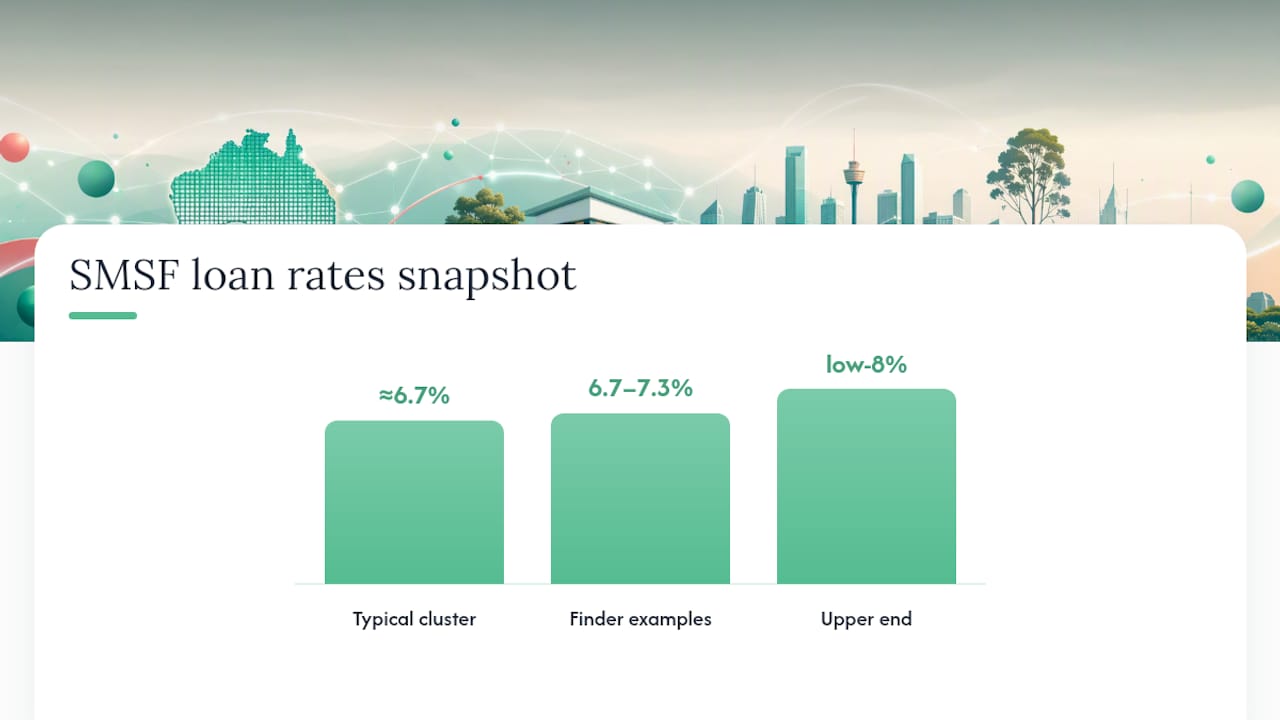
If you've started pricing up an SMSF loan, you've probably noticed the numbers move depending on who you ask and when you ask. As of mid‑2026, comparison tables from major aggregators show advertised SMSF loan rates typically clustering in the mid‑6% to low‑7% range, with some products stretching into the high‑7s depending on the lender, loan purpose, and how much equity your fund is putting in. Finder's SMSF home loan comparisons list several products advertising rates around 6.7% to 7.3%, though refinance-only offers occasionally headline lower, with tighter eligibility attached.
Here's the thing most trustees don't expect until they start calling around: the big four banks have largely exited SMSF lending altogether. Finder and InfoChoice both note that non-bank lenders now supply most of the competitive SMSF products on the market, which changes how you shop. You're not comparing five familiar bank brands. You're comparing a handful of specialist lenders whose products don't always show up on the comparison sites you'd normally check for a standard home loan.
A few points worth locking in before you go further:
- Advertised rates and comparison rates can differ by half a percentage point or more once fees are included.
- Non-bank lenders dominate the SMSF LRBA space, so expect less brand recognition and more variation in product structure.
- Refinance-only products sometimes carry lower headline rates but stricter eligibility rules.
Rates snapshot, correct as of mid‑2026: advertised SMSF loan rates commonly range from around 6.7% to the low‑8% mark p.a., according to Finder's ongoing SMSF loan comparisons. These figures move regularly, so treat any single number as a starting point for negotiation, not a locked-in quote.
What actually moves the rate on an SMSF loan?
Two SMSF trustees can apply for what looks like the same loan and land on noticeably different rates. The gap usually comes down to a handful of variables lenders weigh differently.
Loan-to-value ratio (LVR) is the biggest lever. SMSF lenders typically want more equity in the deal than a standard home loan would require, and pushing your LVR down often pulls your rate down with it. Security type matters just as much: a residential investment property in a capital city is priced differently to commercial or business real property, which some lenders treat as higher risk and price accordingly.
Beyond that, expect these factors to shape your offer:
- Loan purpose and repayment type (interest-only tends to price slightly higher than principal and interest).
- Loan term, since longer terms can carry a small premium.
- Trustee and fund structure, including whether you're using a corporate trustee.
- Documentation quality and how much SMSF lending experience the lender has.
- The fund's credit profile and the lender's current appetite for LRBA lending.
Pro Tip: Get your trust deed and LRBA documentation reviewed before you apply, not after a lender flags an issue. A clean paper trail from day one often shaves weeks off approval and avoids a rate being pulled while you fix paperwork.
Canstar's SMSF lending guide makes a useful point here: the mechanics of an SMSF loan (fixed or variable, typical 30-year terms, interest-only windows) look similar to a normal mortgage. The pricing and the deposit expectations are where the real differences show up.
What is the ATO's LRBA interest-rate table and why does it matter?
The Australian Taxation Office publishes benchmark interest rates for limited recourse borrowing arrangements (LRBAs) every financial year, and they're the reference point regulators use to test whether a related-party loan looks commercially reasonable. For 2025–26, the ATO's published benchmarks set the safe-harbour rate at 8.95% p.a. for real property and 10.95% p.a. for listed shares or units.
| LRBA asset type | 2025–26 ATO safe-harbour rate |
|---|---|
| Real property | 8.95% p.a. |
| Listed shares or units | 10.95% p.a. |
"Safe harbour" means a related-party loan priced at or above these rates is treated as arm's length for compliance purposes, without the trustee needing to argue the case separately. It doesn't set what a bank or non-bank lender will charge you. Commercial SMSF loans from third-party lenders sit under this benchmark in many cases, and that's fine. The table exists specifically for loans between a fund and a related party, such as a member lending to their own SMSF.
The trap, according to the ATO's own guidance, is treating the safe-harbour figure as a pricing shortcut without documenting why it applies to your situation. If you're using a related-party loan, keep records showing how the rate, term, and security compare to what a genuine third-party lender would offer. That documentation is what protects the fund if the ATO asks questions later.
How to compare SMSF loan offers without getting caught out
Comparing SMSF loans properly takes more than lining up interest rates in a spreadsheet. Work through this sequence before you commit to anything:
- Convert both the advertised rate and the comparison rate into a monthly repayment figure using the actual loan amount you need.
- List every fee: application, ongoing/annual, valuation, and legal, then add them to the true cost of the loan over your expected term.
- Check the minimum LVR and work out how much deposit your fund actually needs to stump up.
- Confirm what features are included, redraw, offset, interest-only periods, and whether the loan is portable if you refinance later.
- Ask directly about SMSF compliance support: does the lender understand LRBA structuring, or are you the one educating them?
| What to check | Why it matters |
|---|---|
| Comparison rate vs advertised rate | Fees can add half a percentage point or more to the real cost |
| LVR and deposit requirement | Lower equity contribution can mean a higher rate |
| Ongoing fees | Small annual fees compound significantly over a 20 to 30-year term |
| Turnaround time | Slow lenders can jeopardise time-sensitive property purchases |
| SMSF-specific documentation support | Reduces legal costs and delays from incorrect trust deed wording |
Watch for red flags: vague answers about ongoing fees, no clear process for LRBA documentation, or turnaround times measured in months rather than weeks. AMP's SMSF loan product pages illustrate the advertised-versus-comparison-rate gap clearly, and it's worth pulling up a few lender pages side by side to see how consistently that gap shows up. Running the numbers through a loan comparison calculator makes the fee-adjusted cost far easier to see than eyeballing a rate column.
What deposit, fees and other costs should trustees budget for?
Most SMSF lenders want more skin in the game than a standard home loan borrower would need to provide. Finder's lender comparisons show LVR minimums varying widely across the market, which is part of why shopping around actually pays off here.
Beyond the deposit, budget for:
- Application and settlement fees charged by the lender.
- Ongoing administration or annual fees that apply for the life of the loan.
- Legal fees for setting up or reviewing the LRBA and bare trust structure.
- Property valuation costs, which some lenders pass straight through to you.
Statistic to note: lenders commonly ask for a minimum equity contribution in the 20% to 40% range for SMSF loans, according to Finder's SMSF home loan comparisons, well above what many first home buyers put down on a standard mortgage.
Then there are the costs that sit outside the loan itself: conveyancing, stamp duty on the property, and accountant or adviser fees for confirming the structure meets compliance rules. Skipping proper advice here to save a few hundred dollars is one of the more expensive mistakes trustees make, because a compliance error discovered after settlement is far costlier to fix than a review beforehand.
Applying for an SMSF loan: documents and timing
Getting from enquiry to settlement on an SMSF loan usually takes longer than a standard home loan, largely because of the extra documentation involved. Here's the general sequence:
- Gather your paperwork. Lenders typically want the fund's trust deed, LRBA and bare trust documents, trustee minutes authorising the borrowing, recent SMSF financials, and identification for each trustee.
- Get pre-approval. This gives you a realistic borrowing figure before you start looking at property, and most lenders can turn this around within one to two weeks with complete documentation.
- Order a valuation and complete due diligence. Expect another one to two weeks here, sometimes longer for regional or commercial property.
- Move through formal loan approval. Lenders check the trust deed wording carefully at this stage, and a small drafting gap can trigger a costly legal amendment, according to ZENRG Finance's practical experience with SMSF structures.
- Settle. From application to settlement, a typical timeframe can range from a few weeks to a couple of months, depending on the completeness of your paperwork and other factors.
A broker who works with SMSF lending regularly can help navigate these steps more efficiently, mainly by understanding different lenders' requirements for trust deed wording.
When SMSF borrowing makes sense, and where trustees trip up
SMSF borrowing tends to suit funds with strong, stable contributions and a clear long-term property strategy, not funds trying to stretch into a purchase they can barely service. Where trustees go wrong most often: underestimating ongoing costs, using generic trust deed wording that a lender later rejects, and assuming the ATO's safe-harbour figures set the market rate rather than a compliance benchmark. ZENRG Finance's SMSF lending work with Francis Choo shows how much smoother the process runs when structuring and lender selection happen together from the start, rather than as an afterthought once a contract's already signed.
Why the safe-harbour rate confuses more trustees than it helps
Most articles on this topic treat the ATO's benchmark rate as if it's a target to beat, and that's where a lot of trustees go wrong. The 8.95% figure for real property exists to test related-party loans, not to tell you what a fair commercial rate looks like. Treating it as a price cap has led some trustees to reject perfectly reasonable third-party offers because they compared the wrong number to the wrong benchmark.
The bigger gap in conventional advice is the fixation on headline rate. Two products with the same advertised rate can differ by thousands of dollars once fees, LVR requirements, and documentation flexibility are factored in. I'd argue the fee schedule and the lender's SMSF experience matter more to your outcome than half a percentage point on the rate.
If there's one thing to prioritise first, it's documentation. A trust deed that a lender rejects, or a bare trust structure drafted loosely, costs more in delays and legal fixes than most rate differences ever will. Get the structure right before you go rate-hunting.
— Allen
Get tailored SMSF lending support from ZENRG Finance
Comparing advertised rates, comparison rates, LVR requirements, and lender-specific trust deed quirks isn't a spreadsheet job for most trustees, it's a broker job. Some brokers work specifically with SMSF trustees to compare lender offers, check fees and comparison rates, and help structure the LRBA correctly the first time to avoid legal issues later.

A SMSF lending strategy session walks through your fund's position, likely borrowing capacity, and which lenders are realistically going to say yes to your trust deed and security type. It's a practical conversation, not a sales pitch, and it typically saves weeks of back-and-forth compared to approaching lenders cold. If you want a broader look at how ZENRG structures SMSF loans before booking, the Self Managed Super Funds page covers the full service. To understand your fund's position, consider booking a strategy session to review your options before committing to a lender.
This article is general information, not a substitute for advice from a qualified financial advisor. Consult a qualified financial professional about your own circumstances before acting on anything here.
Sources
- Other super rates and thresholds | Australian Taxation Office
- SMSF home loans 2026: Compare rates & lenders | Finder
FAQ
What is the best interest rate for an SMSF loan?
Comparing the comparison rate and fees, not just the headline figure, is the only reliable way to find the best deal for your situation.
What is the 5% SMSF rule?
If you're unsure how it applies to your fund's structure, that's worth raising directly with your accountant or broker before borrowing.
What are typical interest rates for SMSF mortgages?
Advertised rates range for products, according to Finder's SMSF loan comparisons. Comparison rates usually run a little higher once fees are included.
What determines whether an SMSF loan rate looks compliant to the ATO?
The rate for real property in 2025–26 is the reference point for related-party LRBA loans specifically, not a general market rate. Third-party commercial loans are assessed on their own commercial terms, but documenting how your rate compares to market offers is still good practice.
How can a broker help with current SMSF loan interest rates?
A broker with SMSF experience can compare non-bank lender products that don't always appear on standard comparison sites, and flag trust deed or documentation issues before they cause delays. ZENRG Finance's SMSF lending strategy sessions are built around exactly that kind of upfront structuring and lender matching.