
Home loan settlement is the final legal stage of buying a property, where ownership transfers to your name, loan funds are released by your lender, and you receive the keys. Known formally as property settlement, this process is coordinated between your conveyancer, your lender, and the seller's representatives. The home loan settlement process explained here covers every stage from contract exchange to the moment you walk through your front door. Understanding each step means fewer surprises and a much smoother experience on the day.
What happens during the home loan settlement period?
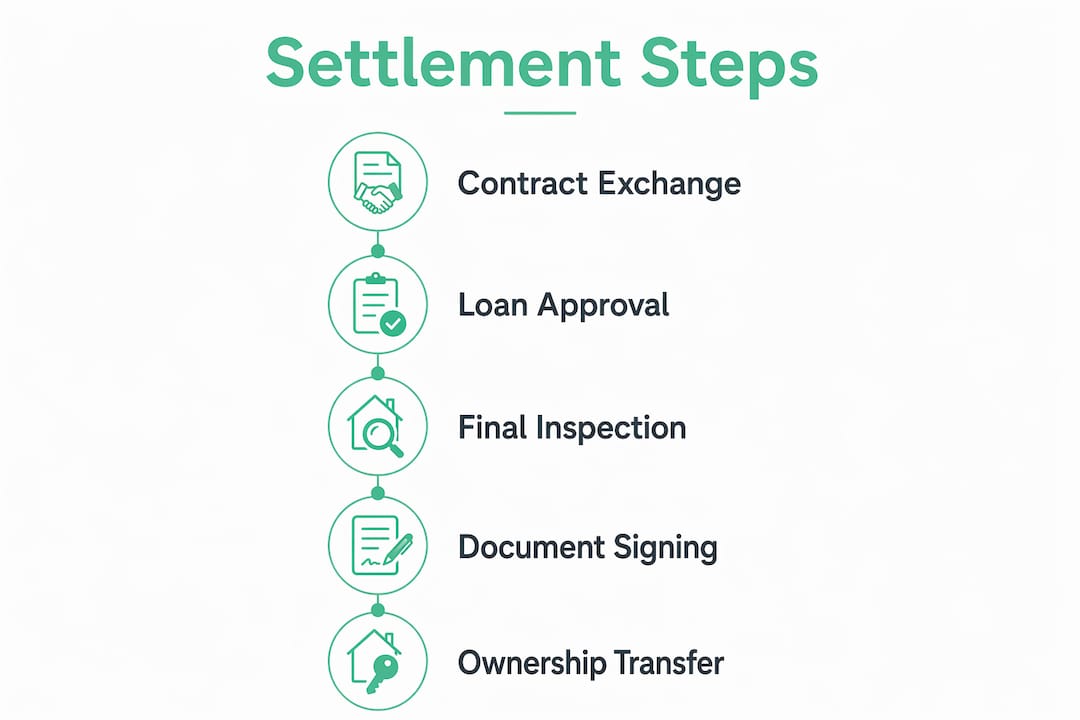
The settlement period is the window of time between signing contracts and the actual settlement day. This period typically runs 30 to 90 days, giving your lender time to finalise the loan and your conveyancer time to complete all legal checks.
During this period, several things happen at once. Your lender works through final loan approval, verifying your income, assets, and the property valuation. Your conveyancer conducts title searches to confirm there are no outstanding debts, caveats, or legal issues attached to the property.

You also have responsibilities during this window. Buyers conduct a final property inspection shortly before settlement day to confirm the property is in the agreed condition. You need to arrange home and building insurance before settlement, as your lender will require proof of cover before releasing funds.
Key activities during the settlement period include:
- Final loan approval: Your lender reviews all documents and issues formal approval.
- Title searches: Your conveyancer checks for any encumbrances on the property title.
- Home insurance: You arrange a policy and obtain proof of cover to send to your lender.
- Final inspection: You walk through the property to confirm its condition before handover.
- Document signing: You sign the mortgage documents and any transfer forms your conveyancer sends through.
- Funds preparation: You confirm the exact amount needed for settlement, including stamp duty and adjustments.
Pro Tip: Book your final property inspection at least two to three days before settlement day. If you spot damage or missing items, your conveyancer needs time to raise the issue with the seller before funds are released.
Delays during the settlement period are common and usually avoidable. Late insurance documentation, slow responses to lender requests, or missing paperwork are the most frequent causes. Staying on top of every request from your conveyancer and lender is the single most effective way to keep things on track.
Who is involved in home loan settlement and what do they do?
Settlement coordinates multiple parties: your conveyancer or solicitor, your lender, the seller's conveyancer, and the seller's lender. Each plays a distinct role, and the process only moves forward when everyone does their part.
- Your conveyancer or solicitor manages the legal side of the transfer. They conduct title searches, prepare transfer documents, calculate adjustments for rates and water charges, and coordinate the settlement date and time with all parties.
- Your lender provides the loan funds on settlement day. They verify your insurance, confirm the loan amount, and instruct their representative to release funds through the settlement platform.
- The seller's conveyancer prepares the transfer of land documents and arranges the discharge of the seller's mortgage with their lender.
- The seller's lender releases the mortgage over the property once their client's loan is repaid from the sale proceeds.
- You, the buyer sign all required documents, confirm your contribution funds are ready in the correct account, and provide proof of home insurance to your lender before settlement day.
- PEXA (Property Exchange Australia) is the electronic platform used in most Australian states to complete settlement. PEXA allows all parties to coordinate and transfer funds and titles digitally, without anyone needing to be in the same room.
Understanding who does what removes a lot of the anxiety around settlement. You do not need to manage the legal coordination yourself. Your conveyancer handles that. Your job is to respond quickly, sign what is sent to you, and have your funds ready.
What exactly happens on settlement day?
Settlement day is when ownership legally transfers and loan funds are released. The entire process typically takes 20 to 45 minutes and happens electronically via platforms like PEXA, not in a physical meeting room.
Here is how the day unfolds, compared to what many first-time buyers expect:
| What buyers expect | What actually happens |
|---|---|
| A formal meeting with all parties | An electronic process coordinated online via PEXA |
| Hours of paperwork on the day | Documents signed in the days before settlement |
| Personally handing over a cheque | Funds transferred electronically between accounts |
| Receiving keys from the seller directly | Keys released by the real estate agent once settlement confirms |
| Uncertainty about timing | Confirmation sent to all parties when settlement completes |
On the morning of settlement day, your conveyancer and lender log into PEXA and confirm all documents and funds are in order. Your lender releases the loan amount into the settlement workspace. You contribute any remaining funds, such as your deposit balance, stamp duty, and rate adjustments. Once all figures balance and every party confirms, the title transfers to your name and the funds are distributed to the seller and their lender.
Your real estate agent receives automatic notification that settlement has completed. They then release the keys to you. The whole sequence, from the first confirmation to keys in hand, usually wraps up within the same afternoon.
Pro Tip: Confirm your settlement time with your conveyancer the day before. If settlement is scheduled for the afternoon, avoid booking removalists for the morning. Settlement can occasionally run a few hours late, and you want your moving plans to have some flexibility.
How can first-time buyers avoid settlement delays?
Settlement delays are frustrating, but most are preventable. Late or missing home insurance documentation is one of the most common reasons a settlement freezes on the day. Lenders require an insurance binder or declarations page, and many ask for it at least one week before settlement.
Here are the most practical steps to keep your settlement on track:
- Arrange home insurance early. Get your policy in place as soon as contracts are exchanged. Send proof to your lender well before the deadline they specify.
- Review your closing disclosure documents. Buyers should review all fees and charges at least three days before settlement. This document details every cost, including stamp duty, legal fees, and the final cash amount required.
- Respond to requests immediately. When your lender or conveyancer asks for a document or signature, treat it as urgent. A one-day delay from you can push the settlement date back by a week.
- Confirm your contribution funds are in the right account. Your conveyancer will tell you exactly where to transfer your funds and by when. Do this at least two business days before settlement to allow for bank processing times.
- Avoid major financial changes. Do not change jobs, take on new debt, or make large purchases between loan approval and settlement. Lenders can and do re-check your financial position before releasing funds.
One thing worth knowing: the term "home loan settlement" can also refer to debt settlement, which is a completely different process with negative credit implications. When you are talking to your lender or conveyancer about property settlement, use the term "property settlement" to avoid any confusion.
The buyers who sail through settlement are the ones who treat every request as a priority and prepare their documents well in advance. The ones who struggle are usually waiting until the last minute on insurance or paperwork.
Key takeaways
Property settlement is a coordinated legal and financial process that requires preparation, prompt responses, and clear communication with your conveyancer and lender.
| Point | Details |
|---|---|
| Settlement timeline | The settlement period runs 30–90 days after contract exchange, giving all parties time to prepare. |
| Insurance is non-negotiable | Provide proof of home insurance at least one week before settlement to avoid delays. |
| PEXA handles the day | Settlement completes electronically via PEXA in 20–45 minutes, with no physical meeting required. |
| Review your documents early | Check all fees and final cash required at least three days before settlement day. |
| Your conveyancer leads the legal work | Your job is to sign documents promptly, prepare funds, and respond quickly to all requests. |
What I have learned from watching buyers go through settlement
After working with many first-time buyers through the settlement process, the pattern I see most often is this: buyers who feel anxious about settlement are usually the ones who have not spoken to their conveyancer or lender in the week leading up to the day. They are waiting for someone to call them, rather than picking up the phone themselves.
Settlement is not complicated. It is a process with clear steps and clear roles. What makes it stressful is the unknown. The fix is simple: ask questions early and often. If your conveyancer sends you a document, read it before you sign it and ask what it means if you are unsure. If your lender asks for something, send it the same day.
The insurance issue catches more buyers off guard than almost anything else. I have seen settlements delayed because a buyer assumed their lender would remind them about insurance. Lenders do not always follow up. You need to take ownership of that step yourself.
One more thing: do not confuse property settlement with debt settlement. They are completely different processes. Debt settlement involves negotiating a reduced payoff on a loan and can damage your credit record. Property settlement is the legal completion of your home purchase. Keep that distinction clear when speaking with anyone in your finance team.
If you go into settlement prepared, with your documents signed, your insurance sorted, and your funds ready, the day itself is almost anticlimactic. That is exactly how it should be.
— Allen
Ready to settle your first home with confidence?
Buying your first home is a big deal, and the settlement stage does not have to feel overwhelming. Zenrgfinance works with first-time buyers to make the whole process clear, from loan pre-approval right through to settlement day. The team at Zenrgfinance can walk you through your loan options, help you understand your costs, and connect you with the right professionals to keep your settlement on track.

Whether you want to compare loan options with the loan comparison calculator or speak directly with a mortgage specialist, Zenrgfinance has the tools and the people to support you. Connect with a mortgage relationship manager today and take the next step toward your new home with clarity and confidence.
FAQ
What is property settlement in Australia?
Property settlement is the legal process where ownership of a home transfers from the seller to the buyer and the lender releases the loan funds. It typically completes electronically via PEXA within 20 to 45 minutes on the agreed settlement day.
How long does the home loan settlement process take?
The settlement period between contract exchange and settlement day usually runs 30 to 90 days. The settlement event itself on the day takes around 20 to 45 minutes to complete electronically.
What documents do I need before settlement day?
You need proof of home insurance, signed mortgage documents, and confirmation that your contribution funds are in the correct account. Review all fees and charges in your closing disclosure at least three days before settlement to avoid any last-minute surprises.
What causes settlement delays?
The most common causes are late home insurance documentation, slow responses to lender or conveyancer requests, and missing or incorrect paperwork. Late insurance proof can freeze the entire transaction on settlement day, so arrange your policy as early as possible.
Do I need to attend settlement in person?
No. Settlement in Australia is completed electronically through platforms like PEXA. Your conveyancer and lender coordinate everything online, and you receive confirmation once the title has transferred and the keys are ready for collection from the real estate agent.