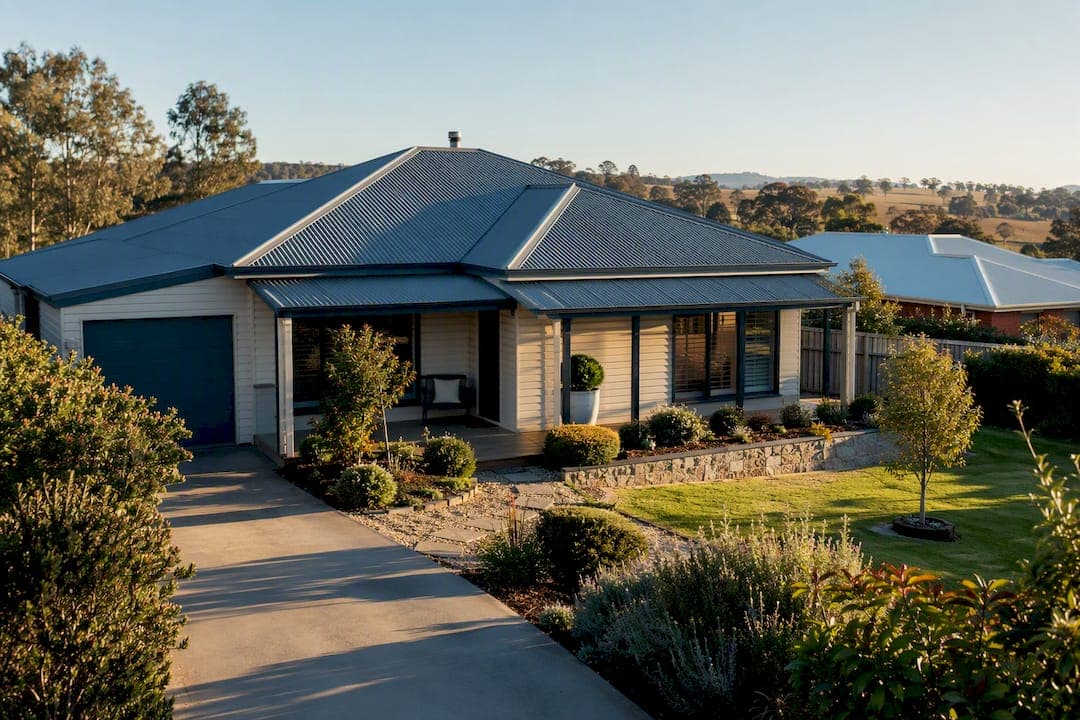
If you're buying your first home in regional Australia, the Regional First Home Buyer Guarantee (RFHBG) can get you into the market with just a 5% deposit, because Housing Australia guarantees a portion of your loan to the lender rather than handing you cash. From 1 October 2025, the government scrapped the annual cap on places, so eligible buyers no longer have to race the clock before spots run out. You still apply through a participating lender and meet the usual eligibility and price cap rules.
TL;DR:
- Applicants must be Australian citizens or permanent residents under 18, with income below $125,000 for singles or $200,000 for couples.
- The scheme guarantees up to 15% of the property's value, allowing buyers to avoid paying Lenders Mortgage Insurance on a 5% deposit.
- Eligibility requires proof of regional residency for at least 12 months and a strict review of the property’s location and price caps based on the ASGS classification.
- Lenders apply their own credit assessments, so a strong credit file and documented income are still essential even with government-backed guarantees.
- The removal of the annual application cap starting October 2025 gives regional buyers longer, less rushed opportunities to secure a property under the scheme.
Table of Contents
- What is the Regional First Home Buyer Guarantee?
- Who is eligible for the regional first home buyer scheme?
- Which properties and regions actually qualify?
- How does the guarantee actually protect the lender?
- How do you apply through a participating lender?
- What limits and pitfalls catch buyers out?
- Your practical checklist before applying
- Why unlimited places change the game for regional buyers
- Get help applying for the Regional First Home Buyer Guarantee
- Sources
What is the Regional First Home Buyer Guarantee?
The RFHBG sits inside the Australian Government's Home Guarantee Scheme, alongside the First Home Guarantee and Family Home Guarantee. It's built specifically for buyers purchasing in regional Australia rather than the capital cities, and it works by having Housing Australia guarantee part of your loan directly to the lender, not to you.
That guarantee is what lets you skip Lenders Mortgage Insurance (LMI), the fee lenders normally charge when your deposit sits below 20%. On a typical regional purchase, that can save thousands of dollars upfront.
The main benefits in practice are:
- Buy with as little as a 5% deposit instead of the usual 20%
- Avoid paying LMI, which often adds thousands of dollars to your loan costs
- Can be combined with other eligible state concessions, such as stamp duty relief, where permitted
Who is eligible for the regional first home buyer scheme?
Eligibility hinges on a handful of firm rules, and missing just one can knock you out of contention. Check yourself against these before you approach a lender:
- You're an Australian citizen or permanent resident, and at least 18 years old.
- Your taxable income doesn't exceed $125,000 for individuals or $200,000 for joint applicants, based on your most recent Notice of Assessment.
- You haven't owned property in Australia in the last 10 years, unless you qualify under a specific exemption.
- You intend to live in the property as an owner-occupier, on a principal and interest loan.
- You've lived, or intend to live, in a regional area for at least 12 months, with exemptions available for people relocating for work or family reasons.
That last point trips up more applicants than any other. Lenders assess the 12-month regional residency rule strictly, so gather leases, utility bills, or employment records that prove where you've actually been living.
Which properties and regions actually qualify?
Price caps vary by state and by whether you're buying in a regional centre or a broader regional area, and Housing Australia publishes the full breakdown for comparison against the other guarantees. Regional is defined using the Australian Statistical Geography Standard (ASGS) SA4 classification, not just "outside the city limits."
Pro Tip: Two towns an hour apart can fall into different price cap zones under the ASGS system, so never assume a property qualifies just because it "feels" regional.
Key exclusions to know upfront:
- All eight capital cities are excluded, along with the entire Australian Capital Territory and Northern Territory in most cases
- Price caps differ by state and by whether the location is classed as a regional centre or a broader regional area
- Housing Australia's regional checker confirms a specific address, but always get your lender to verify before you sign anything
How does the guarantee actually protect the lender?
Housing Australia guarantees up to 15% of the property's value directly to the lender, which is what allows the lender to approve a loan with only a 5% deposit from you. This isn't a grant sitting in your bank account. It's a backstop that reduces the lender's risk, which is why they're willing to skip LMI on a low-deposit loan.
That protection has limits, and understanding them matters:
- The guarantee doesn't cover your repayments if you fall behind. You're still fully liable for the loan.
- It doesn't remove the lender's own credit assessment. You still need to pass their serviceability checks.
- It can't be stacked with the First Home Guarantee on the same purchase.
Pro Tip: Meeting every RFHBG rule doesn't guarantee loan approval. Lenders apply their own credit standards on top of the scheme, so a clean credit file and solid income documentation still matter.
How do you apply through a participating lender?
Housing Australia doesn't take applications directly. Every application runs through a participating lender or a mortgage broker authorised to access the scheme. The process generally follows this order:
- Check your eligibility against the income, residency, and ownership rules.
- Get pre-approval from a participating lender, who confirms your borrowing capacity.
- Reserve your place under the guarantee once your loan is structured.
- Submit your documents, including your ATO Notice of Assessment, photo ID, and proof of regional residency.
- Receive conditional approval, then move toward settlement, with timeframes varying depending on whether you're buying an established home or building new.
Get your paperwork sorted before you start rather than scrambling once you've found a property. Lenders move faster when everything lands in one clean submission.
What limits and pitfalls catch buyers out?
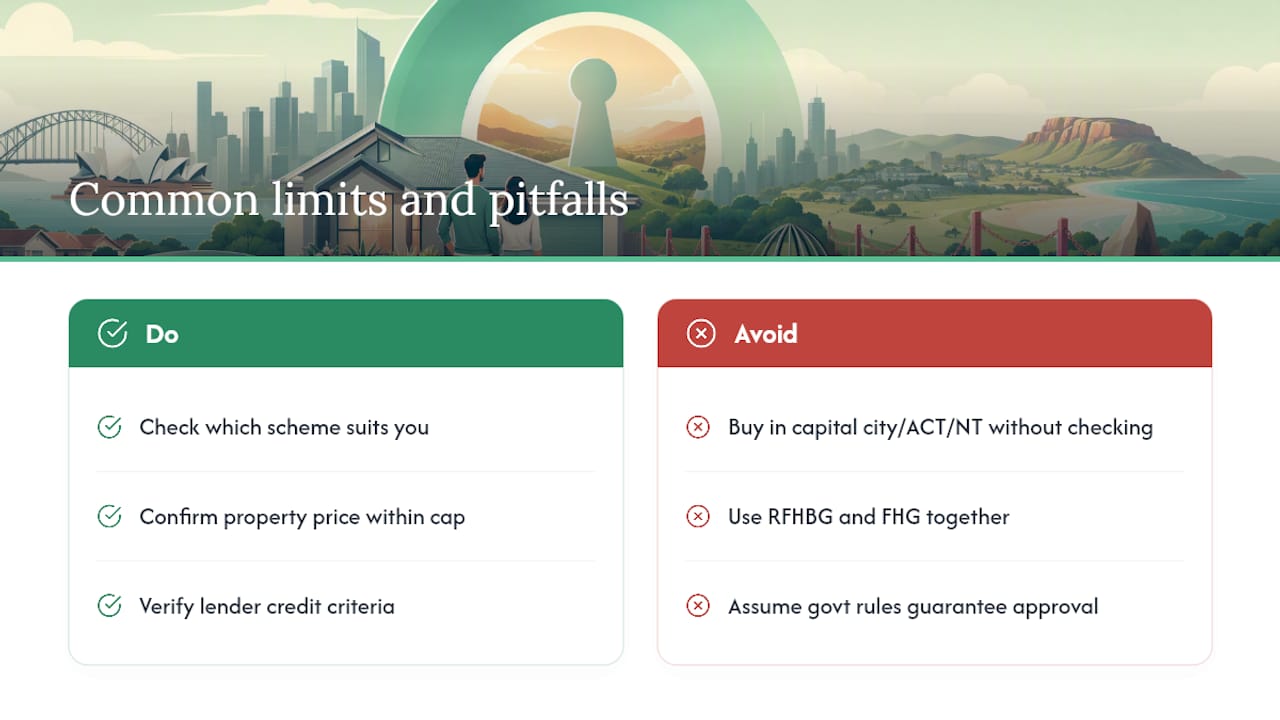
Capital city addresses and ACT or NT properties are the most common reason applications get rejected outright, alongside properties that quietly breach the price cap for their zone. You also can't run the RFHBG alongside the First Home Guarantee on the same purchase, so check which scheme actually suits your situation before you commit. Even when you tick every scheme box, the lender's own credit criteria still apply. Meeting the government's rules gets you in the door, but it doesn't override a lender's assessment of your income, debts, and credit history.
Your practical checklist before applying
Before you approach a lender or broker, pull together these documents so nothing holds up your reservation:
- Your latest ATO Notice of Assessment
- Proof of identity (driver's licence or passport)
- Proof of regional residency, such as a lease, utility bill, or employer letter
- Evidence of your 5% deposit, whether savings or a gift
- Recent payslips or income statements
On timing, reserve your place as early as possible once you're loan ready, because building a new home usually involves longer approval windows than buying established. A broker checklist can help you sequence this correctly.
Pro Tip: A broker's real value here is triage. They check your eligibility, match you to a lender who actually participates in the RFHBG, and collate your documents before submission, which cuts out a lot of back-and-forth. If you want that support directly, you can book a Mortgage Relationship Manager to walk through your options.
Why unlimited places change the game for regional buyers
Scrapping the annual cap from 1 October 2025 fixes the single biggest frustration regional buyers had with this scheme: missing out because places ran dry months before the financial year ended. That policy shift, confirmed in the government's own announcement, means your timing no longer has to compete with everyone else's. My honest read is that regional buyers now have a genuine window to move deliberately rather than rushing. Talk to a participating lender early, run your address through the official regional checker, and use resources like ZENRG Finance's scheme guide to confirm the details before you commit to a property.
— Allen
Get help applying for the Regional First Home Buyer Guarantee
Working through eligibility rules, price caps, and lender criteria on your own takes time you'd rather spend house hunting. A mortgage brokerage can assist you by running your eligibility check, matching you to a lender that participates in the RFHBG, and preparing your documents so your application goes in clean the first time.

Because this scheme depends heavily on lender-specific credit assessment sitting alongside the government guarantee, having someone map both at once saves you from chasing rejections. Our team also helps with the practical extras, like working out your real borrowing capacity through a loan comparison calculator, and can flag how low-deposit, no-LMI options compare against other schemes you might qualify for. If you're ready to move on your regional purchase, book a Mortgage Relationship Manager and get a clear read on your options.
Sources
For the full detail behind every rule in this guide, go straight to the source. Housing Australia publishes the RFHBG factsheet and the regional checker, while the Treasury media release confirms the October 2025 expansion. FirstHomeBuyers.gov.au covers the broader Home Guarantee Scheme.
This article is general information, not a substitute for advice from a qualified financial advisor. Consult a qualified financial professional about your own circumstances before acting on anything here.
- Regional First Home Buyer Guarantee factsheet — Housing Australia
- Regional home buyers get unlimited support — Ministerial media release (Clare O'Neil)