
An interest rate lock is your lender's promise to hold a specific rate and points for a set window while your loan is processed, so market moves can't touch your repayment before settlement. It's worth using when you're within 30 to 45 days of settlement and the locked repayment comfortably fits your budget. The trade-off is simple: you're protected if rates rise, but you miss out if they fall.
TL;DR:
- Rate locks typically last between 30 and 120 days, depending on the complexity of the transaction, with longer locks common for new construction projects.
- Float-down options usually require an upfront fee or a higher initial rate and are useful mainly in longer lock periods when rates are more likely to drop.
- Locking only covers the interest rate and discount points but does not guarantee final approval if borrower or property circumstances change.
- Borrowers should get the lock agreement in writing, include a buffer for delays, and avoid major financial changes during the lock period to ensure the protection remains valid.
Table of Contents
- What an interest rate lock actually covers
- How much a rate lock actually costs
- Float-downs, extensions and other lock options
- When to lock: a practical decision framework
- Practical checklist: how to secure a rate lock properly
- Publisher perspective: how ZENRG Finance approaches rate locks
- Get a rate lock strategy built around your settlement date
- Sources
What an interest rate lock actually covers
A rate lock freezes two things: the interest rate itself and any discount points attached to it. It does not freeze lender fees, government charges, or other closing costs, which can still move between application and settlement. Borrowers often assume a lock protects the whole deal. It only protects the pricing on the loan itself.
Lock periods follow a fairly standard rhythm across the market. Most lenders offer:
- 30 day locks for straightforward loans close to settlement
- 45 or 60 day locks when there's more paperwork or a slower conveyancing timeline
- 90 day locks for borrowers with longer settlement horizons
- Extended locks, sometimes up to 120 days, for new construction where build timelines are unpredictable
A lock only holds if you settle within that window and nothing material changes. If your income, credit profile, or the property valuation shifts during processing, the lender can revisit the locked terms even before expiry, because the lock never guarantees final approval. Underwriting still runs its full course.
How much a rate lock actually costs
Locking a rate is rarely free, even when a lender advertises it that way. Fees generally fall into three patterns:
- A flat dollar fee charged regardless of loan size
- A percentage of the loan amount, commonly 0.15% to 0.50%
- No visible fee at all, with the cost instead baked into a slightly higher locked rate
On a $600,000 loan, a 0.25% lock fee works out to $1,500. A 0.50% fee doubles that to $3,000. Those numbers matter when you're comparing lenders who quote a "no fee" lock against one who charges upfront. A no-cost lock usually means you're paying for it through a marginally worse rate for the life of the loan, not through a one-off charge, so it's worth asking for the effective annual rate rather than taking "no fee" at face value.
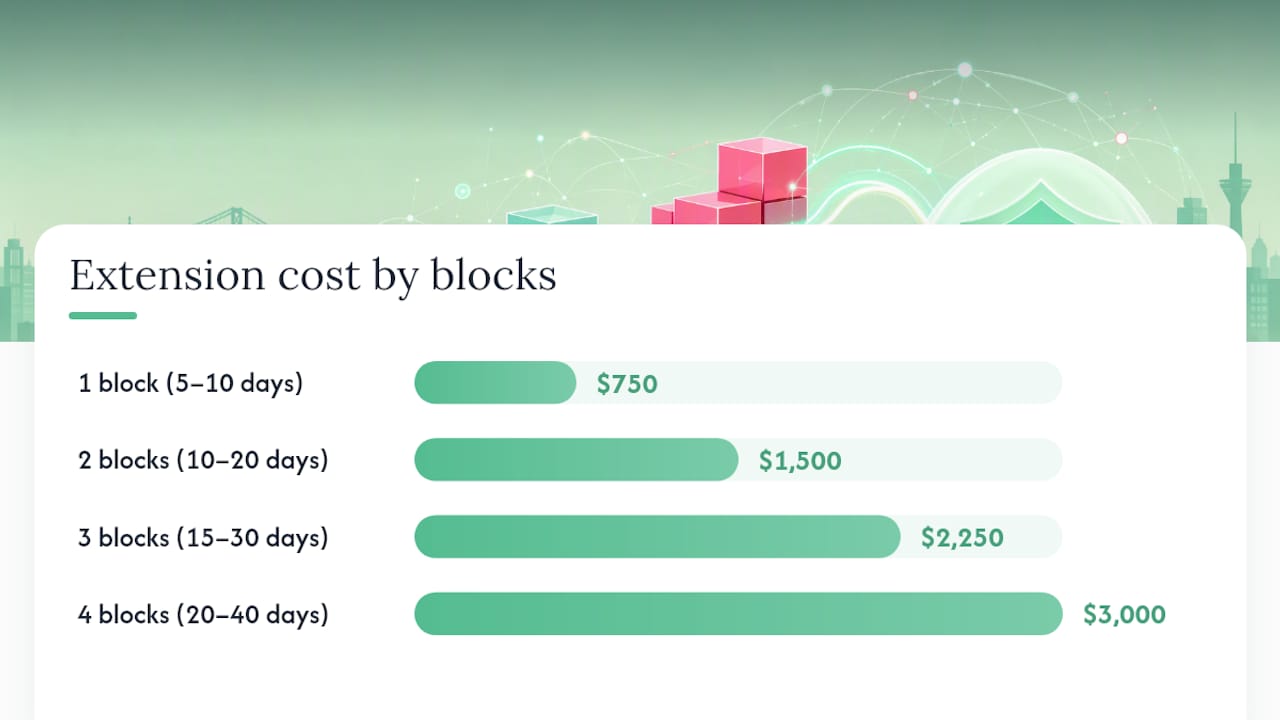
Extensions carry their own cost if settlement runs late. Lenders commonly charge around 0.125% of the loan amount for every 5 to 10 day block you need beyond the original expiry. On that same $600,000 loan, a 10 day extension at 0.125% adds $750. It's a manageable cost if your settlement slips by a week, but it stacks up fast if delays keep dragging on.
Float-downs, extensions and other lock options
A float-down lets you swap into a lower rate if the market drops after you've locked, without giving up the protection you already have. Most lenders set a minimum movement threshold before you can trigger one, often around a 0.25% rate drop, and you'll typically only get to use it once per loan.
- Float-downs usually cost an upfront fee or come with a slightly higher initial locked rate
- They're most useful on longer locks, where there's more time for rates to move
- On a short 30 day lock in a stable market, the fee often isn't worth paying
If settlement is going to run past your lock's expiry, extending is almost always cheaper than letting the lock lapse and relocking at whatever the market is doing that week. Paying an extension fee to buy another 10 or 20 days is a known, bounded cost. Relocking after expiry exposes you to full market risk again.
Pro Tip: *Ask your broker to price the float-down against a realistic rate-drop scenario before you pay for it.
When to lock: a practical decision framework
Locking is a risk-management decision, not a bet on where rates are headed next. The right time to lock comes down to your settlement date and your budget, not a guess about the Reserve Bank's next move.
- Set your affordability ceiling first. Work out the highest repayment you can comfortably carry, then check whether today's rate sits under that line. If it does, locking removes the risk of a rise pushing you over it.
- Check your settlement date against the lock window. If you're inside 30 to 45 days of settlement, a standard lock usually covers you without needing an extension.
- Add time for complexity. New builds, SMSF lending, and files with non-standard income need longer locks and a wider buffer, because these settlements slip more often than a straightforward established-home purchase.
- Factor in lender turnaround times. Some lenders process faster than others; ask your broker or lender for their current average turnaround before picking a lock length.
- Watch the calendar. Settlements clustered around Christmas, Easter, or end of financial year tend to face conveyancing and bank processing delays, so build in extra days.
- If you have budget slack, floating is a reasonable option. A borrower with plenty of room between their locked repayment and their actual capacity can afford to wait and see. Anyone tighter on budget should prioritise certainty over the chance of a better rate.
Practical checklist: how to secure a rate lock properly
Getting a good lock isn't just about picking a number. It's about making sure the paperwork protects you.
- Get the agreement in writing. Ask for the lock confirmed on paper with the exact start date, expiry date, extension fee schedule, and any float-down rules spelled out. Written lock-in terms hold up; a verbal promise from a loan officer doesn't.
- Build in a buffer. Choose a lock length that covers your expected settlement plus a margin for delay. Locking to the exact date you hope to settle leaves no room for a slow valuation or a hiccup with the settlement process.
- Confirm fee timing and refundability. Ask whether the lock fee is charged at signing or rolled into settlement costs, and whether it's refundable if the loan doesn't proceed.
- Keep your finances steady. Avoid new credit applications or large purchases, since changes to your borrowing profile during the lock period can still affect final approval, even with the rate secured.
Pro Tip: Keep a copy of your written lock agreement somewhere you can find it fast. If settlement runs late, you'll want the expiry date and extension terms in front of you, not buried in an email thread.
Publisher perspective: how ZENRG Finance approaches rate locks
At ZENRG Finance, Allen and the team model lock costs against each client's actual settlement timeline before recommending a length, rather than defaulting to whatever the lender offers first. Complex files, new builds and SMSF lending usually get a longer lock with a built-in buffer, because those settlements move on their own schedule. Every recommendation gets documented in writing, matching the standard the Federal Reserve's lock-in guidance sets out for borrowers everywhere.
— Allen
Get a rate lock strategy built around your settlement date
Locking a rate is a straightforward idea until you're staring down three fee structures, an unfamiliar float-down clause, and a settlement date that keeps shifting. The service works through that with you directly, comparing lock pricing across lenders and negotiating terms so you're not stuck with whatever the first quote offers.

Because the broker compares loan products from multiple lenders rather than selling one bank's rate sheet, you get a lock recommendation matched to your actual settlement date, not a generic 30 day default. That matters most for borrowers with new builds, SMSF lending, or anything outside a standard purchase, where the wrong lock length costs real money in extension fees.
If you want to see how a locked rate stacks up against your repayment capacity before you sign anything, run the numbers through the loan comparison calculator. When you're ready to talk through timing and lock options for your specific settlement date, book time with a mortgage relationship manager and get a written recommendation before your finance clock starts ticking.
This article is general information, not a substitute for advice from a qualified financial advisor. Consult a qualified financial professional about your own circumstances before acting on anything here.
Sources
- What is a mortgage rate lock — Mozo
- A consumer's guide to mortgage lock-ins — Federal Reserve
- How home loan rate locks work — Compare the Market