
Budget additional funds on top of your deposit to cover the hidden costs of buying your first home, and keep a further substantial buffer aside for the unexpected. For a sizeable property, these costs can be significant and often take buyers by surprise.
The biggest hitters are:
- Stamp (transfer) duty, unless you qualify for a first home buyer concession
- Lenders Mortgage Insurance (LMI) if your deposit is under 20%
- Conveyancing and legal fees
- Building, pest and strata inspections
- Loan establishment and mortgage registration fees
- Moving costs and settlement-day adjustments
Real-world figures back this up. Realestate has tallied hidden costs for first home buyers at around $16,807 on top of the sale price, and Mozo puts typical upfront costs at 5% to 7% of the purchase price nationally. For official verification of what applies where you live, your state or territory revenue office and the NSW government's cost guide are the two starting points worth bookmarking.
Key Takeaways
| Point | Details |
|---|---|
| Set a realistic savings target | Save 5% to 7% of the purchase price for hidden costs on top of your deposit, plus a $10,000 buffer. |
| Verify stamp duty locally | Use your own state or territory revenue office calculator, since concessions and price caps differ everywhere. |
| Budget for LMI early | LMI can cost $8,000 to $25,000 or more depending on deposit size, unless a guarantee scheme removes it. |
| Get inspections done | Building, pest and strata reports cost $400 to $800 combined but can prevent five-figure repair surprises. |
| Talk to a broker before offering | Zenrgfinance maps LMI, stamp duty concessions and lender fees together so your budget reflects the real total cost. |
Table of Contents
- Worked example: total hidden costs on a $700,000 property
- Conveyancing and legal fees: what you pay and why
- Stamp duty and first home buyer concessions: what to check
- Pest, building and strata inspections: small cost, big risk reduction
- Lenders Mortgage Insurance: when it applies and what it really costs
- Loan application, establishment and registration fees
- Insurances and day-one ongoing costs to budget for
- Moving day and settlement-day costs
- Other hidden costs: special levies and urgent repairs
- How to budget for hidden costs: your pre-settlement checklist
- How a mortgage broker helps first home buyers avoid these surprises
- Common mistakes we see from first home buyers
- Get a clear picture of your true costs before you commit
- Sources
Worked example: total hidden costs on a $700,000 property
| Building and pest inspection | $400 | $800 | | Lenders Mortgage Insurance | $8,000 | $18,000 | | Loan application and registration fees | $600 | — | | Moving and settlement adjustments | $1,500 | — | | Total hidden costs | — | — |
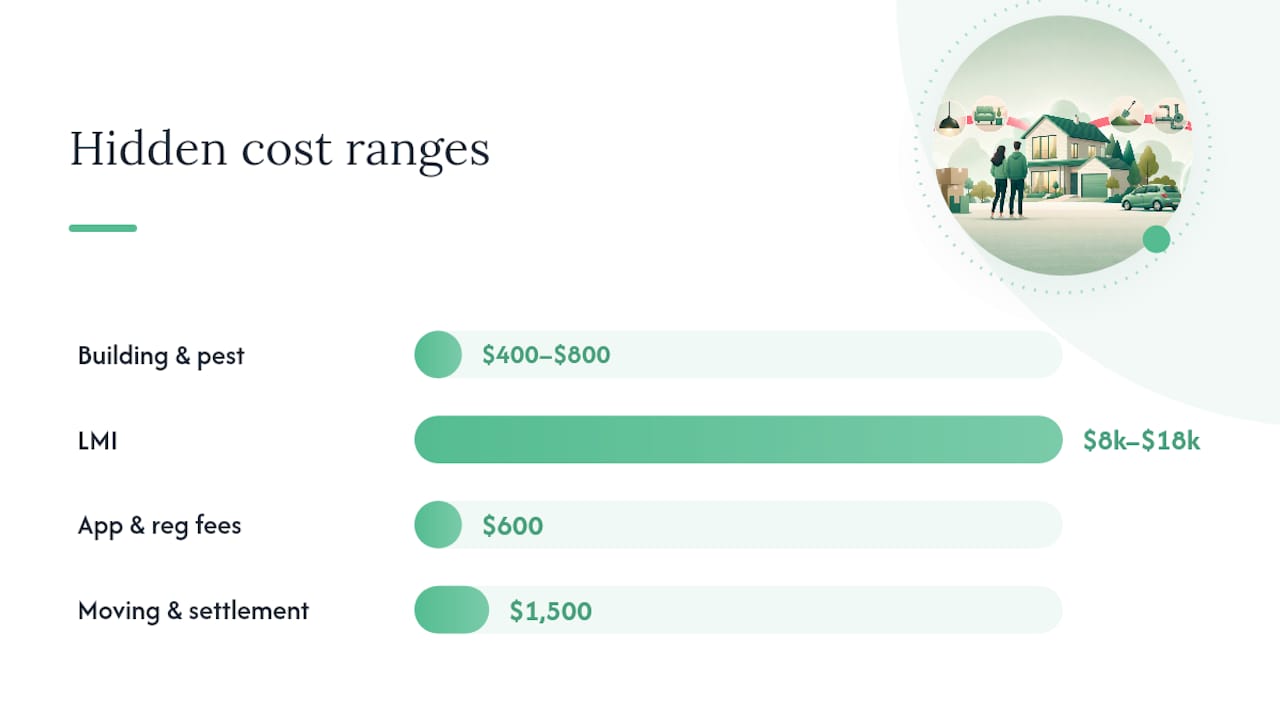
The spread is wide because your deposit size and eligibility for concessions do most of the heavy lifting. Mozo's research on the expanded First Home Guarantee shows how a scheme place can strip LMI out of that total entirely.
Conveyancing and legal fees: what you pay and why
Your conveyancer or solicitor reviews the contract of sale, checks the title for restrictions or easements, handles settlement, and lodges the transfer with land titles. It is not paperwork you want to skip, and it is rarely optional in practice.
Expect to pay:
- A professional fee of $800 to $2,000 for a standard purchase
- Title search disbursements around $50 to $100
- Strata search fees of $200 to $300 for units or townhouses
- Registration fees charged by the state titles office
Ask for a fixed-fee quote upfront that separates the professional fee from disbursements. That way nothing sneaks up on you at settlement.
Pro Tip: Send your conveyancer the contract of sale before you sign anything. A quick review can catch special conditions that cost you thousands later.
Stamp duty and first home buyer concessions: what to check
Stamp duty, officially called transfer duty in most states, is calculated as a percentage of your purchase price and is almost always the single largest hidden cost on the list. On a $700,000 purchase without any concession, it can run into the tens of thousands.
Every state and territory sets its own rates, thresholds and first home buyer concessions, so a figure that applies in one state can be wildly wrong in another. Queensland, for example, publishes its own transfer duty calculator and rate schedule, and separately lists concessions and exemptions for first home buyers on homes and vacant land, including price caps that determine whether you get a full or partial reduction.
The pattern repeats nationally: most jurisdictions offer either a full exemption below a certain price point or a sliding-scale concession up to a higher cap, and the caps get reviewed periodically. This means the "typical" figure quoted in a general article can be out of date within months of a state budget.
Before you factor stamp duty into your savings target:
- Look up your specific state or territory revenue office calculator, not a national average
- Check whether the property price falls under your state's first home buyer cap
- Confirm whether the concession applies to established homes, new builds, vacant land, or all three
- Reconfirm eligibility close to settlement, since thresholds can shift between when you start looking and when you exchange
Buyers agents working in Queensland's market, such as those covered on the Buyers Agents Brisbane blog, often flag this exact gap. Clients budget using an old duty figure they found online months earlier, then get a shock when the settlement statement arrives.
Pest, building and strata inspections: small cost, big risk reduction
A building and pest inspection typically costs $400 to $800 and can save you from buying a property with termite damage, structural cracking or wiring that needs a full rewire. Compared to a $700,000 purchase, it is a rounding error, and skipping it is one of the more common regrets first home buyers report after settlement.
If you are buying a unit or townhouse, a strata report matters just as much. It costs roughly $200 to $300 and reveals the sinking fund balance, upcoming works, and whether the owners' corporation has approved any special levies. Reading the last two years of meeting minutes tells you more about a building's future costs than any glossy sales brochure.
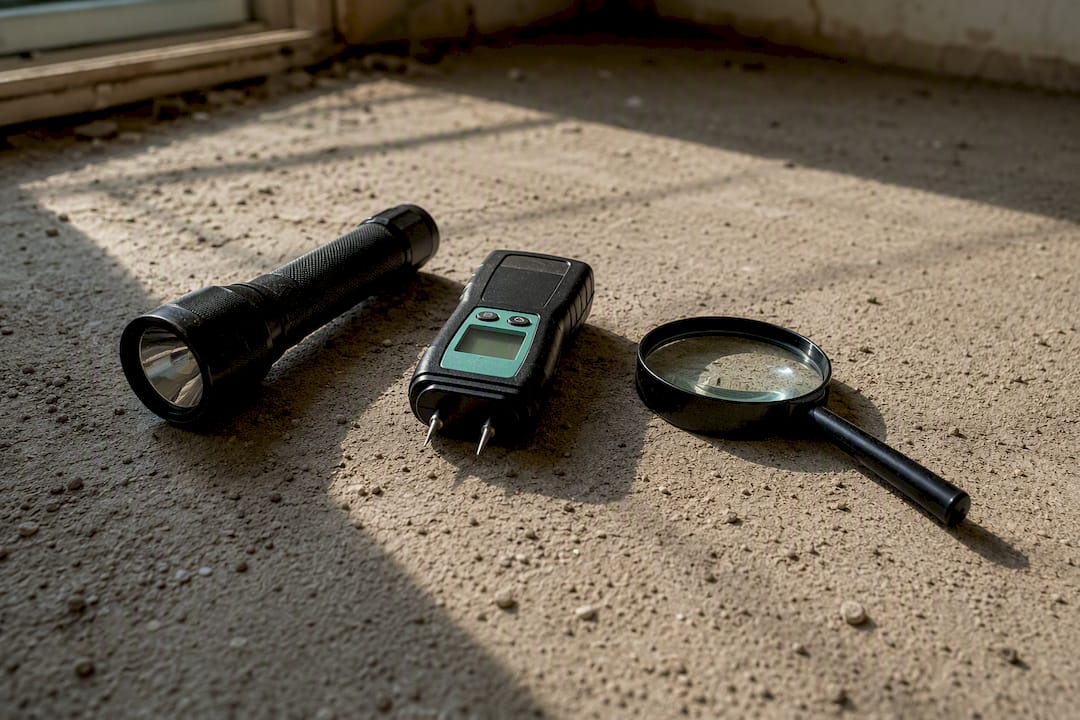
Pro Tip: Turn up to the building inspection in person. Seeing a problem described in the report, like rising damp in a subfloor, gives you real leverage to renegotiate the price or ask the seller to fix it before settlement.
Lenders Mortgage Insurance: when it applies and what it really costs
LMI is a one-off insurance premium that protects your lender, not you, if you default on the loan.
The cost scales sharply as your deposit shrinks:
- 5% deposit on a $700,000 property: LMI can run to $25,000 or more
- 10% deposit: typically $12,000 to $18,000
- 15% deposit: often $5,000 to $9,000
Most lenders let you capitalise LMI into the loan rather than paying it upfront, which eases the cash squeeze at settlement but adds interest over the life of the loan.
Ways to reduce or avoid it altogether:
- Save a full 20% deposit, though this takes most first home buyers years longer
- Use a family guarantor to boost your effective deposit on paper
- Check your eligibility for the expanded First Home Guarantee, which from October 2025 allows eligible buyers to purchase with a 5% deposit and no LMI at all
Understanding how your deposit size shapes both LMI and the rate you pay is worth doing before you lock in a target purchase price, not after.
Loan application, establishment and registration fees
Beyond LMI, lenders charge their own setup fees, and these vary more between lenders than most first home buyers expect.
Typical charges include:
- Loan application or establishment fees: $0 to $600, with many lenders waiving this for first home buyers as a promotional incentive
- Property valuation fees: $100 to $300, sometimes bundled into the establishment fee
- Ongoing annual package fees: $0 to $395 if you choose a packaged loan with offset accounts and fee waivers
- Mortgage registration fees charged by your state's titles office: generally $150 to $250
Comparing how your home loan stacks up against fee-free alternatives before signing can save you several hundred dollars without changing your interest rate at all.
Insurances and day-one ongoing costs to budget for
Your lender will require building insurance before settlement, typically $1,000 to $2,000 a year depending on the property and location, and it is worth adding contents insurance for another $300 to $600.
From the day you get the keys, you are also on the hook for council rates ($1,500 to $3,500 a year), water charges, and if you buy a unit, strata levies that commonly run $2,000 to $6,000 annually.
Add it up and a $700,000 property can cost $8,000 to $15,000 a year beyond your mortgage repayments in insurance, rates and upkeep. ABC News reports that once these ongoing costs are factored in, total housing costs can run 20% to 40% higher than an equivalent rent, and many buyers underestimate this gap badly.
Moving day and settlement-day costs
Local removalists typically charge $500 to $1,500, while an interstate move can climb to $3,000 to $10,000 depending on volume and distance. On top of that, budget for:
- Locksmith and basic security changes: $150 to $400
- End-of-lease or move-in cleaning: $200 to $500
- Utility connection fees for electricity, gas and internet: $100 to $300 combined
- Mail redirection: around $50 to $100
Book removalists and tradespeople as soon as you exchange contracts. Leaving it until the week of settlement often means paying premium last-minute rates or missing your preferred date entirely.
Other hidden costs: special levies and urgent repairs
Strata special levies catch plenty of first home buyers off guard. They are raised when a building's sinking fund cannot cover an unexpected repair, like a lift replacement or roof works, and can range from a few hundred dollars to $10,000 or more per lot depending on the job.
Outside strata properties, urgent post-settlement repairs (a failed hot water system, a leaking roof) are another common surprise. Between LMI, inspections, disbursements and early repairs, unexpected costs for first home buyers can total $20,000 to $50,000 in some cases.
Pro Tip: Before you make an offer on a strata property, request the last two years of AGM minutes and the sinking fund balance. A pattern of deferred maintenance is your clearest warning sign.
How to budget for hidden costs: your pre-settlement checklist
Work through these steps in order, starting as soon as you begin house hunting seriously:
- Before you offer: get indicative quotes for conveyancing, building and pest inspections, and insurance so you know your real budget ceiling.
- At exchange: pay your deposit (usually 5% to 10% of the price) plus any inspection costs already incurred.
- Before settlement: finalise building insurance, confirm your conveyancer's disbursement estimate, and check your lender's fee schedule one last time.
- At settlement: your conveyancer coordinates payment of stamp duty, registration fees and any adjustments for rates or strata levies already paid by the seller.
- After move-in: set aside your first quarter of council rates and strata levies, since these are often due within weeks of taking possession.
Ask your lender directly whether LMI applies, whether it can be capitalised, and whether any establishment fees are currently waived. Ask your conveyancer for a written, itemised disbursement estimate rather than a lump-sum quote. A budget planner built specifically around deposits and upfront costs makes this whole exercise faster than a spreadsheet from scratch.
How a mortgage broker helps first home buyers avoid these surprises
A good broker does more than shop interest rates. At the budgeting stage, they compare full loan packages across lenders, flag fees a comparison rate hides, and map out exactly which government guarantee scheme you qualify for before you get emotionally attached to a property you cannot actually afford to settle on.
ZENRG Finance works through this with first home buyers directly:
- Personalised calculations covering LMI, stamp duty concessions and establishment fees together, not in isolation
- Guidance on scheme eligibility, including low-deposit and no-LMI options
- Support through to settlement, so nothing gets missed between exchange and handover
Pro Tip: Talk to a broker before you start inspecting properties, not after you have found "the one". It is far easier to set a realistic price ceiling early than to renegotiate your expectations under time pressure.
Common mistakes we see from first home buyers
The biggest one is treating the mortgage repayment as the whole cost of owning a home. It is not, and the gap between what people expect and what they actually pay catches almost everyone at least once.
Underbudgeting for LMI is the next most common error, closely followed by skipping the building inspection to save $600 on a $700,000 purchase, and forgetting that settlement includes rate and strata adjustments the seller has already paid for. The usual consequence is a scramble for extra cash in the final week before settlement. The fix is simple: build your $10,000 buffer in before you start looking, not after you have signed a contract.
Get a clear picture of your true costs before you commit
Spreadsheets and government calculators get you part of the way, but they cannot tell you which lender waives establishment fees for your situation, or whether a guarantor arrangement makes more sense than paying LMI outright. Zenrgfinance works through your specific numbers, purchase price, deposit, and state, to build a personalised cost picture before you make an offer, not after.

A first call with Zenrgfinance walks through your borrowing capacity, likely LMI exposure, and which first home buyer schemes you actually qualify for, all before you spend a dollar on inspections or legal fees. Pro Tip: bring your last three payslips, a summary of your savings and debts, and your target price range to your first consult so the numbers are accurate from the start. From there, book a session with a mortgage relationship manager to map out your full cost picture, or explore property investment options if you are weighing up your first purchase against a broader strategy.
Sources
Always verify figures against the current version of these pages before you commit to a purchase price, since thresholds and scheme rules change.
- The hidden costs of home ownership and why they're on the rise - ABC News
- Costs when buying a home
- Qro
- The real costs of buying your first home in Australia 2026 | Mozo
This article is general information, not a substitute for advice from a qualified financial advisor. Consult a qualified financial professional about your own circumstances before acting on anything here.