
If your current variable rate sits 0.25% or more above what your lender is offering new customers today, call their retention team with a competing quote this week. That single action, backed by a real external offer, is the fastest way to cut your rate without the cost or paperwork of a full refinance. The ACCC has found that many Australian borrowers are missing out on significant savings simply by not reassessing their mortgage, and Zenrgfinance sees this play out regularly with clients who have not reviewed their rate in two or more years.
Here is what to do in the next 24–48 hours:
- Collect your loan details: current interest rate, outstanding balance, remaining term, and product type (variable, fixed, or split).
- Note any clawback windows: cashback offers received in the last 12–24 months may be recouped if you refinance early.
- Get 2–3 competing quotes: advertised new-customer rates from other lenders, or ask a broker for wholesale quotes.
- Call your lender's retention team (not general customer service) and mention you have competing offers in hand.
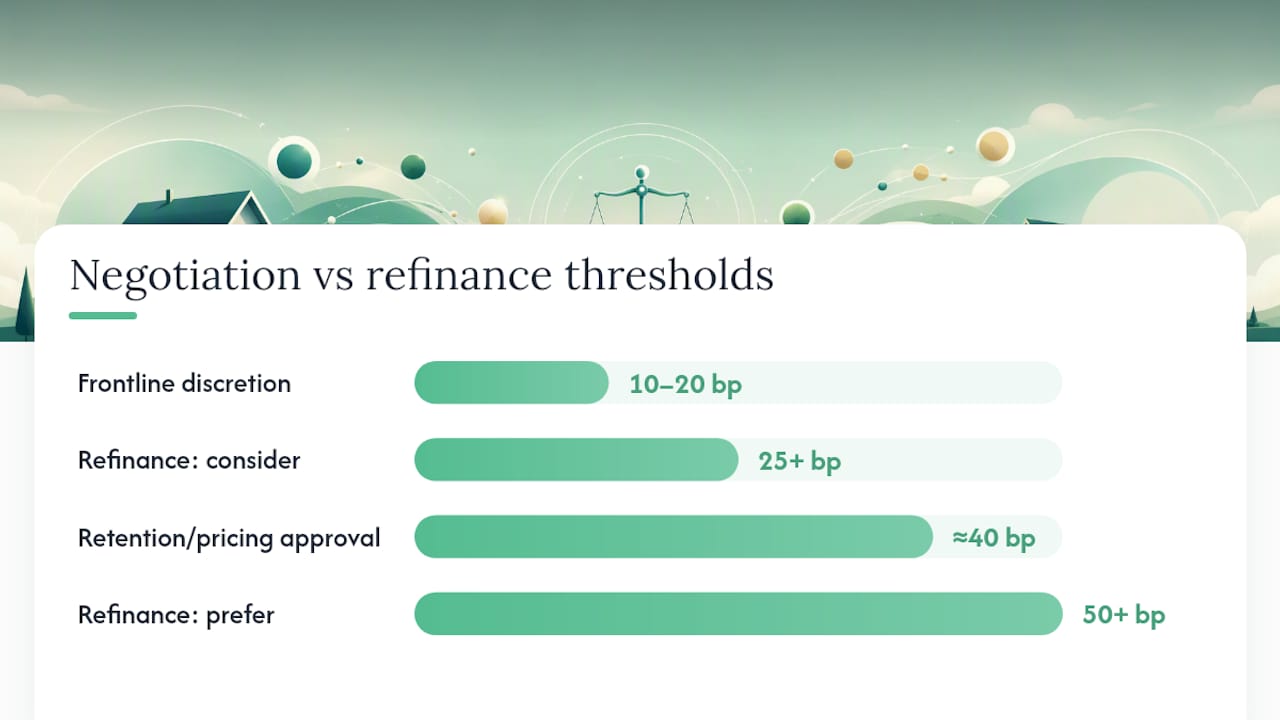
- If the retention offer still leaves you 25+ basis points above market, get a formal refinance assessment.
Pro Tip: Ask specifically for the "home loan retention team" or "home loan review team" when you call. Frontline staff typically hold limited pricing discretion; the retention team can approve deeper rate reductions without requiring a new application.
Table of Contents
- What is the lender loyalty penalty, and why does it affect Australian borrowers?
- How do you check whether you are paying a loyalty penalty?
- Does refinancing actually pay? Break-even costs for Australian borrowers
- What are your practical options for avoiding the loyalty penalty?
- What do the ACCC and RBA say about loyalty penalties?
- Key takeaways
- The loyalty penalty is a problem borrowers can solve themselves
- [Zenrgfinance helps you stop paying more than you should; to easily manage this process, consider using a CRM system to track your loan details and lender communications efficiently.](#zenrgfinance-helps-you-stop-paying-more-than-you-should-to-easily-manage-this-process-consider-using-a-crm-systemhttpsexplorecrmannual-paid-to-track-your-loan-details-and-lender-communications-efficiently)
- Useful sources and calculators
What is the lender loyalty penalty, and why does it affect Australian borrowers?
The lender loyalty penalty, also called the "mortgage loyalty tax," is the gap between the interest rate you are currently paying and the rate your lender is offering brand-new customers with a similar loan profile. It is not a fee listed on your statement. It shows up as a higher rate that quietly compounds month after month while your lender uses sharper pricing to win new business.
The mechanics are straightforward. Lenders compete aggressively for new customers, offering discounts at origination that they rarely extend to existing borrowers. Once you are on the books, the incentive to reprice your loan disappears unless you push for it. According to Your Finance Guide's analysis of the RBA lenders' interest rates series, outstanding variable owner-occupier loans averaged around 6.38% while new loans were being written at approximately 5.90% as at April 2026, a gap of roughly 48 basis points.
On a $500,000 loan, 48 basis points translates to roughly several thousand dollars in extra interest every year, accumulating significantly over several years.
The gap tends to widen during periods of rate competition, when lenders cut front-book rates to attract new customers but leave back-book rates untouched. BrokerNews has reported on lenders periodically cutting advertised rates and urging borrowers to reassess, which creates windows where the loyalty gap is at its widest and your negotiating position is strongest. Understanding why lender loyalty can cost you is the first step to doing something about it.
How do you check whether you are paying a loyalty penalty?
Start by pulling together four numbers: your current interest rate, your outstanding loan balance, your remaining loan term, and your loan type. With those in hand, you can run a quick comparison in under ten minutes.
Step 1: Find the market rate for your profile. Look at advertised variable rates for owner-occupiers with a loan-to-value ratio (LVR) similar to yours. The RBA's lenders' interest rates series gives you the average new-loan rate as a benchmark. A broker can also pull wholesale rates that are not publicly advertised.
Step 2: Calculate the gap. Subtract the best available new-customer rate from your current rate. A gap of 25 basis points (0.25%) or more is worth acting on.
Step 3: Convert the gap to dollars. Use this formula:
Monthly saving = (Rate gap ÷ 100 ÷ 12) × Outstanding balance
Two worked examples on a $350,000 outstanding balance:
| Scenario | Rate gap | Monthly saving | Annual saving |
|---|---|---|---|
| 48 basis points (0.48%) | 0.48% | ~$140 | ~$1,680 |
| 100 basis points (1.00%) | 1.00% | ~$292 | ~$3,500 |
Documents to have ready before you call a lender or broker:
- Most recent mortgage statement (showing current rate and balance)
- Loan summary or product disclosure statement
- Competing Loan Estimates or rate quotes from at least two other lenders
- Details of any cashback received and when
Pro Tip: When you call, say: "I'd like to speak to someone in the home loan retention team about repricing my loan. I have competing offers I'd like to discuss." That phrasing signals you are a flight risk and routes you past frontline staff to someone with real pricing authority.
Does refinancing actually pay? Break-even costs for Australian borrowers
Refinancing costs money upfront, so the question is always whether the monthly saving covers those costs before you sell or refinance again. The break-even formula is simple:
Months to break even = Total refinance cost ÷ Monthly saving
Typical refinance costs in Australia:
| Cost item | Typical range | Negotiable? |
|---|---|---|
| Discharge fee (existing lender) | $150–$400 | Rarely |
| Settlement/establishment fee (new lender) | $0–$600 | Sometimes |
| Government mortgage registration fee | $100–$200 (varies by state) | No |
| Valuation fee | $0–$600 (often waived) | Yes, ask |
| Lenders Mortgage Insurance (LMI) | $0 if LVR stays below 80% | No |
| Cashback clawback | Varies by lender (12–24 months) | No |
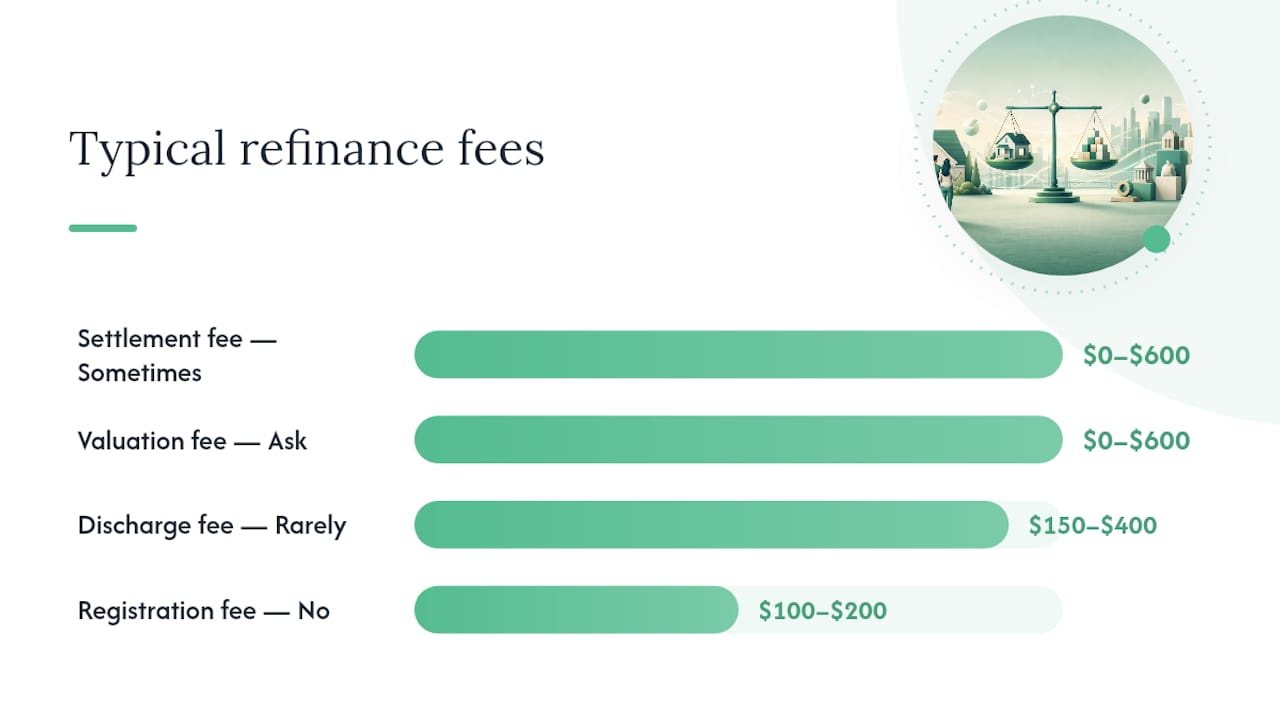
LegalClarity's worked example shows clearly how monthly savings versus total refinance costs determine whether switching pays. Many lenders also waive establishment and valuation fees for competitive refinances, so the real out-of-pocket cost is often lower than the table suggests.
Break-even worked example ($350,000 balance, 25bp saving):
- Monthly saving: ~$73
- Total estimated refinance costs: ~$1,200 (discharge + registration + valuation)
- Break-even: 1,200 ÷ 73 = approximately 16 months
At 100 basis points, the same costs break even in about four months. If you plan to hold the loan for at least two years, refinancing at a 25bp saving typically pays. LegalClarity also notes that origination and many lender fees are negotiable, and that presenting competing Loan Estimates side by side is one of the most effective tools for reducing or waiving them.
No-upfront-cost options: Some lenders roll refinance costs into the new loan or offer cashback to cover switching costs. These work well if you plan to hold the loan for several years, but check whether the cashback comes with a clawback clause. Use the Zenrgfinance property buying cost calculator to build your own estimate before committing.
What are your practical options for avoiding the loyalty penalty?
You have three main paths, and the right one depends on the size of the gap and your loan situation.
1. Call the retention team and ask for a rate match This is always the first move. It costs nothing, takes 20–30 minutes, and often produces an immediate rate reduction. WealthWorks reports that calling the retention team with a competing quote is one of the most consistently effective tactics available to Australian borrowers. Use this script verbatim if you like:
"Hi, I'd like to speak to someone in the home loan retention team. I've been a customer for [X] years and I've received competing offers at [rate]%. I'd like to understand what you can do to match that before I consider moving my loan."
If the first person you speak to says they cannot help, ask: "Is there a pricing or retention specialist I can speak to? I want to make sure I'm speaking to someone who can review my rate."
2. Refinance via a broker If the retention offer still leaves you 25+ basis points above the best external rate, refinancing is usually worth it. A broker accesses rates across multiple lenders, including wholesale pricing not available directly, and manages the paperwork. This path makes most sense when your LVR is below 80% (avoiding LMI), your credit file is clean, and you plan to hold the loan for at least 18–24 months.
3. Split or restructure your loan If you are on a fixed rate with significant break costs, or if you want to test a new lender without fully committing, splitting your loan can reduce the loyalty gap on the variable portion while leaving the fixed portion intact. This is also worth considering for property investors who want to separate investment and owner-occupier portions for tax purposes.
When to negotiate vs when to refinance:
| Situation | Best action |
|---|---|
| Gap is 25–50bp, clean file, no cashback clawback | Call retention first; refinance if offer is insufficient |
| Gap is 50bp+, LVR below 80% | Refinance via broker |
| Fixed rate with high break costs | Wait for fixed term to end, then refinance |
| LVR above 80% | Negotiate first; refinancing may trigger LMI |
Pro Tip: Frontline staff usually hold discretion of around 10–20 basis points. Retention and pricing teams can approve up to roughly 40 basis points without a new application. Always escalate if the first offer does not close the gap.
What do the ACCC and RBA say about loyalty penalties?
The ACCC's home loan price inquiry found that pricing practices in the Australian mortgage market disadvantage existing borrowers and recommended measures to improve transparency and make switching easier. The RBA's lenders' interest rates series, which tracks the gap between outstanding and new loan rates, provides the clearest ongoing evidence of the loyalty penalty in practice.
The policy picture is more nuanced than "ban the gap and fix the problem." UNSW BusinessThink research argues that banning loyalty penalties in markets where competition is already weak can produce unintended consequences, including tacit collusion among lenders that ultimately harms consumers. The UK's FCA experience with price-walking bans in insurance offers a cautionary example: the regulation helped some consumers but may have dampened competitive discounting in others.
"Fairness regulation can have unintended consequences when market competition is weak. Complementary measures, such as price caps or enhanced switching infrastructure, may be needed alongside any ban." — UNSW BusinessThink
For borrowers, the practical takeaway is this: regulatory fixes move slowly, and the gap exists now. Your best protection is your own vigilance.
- Improved transparency — from ACCC recommendations means more lenders now publish comparison rates, making the gap easier to spot.
Key takeaways
Avoiding the lender loyalty penalty comes down to three actions: identify the gap, calculate whether switching pays, and either negotiate or refinance before the cost compounds further.
| Point | Details |
|---|---|
| The gap is real and measurable | Outstanding variable loans averaged roughly 48bp above new-loan rates as at April 2026, per RBA data. |
| Retention calls work | Calling with a competing quote often produces an immediate rate cut, with retention teams able to approve up to ~40bp. |
| Break-even is usually under one year | On a $350,000 loan with a 48bp saving, typical refinance costs break even in about 9 months. |
| Fees are often negotiable | Valuation, establishment, and origination fees can frequently be waived or reduced when you present competing offers. |
| Zenrgfinance can run the numbers for you | Zenrgfinance offers rate checks, lender repricing requests, and full refinance management across a panel of lenders. |
The loyalty penalty is a problem borrowers can solve themselves
Most borrowers assume their lender will pass on rate improvements automatically. They rarely do. What I observe consistently is that the borrowers who pay the least are not necessarily the ones with the best credit scores or the largest deposits. They are the ones who review their rate every six months and are willing to make one phone call or spend an hour with a broker.
The 48 basis-point gap in the RBA data is not a rounding error. On a $600,000 loan, that is close to $2,900 a year in avoidable interest. The frustrating part is that lenders have the capacity to reprice existing loans. They just do not do it unless you ask, and they do not ask loudly unless you signal you are about to leave.
The regulatory conversation around loyalty penalties is worthwhile, but it will not help you this month. What will help is knowing that your retention team has real pricing authority, that competing quotes are your strongest negotiating tool, and that a broker can access rates you cannot find on a comparison website. The borrowers who treat their mortgage as a set-and-forget product are, in effect, subsidising the discounts offered to new customers. That is a choice, but it does not have to be yours.
Zenrgfinance helps you stop paying more than you should; to easily manage this process, consider using a CRM system to track your loan details and lender communications efficiently.
Paying a loyalty penalty is not inevitable. Zenrgfinance works with Australian borrowers to identify the gap between what they are paying and what is available, then takes the steps to close it, whether that is a direct repricing request to your current lender, a full refinance across a panel of lenders, or a break-cost analysis if you are mid-fixed-term.

For a consult, bring your most recent mortgage statement, your current rate, and your loan balance. If you have received competing quotes, bring those too. Zenrgfinance can typically complete a repricing request within a few days and a full refinance within four to six weeks. For borrowers with SMSF lending needs, the team also covers SMSF loan structuring as part of a broader review.
The next step is straightforward: book a session with a mortgage relationship manager and find out exactly where your rate sits relative to the market today.
Useful sources and calculators
These are the most reliable places to check rates, understand costs, and read the regulator's findings:
| Resource | Best used for |
|---|---|
| ACCC home loan price inquiry final report | Regulatory background and transparency recommendations |
| ACCC media release on switching savings | Quick summary of why borrowers should reassess |
| Your Finance Guide: 48bp gap analysis | Current RBA data on outstanding vs new loan rates |
| LegalClarity: refinance costs and break-even | Worked example and Australian cost checklist |
| WealthWorks: retention call tactics | Practical negotiation steps and success context |
| Zenrgfinance property buying cost calculator | Build your own break-even estimate |
- Home loan price inquiry final report
- Home loan borrowers missing out on significant savings by not switching
- Loyalty‑penalty regulations and market competition impact
- Mortgage Loyalty Tax 2026: Existing Customers Pay 48bp More | Your Finance Guide
- Mortgage loyalty tax: what it costs and how to avoid it
- Are loan origination fees negotiable? How to pay less
- The Mortgage Loyalty Tax: Why Australian Borrowers Who Don't Switch Lenders Pay Thousands More | WealthWorks
- Aussie alerts on costly loyalty penalty
This article provides general information only and is not financial advice. Confirm current rates, fees, and eligibility with your lender or a qualified mortgage broker before making any decisions.