
If your business turns over less than $10 million a year and you use simplified depreciation, you can immediately deduct the full business-use cost of any asset under $20,000 first used or installed ready for use between 1 July 2025 and 30 June 2026. That's the law right now for the 2025–26 income year. The Government has flagged making that $20,000 threshold permanent from 1 July 2026, but as of the 12 May 2026 Budget announcement, it hadn't passed Parliament.
So here's what you need to do this week, not next month.
- Check your aggregated turnover sits under $10 million (add in any connected or affiliated entities).
- Confirm you're actually using the simplified depreciation rules. If you opted out years ago, you'll need to opt back in before you can claim.
- Make sure each asset costs less than $20,000, tested on the full purchase price, before any trade-in credit.
- Get the asset installed and ready for use, or actually in use for your business, by 30 June 2026. A ute sitting in the driveway with the plastic still on the seats doesn't count.
The single biggest trap tradies fall into is timing. Buying and paying for a new welder in June doesn't help you if it doesn't turn up, or doesn't get commissioned, until July. The ready-for-use test is about actual use or availability for use, not the invoice date.
Pro Tip: Start a simple folder now, digital or physical, with the invoice, delivery note, installation date, and a note on the percentage of business use for every asset you're planning to claim. If the ATO asks questions in twelve months, you want this sorted in minutes, not hours.
Key Takeaways
The instant asset write-off lets eligible small businesses immediately deduct the business-use cost of assets under $20,000 first used or ready for use by 30 June 2026, tested per asset on the full purchase price.
| Point | Details |
|---|---|
| Eligibility basics | Aggregated turnover under $10 million and use of simplified depreciation rules are both required. |
| Deadline reality | The asset must be first used or installed ready for use by 30 June 2026, not just ordered or paid for. |
| Per-asset rule | Each asset is tested separately against $20,000, using the full price before any trade-in credit. |
| Vehicle caveat | Passenger cars face a separate car limit; commercial vehicles like eligible utes generally don't. |
| Zenrgfinance's role | Zenrgfinance structures finance to help settle and install eligible assets before the deadline, alongside SMSF lending options, while leaving tax treatment decisions to your registered tax agent. |
Table of Contents
- What is the instant asset write off and how does it work?
- What's actually changed for 2026?
- Who is eligible for the instant asset write off?
- Which assets qualify, and where does the car limit trip people up?
- How do you actually claim it, and what records do you need?
- How does the write off interact with the small business pool?
- When should you buy before 30 June 2026?
- Three worked examples for small business owners
- When should you bring in a broker or accountant?
- A practical perspective on getting this right
- How Zenrgfinance can help you fund the right asset at the right time
- Where to check the official rules
- Frequently asked questions
- Sources
What is the instant asset write off and how does it work?
The instant asset write-off lets an eligible small business claim an immediate tax deduction for the business portion of an asset's cost in the year it's first used or installed, rather than spreading that deduction over several years through depreciation. It's a timing benefit, not free money. You still only claim what you're entitled to; you just get to claim it faster.
You can only access this concession if you're using the simplified depreciation rules in the first place. Most small businesses default into these rules automatically, but some have opted out, often because an accountant set them up on standard depreciation years ago for a specific reason. If that's you, check before you assume the write-off applies.
The instant asset write-off is not automatic. Eligible businesses must actively use the simplified depreciation rules and confirm the asset isn't one of the specific exclusions before assuming a deduction applies.
One detail catches out business owners buying several things at once: the $20,000 limit applies per asset, not per year and not per invoice. A concreter who buys a new compactor for $4,500, a set of power tools for $2,200, and a trailer for $9,000 in the same month can potentially write off all three separately, provided each one individually sits under the threshold and passes the timing test.
Here's what typically qualifies for simplified depreciation treatment:
- New tools, machinery, and equipment used in the business
- Second-hand assets, provided they meet the same cost and timing rules
- Computers, software licences, and office equipment
- Improvements to an existing depreciating asset (treated as a "second element" cost), where the improvement itself is under the limit
Various explainers, including Reckon's guidance for small business owners, cover this ground too, but the ATO's own pages remain the definitive word on eligibility.
What's actually changed for 2026?
For the 2025–26 income year, the confirmed law is straightforward: eligible small businesses with aggregated turnover under $10 million can immediately deduct assets costing less than $20,000, provided those assets are first used or installed ready for use between 1 July 2025 and 30 June 2026. This isn't new for 2026 as such. It's the rule that's been running for this income year and it's what you claim on when you lodge your 2025–26 return.
What is new is the announcement. On 12 May 2026, the Government's Budget flagged a plan to make the $20,000 threshold permanent from 1 July 2026, rather than treating it as a measure that needs re-announcing (and re-legislating) every year, as has happened repeatedly since it was first introduced.
The gap between announcement and law matters. A Budget announcement is a statement of intent. It only becomes enforceable once Parliament passes the relevant legislation and it receives assent. Plenty of Budget measures have been announced, debated, amended, and sometimes dropped entirely before becoming law.
- For 2025–26 claims, rely on the current, already-legislated $20,000 threshold. This is settled law and safe to plan around.
- For 2026–27 and beyond, treat the permanent $20,000 threshold as proposed rather than confirmed. It's the Government's clear intention, but businesses should still plan around confirmed law for the year they're actually claiming in, not around what a Budget speech promised.
If you're weighing up whether to buy now or wait, that distinction should shape your decision more than anything else in this article.
Who is eligible for the instant asset write off?
Run through this checklist before you assume you qualify.
Aggregated turnover test. Your business needs an aggregated annual turnover under $10 million for the 2025–26 income year. Aggregated turnover isn't just your own revenue; it rolls in the turnover of any affiliated or connected entities, so a group structure with several related companies needs to add those figures together, not assess each entity in isolation.
Simplified depreciation rules. You must actually be using these rules, not just be eligible to use them. If you're unsure, this is the first question to put to your bookkeeper: "Are we on the simplified depreciation rules, or did we opt out at some point?" Rejoining after opting out is possible but comes with its own conditions, so don't assume you can flick a switch mid-year.
Timing. The asset needs to be first used, or installed ready for use, between 1 July 2025 and 30 June 2026 to count for this claim year. Payment date is irrelevant. Delivery date alone is irrelevant. What matters is whether the asset is genuinely available for use in your business.
Other eligibility points worth knowing:
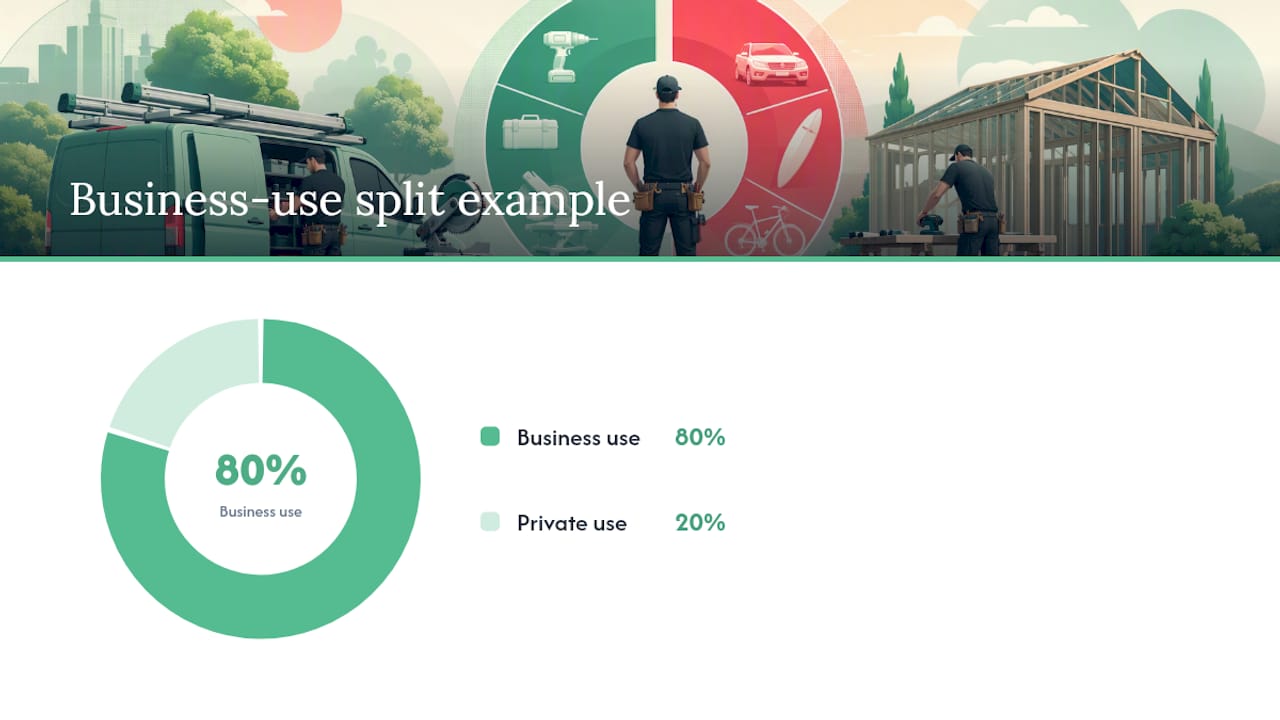
- You claim the business-use portion only, so a ute used 80% for work and 20% personally gets an 80% deduction.
- Both new and second-hand assets are eligible.
- Improvements to an asset you already own (a second element cost) can qualify separately if the improvement itself is under $20,000.
Pro Tip: Call your accountant or bookkeeper this week and ask two questions: "Are we definitely on simplified depreciation this year?" and "Has our aggregated turnover crept close to $10 million?" Both answers change what you can claim, and both are easy to check now rather than discover in tax time.
Which assets qualify, and where does the car limit trip people up?
Almost any depreciating asset used in your business can qualify, provided it clears the cost and timing tests. New tools, secondhand machinery, computers, shop fit-outs, ute canopies, generators, all fair game if each one is under $20,000.

The per-asset rule is worth repeating because it's the single most useful planning lever in this whole concession. Test each asset separately against the $20,000 limit using the full purchase price, not the net amount you paid after a trade-in.
This is where trade-ins cause genuine grief. If you trade in an old air compressor worth $3,000 against a new one priced at $21,000, you might think you've only paid $18,000 out of pocket and assume you're under the threshold. You're not. The ATO tests eligibility on the full $21,000 purchase price, before the trade-in credit is applied. That asset goes into the small business pool instead of getting an immediate write-off.
Vehicles are the other trap, and it's a big one for tradies. Passenger cars are subject to a separate car limit for depreciation purposes, which caps how much of the vehicle's cost can be depreciated at all, regardless of the instant asset write-off threshold. This catches out plenty of business owners who buy a dual-cab passenger vehicle assuming the whole cost is deductible.
The distinction that matters:
- Passenger cars designed to carry fewer than nine passengers hit the car limit, which restricts the depreciable amount even if the purchase price is under $20,000.
- Commercial vehicles, such as utes with a payload rating of one tonne or more, or vehicles designed to carry more people or specifically built for business use, generally sit outside the car limit and can be assessed against the ordinary $20,000 threshold.
Before you sign for a new work vehicle, check its classification against ATO guidance rather than the salesperson's assurance that "it's a commercial vehicle for tax purposes." Zenrgfinance has written previously about how vehicle tax treatment shifts depending on classification, and it's worth a read if you're cross-shopping a ute against a dual-cab wagon.
Common exclusions to keep in mind: land, trading stock, and certain intangible assets follow different rules entirely and generally don't qualify for the instant asset write-off regardless of cost.
How do you actually claim it, and what records do you need?
Claiming the write-off isn't complicated, but it does require doing things in the right order.
- Identify the asset and confirm timing. Nail down the exact date it was first used or installed ready for use, not the order date or payment date.
- Confirm eligibility. Run through the turnover test, the simplified depreciation requirement, and the $20,000 cost test using the full pre-trade-in price.
- Calculate the business-use percentage. If the asset has any personal use component, work out a defensible split now rather than guessing at tax time.
- Include the claim in your current-year tax return under the simplified depreciation rules, deducting the business-use portion of the asset's cost in the year it became ready for use.
- Keep supporting records in case the ATO asks questions later.
Your recordkeeping checklist should include:
- The original invoice showing the full purchase price
- Delivery notes or supplier confirmation of the ready-for-use date
- Installation records where relevant, particularly for fixed equipment
- A vehicle logbook if you're claiming a work vehicle with any private use
- Trade-in paperwork that clearly shows the gross purchase price, not just the net amount paid
- GST treatment notes: if you're registered for GST, the deduction is generally calculated on the GST-exclusive cost
Solid recordkeeping is the difference between a claim that sails through and one that draws a query letter six months after you've forgotten the details.
Here's how the entries differ depending on which side of $20,000 an asset falls:
| Scenario | Tax treatment | Bookkeeping entry |
|---|---|---|
| Asset under $20,000 | Immediate deduction for full cost | Debit expense account, credit cash/asset purchase in full |
| Asset under $20,000, business use 80% | Immediate deduction for 80% of cost | Debit expense (80%), debit drawings/private use (20%) |
| Asset $20,000 or more | Added to small business pool | Debit pool asset account, depreciated at pool rates |
The most common mistakes at claim time: assuming payment date equals eligibility date, using the net trade-in price instead of the gross purchase price, and forgetting to apportion for private use on anything with a dual purpose, like a ute that doubles as the family car on weekends.
How does the write off interact with the small business pool?
Once an asset's cost hits $20,000 or more, it doesn't qualify for the instant write-off at all. It goes into the small business simplified depreciation pool instead, where it depreciates gradually rather than being deducted in one hit.
| Pool depreciation year | Rate applied |
|---|---|
| First year the asset is added | 15% |
| Every subsequent year | 30% |
This matters for cashflow planning. A $25,000 excavator attachment doesn't give you a $25,000 deduction this year. Compare that to a $19,000 attachment, which is fully deductible in the year it's ready for use.
Businesses that used temporary full expensing in earlier income years should also be aware that the "lock out" rules attached to that measure affected which depreciation method you could use afterwards. If you switched methods during that period, it's worth confirming with your accountant which pool your existing assets actually sit in before assuming you can write anything off immediately.
The practical trade-off comes down to this:
- Immediate write-off gives you the full deduction now, better for cashflow in the current year, and it's simpler to record.
- Pool treatment spreads the deduction over several years, which can suit businesses trying to manage taxable income across multiple years rather than front-loading it.
Neither is inherently better. It depends on whether you want the tax benefit now or spread out.
When should you buy before 30 June 2026?
"Installed ready for use" has a specific, practical meaning, and it trips up more claims than any other part of this concession. An asset that's arrived but is still in its box, or a machine that's been delivered but not commissioned, doesn't meet the test. What does count: equipment that's physically set up and capable of being used for its intended purpose, even if you haven't clocked a single billable hour on it yet.
For anything with an installation step, being genuinely diligent about documentation is worth the ten minutes it takes:
- Get written confirmation from your supplier of the actual delivery and commissioning date.
- If installation happens in stages, keep evidence of each stage, particularly the final one that makes the asset usable.
- Photograph equipment in situ with a timestamp if you're doing DIY installation yourself.
If you're weighing up whether to bring a purchase forward, the cashflow question is real. SME investment appetite has been strong heading into this period, and plenty of business owners are looking at financing options rather than paying cash outright, particularly for bigger-ticket equipment that still slips under the $20,000 threshold.
Accelerating a purchase to catch this year's deadline makes sense if the asset is something you'd buy soon anyway. It makes far less sense if you're rushing a purchase purely for the tax outcome and end up with equipment you don't actually need yet. The deduction only ever offsets tax you'd otherwise pay; it never turns a bad purchase into a good one.
If delivery timelines are tight heading into June, act on the deadline pressure early rather than leaving supplier lead times to chance. Ask suppliers now for realistic delivery and installation dates, and have a backup plan if things slip past 30 June.
Three worked examples for small business owners
Example 1: The tradie with multiple tools. Each asset is under $20,000, each is installed and in use before 30 June. All three get written off immediately: total deduction of $7,100 in the 2025–26 return. If the laptop were used 70% for business and 30% personally, only $1,470 of its cost would be deductible.
Example 2: Ute versus passenger car. A landscaper is choosing between a dual-cab ute with a one-tonne payload rating priced at $19,500, and a passenger SUV priced at $24,000. The ute clears the classification test as a commercial vehicle and, being under $20,000, qualifies for the full immediate write-off. The SUV is a passenger car, subject to the car limit, and at $24,000 exceeds the instant write-off threshold anyway, so it heads into the small business pool with depreciation capped by the car limit rules.
Example 3: Trade-in purchase. An electrician trades in an old van worth $6,000 against a new van priced at $22,000, paying $16,000 out of pocket. The eligibility test uses the full $22,000 purchase price, not the $16,000 net cost. Because $22,000 exceeds the threshold, the new van goes into the small business pool at 15% depreciation in year one, rather than being written off immediately.
When should you bring in a broker or accountant?
Some situations are squarely an accountant's call. If you're apportioning business versus private use across a fleet of vehicles, if an asset's classification as a car or commercial vehicle is genuinely ambiguous, or if your aggregated turnover calculation involves multiple connected entities, that's a conversation for a registered tax agent, not a DIY judgement call.
Other situations sit closer to Zenrgfinance's territory. If you need to fund an asset purchase quickly to hit the 30 June ready-for-use deadline, or you're buying several pieces of equipment at once and want to understand how that affects your borrowing capacity, that's a financing conversation.
A few things worth flagging clearly:
- Zenrgfinance doesn't provide tax advice, and nothing here should be read as a substitute for advice from your registered tax agent on your specific claim.
- Where Zenrgfinance can genuinely help is structuring short-term finance so a purchase can be delivered and installed before the deadline, without draining cashflow you need for wages or materials.
- For business owners running purchases through a self-managed super fund structure, SMSF lending rules add another layer of complexity worth discussing before you commit to a purchase timeline.
Pro Tip: If you're financing equipment specifically to beat the 30 June deadline, talk to a broker about settlement timing, not just approval timing. An approved loan that settles on 5 July doesn't help you if the asset needs to be ready for use by 30 June.
A practical perspective on getting this right
Most of the mistakes I see business owners make with this concession aren't about the big rules. They understand the $20,000 threshold and the turnover test well enough. Where things go wrong is in the detail nobody warns them about: the trade-in trap, the ready-for-use date, the vehicle that turns out to be a "car" for tax purposes when the business owner was certain it was a ute.
The conventional advice is "buy before 30 June and claim it." That's not wrong, exactly, but it skips the part that actually determines whether the claim survives scrutiny. Ready for use is a factual test, not a paperwork exercise you can backfill in September. If I had one piece of advice for a tradie reading this in May with a purchase decision on the table, it wouldn't be about the tax rate or the threshold. It would be: get the installation date locked in writing, today, before you worry about anything else.
The other pattern worth naming is the temptation to let the tax outcome drive the purchase decision entirely. A deduction on a $19,000 asset saves you tax on $19,000 of income; it never pays for the other $19,000. Businesses that buy equipment they genuinely need, and happen to get the timing right, come out ahead. Businesses that buy equipment mainly to chase the deadline sometimes end up with kit sitting idle in a shed come August.
Pair good recordkeeping with a proper conversation with your accountant on anything borderline, particularly vehicle classification and multi-entity turnover calculations. The rules reward businesses that plan early and document as they go, not businesses that scramble in the last week of June.
How Zenrgfinance can help you fund the right asset at the right time
Deciding what to buy before 30 June is only half the equation. Finding the cash to buy it without wrecking your working capital is the other half, and that's where Zenrgfinance earns its keep. Rather than tying up your trading account to hit a tax deadline, Zenrgfinance structures short-term finance so the asset lands, gets installed, and is ready for use before 30 June, while your day-to-day cashflow stays intact.

This isn't tax advice, and it never will be. Whether a specific purchase qualifies for the instant asset write-off is a question for your registered tax agent, who knows your full financial picture. What Zenrgfinance brings to the table is the finance side: getting funds settled in time to meet the ready-for-use deadline, structuring business finance around equipment purchases, and helping business owners who run purchases through a self-managed super structure explore SMSF lending options where that fits.
If you've got a purchase decision on the table and the clock is ticking towards 30 June, get in touch with a mortgage relationship manager at Zenrgfinance now to talk through financing options that suit your timeline, not the other way around.
Where to check the official rules
- The ATO's instant asset write-off page is the primary source for eligibility, the per-asset limit, and how it fits within simplified depreciation.
- The ATO's legislative detail page on the $20,000 measure explains the proposal to make the threshold permanent and its current legal status.
- The ATO's 2025–26 newsroom post sets out the confirmed rules and dates for this specific claim year.
- The 2026–27 Budget papers contain the Government's own material on the proposed permanent threshold, useful if you're tracking legislative progress for future planning.
Check the ATO pages for the final word on any claim you're preparing, and keep an eye on the Budget and Parliament material if you're planning purchases beyond 30 June 2026.
Frequently asked questions
Is the $20,000 instant asset write-off law for 2026–27 yet? No. As of the 12 May 2026 Budget announcement, making the $20,000 threshold permanent from 1 July 2026 was a proposal, not enacted legislation. For 2025–26 claims, the $20,000 threshold is already confirmed law.
Can I claim more than one asset under the instant asset write-off in the same year? Yes. The $20,000 limit applies to each asset individually, so you can write off multiple qualifying assets in the same income year provided each one meets the cost and timing tests on its own.
What happens if my asset costs $20,000 or more? It can't be immediately written off. It goes into the small business simplified depreciation pool instead, depreciating at 15% in the first year and 30% in each year after that.
Does a ute qualify for the instant asset write off? Often, yes, provided it's classified as a commercial vehicle (such as one with a payload of one tonne or more) rather than a passenger car, and its cost is under $20,000. Passenger vehicles are subject to a separate car limit that can prevent an immediate write-off even under $20,000.
How do I test the $20,000 threshold if I traded in an old asset? Use the full purchase price of the new asset before any trade-in credit is applied, not the net amount you actually paid. This is one of the most common errors business owners make when claiming.
This article is general information, not a substitute for advice from a qualified financial advisor. Consult a qualified financial professional about your own circumstances before acting on anything here.