
A home loan honeymoon rate is a discounted interest rate offered by lenders for an initial period, typically between 6 months and 2 years, before the loan switches to a higher standard variable rate. The industry term for this is an "introductory rate." Both terms describe the same product, and understanding the difference between the two phases of this loan is the single most important thing you can do before signing. Rate discounts often range from 0.5% to 1.5% below the lender's standard variable rate. That gap sounds small, but on a $600,000 mortgage, even 1% translates to thousands of dollars in savings during the introductory window. The catch is what comes after. Once the honeymoon ends, your repayments can jump sharply, and most lenders will not warn you when that happens.
How does a honeymoon home loan rate compare to other home loan interest rates?
The core difference between a honeymoon rate and a standard variable rate is timing. The honeymoon rate is artificially low for a set period. The standard variable rate is what the lender actually charges for the life of the loan.

When the introductory period ends, your loan automatically rolls over to the revert rate, which is usually the lender's standard variable rate. In 2026, some revert rates exceed 7.0%, while competitive market variable rates sit between 6.0% and 6.5%. That gap of up to 1% or more directly increases your monthly repayments without any action on your part.
To put this in plain terms, here is how the three main rate types compare:
| Rate type | Typical rate (2026) | Duration |
|---|---|---|
| Honeymoon (introductory) rate | 5.0%–5.5% | 6 months–2 years |
| Market variable rate | 6.0%–6.5% | Ongoing |
| Lender revert rate | 7.0%+ | Ongoing after honeymoon |
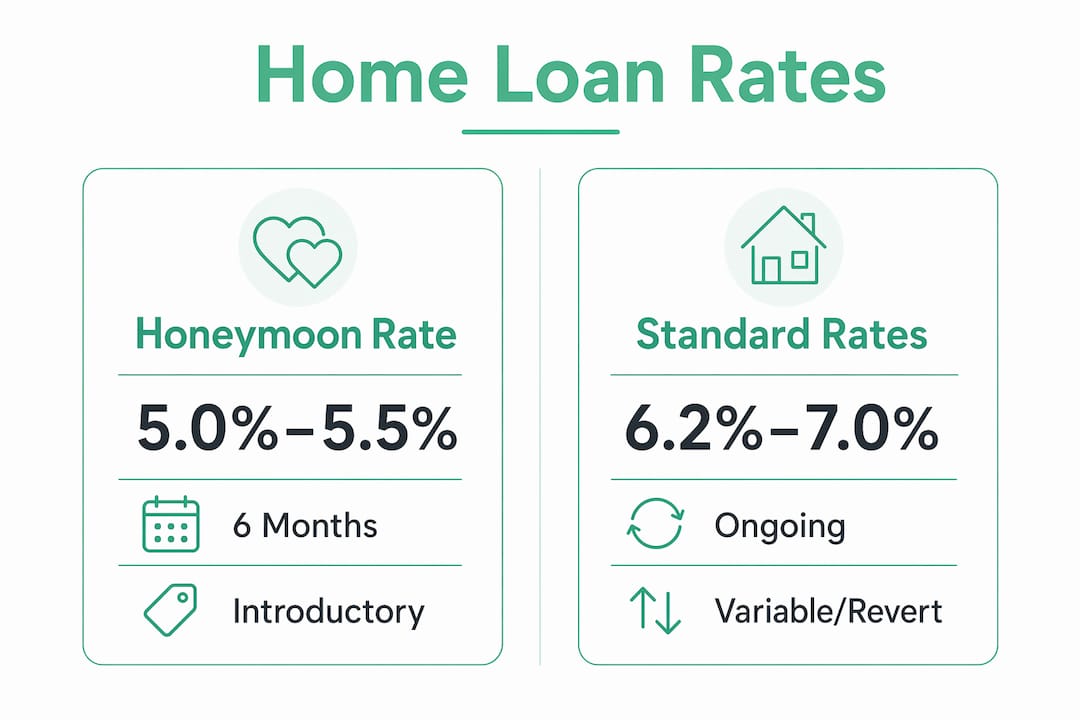
The gap between the honeymoon rate and the revert rate is where borrowers get caught. A lender's revert rate is often well above the market average. That means you could end up paying more than a borrower who never took the honeymoon deal at all.
You can use a loan cost calculator to model the difference between your introductory repayments and what you will pay once the revert rate kicks in. Seeing the numbers side by side makes the decision much clearer.
It also pays to understand the comparison rate on any loan you consider. The comparison rate blends the introductory and revert rates into a single annual figure, giving you a more honest picture of the loan's true cost over time.
What are the pros and cons of choosing a home loan with a honeymoon rate?
Honeymoon rates offer real financial relief during the most expensive phase of homeownership. Lower initial repayments ease early costs like stamp duty, legal fees, and furnishing your new home. For first-time buyers stretching their budget, that breathing room in year one can make a genuine difference.
Pros of a honeymoon rate:
- Lower monthly repayments during the introductory period
- Frees up cash for upfront homeownership costs
- Gives you time to build financial stability before repayments increase
- Can be a useful tool if you plan to refinance before the revert rate kicks in
Cons of a honeymoon rate:
- The revert rate switch is automatic and silent; lenders rarely send reminders
- Revert rates are often above the market average, costing you more long-term
- Missing required repayment levels can void the discount before the period ends
- Borrowers who do not plan ahead end up paying more than they would on a standard loan
The biggest risk is not the rate itself. It is the assumption that the low rate is permanent. Failure to treat the honeymoon rate as temporary leads borrowers into costly financial traps. The discount is a marketing tool, not a long-term pricing commitment.
Pro Tip: Read the loan contract carefully for any conditions attached to the honeymoon rate, such as minimum repayment amounts or restrictions on extra repayments. Missing these conditions can cancel your discount early.
How can you manage the revert rate after the honeymoon period ends?
The revert rate switch happens automatically and without warning. Borrowers must track the expiry date themselves to avoid unknowingly paying a higher rate for months or years. This is not a theoretical risk. Many borrowers only discover the switch when they notice their repayments have increased.
Here is a practical four-step plan to protect yourself:
- Record the exact expiry date of your honeymoon period the day you sign your loan documents. Write it in your calendar and set a digital reminder.
- Set a review reminder 2 to 3 weeks before expiry. This window gives you time to compare current market rates and contact your lender before the higher rate takes effect.
- Request the revert rate in writing. Ask your lender for written confirmation of the exact revert rate and the current market variable rate. This lets you compare your loan's true cost against competitors.
- Refinance or negotiate before the switch. If your revert rate is above the market average, contact your lender and ask for a rate reduction. If they will not move, refinancing your home loan to a more competitive product is often the right call.
Signs that your revert rate is non-competitive include a rate more than 0.5% above the current market variable rate, no offset account or redraw facility, and no flexibility on repayment frequency. Any one of these should prompt you to act.
Pro Tip: Do not wait until the revert rate has already kicked in. Refinancing takes time, and acting early means you avoid even a single month of above-market repayments.
Borrowers should focus on total loan cost, not just the introductory discount. A loan with a lower honeymoon rate but a higher revert rate can cost more over 25 years than a standard variable loan with no introductory offer at all.
Are honeymoon loans right for every borrower?
Honeymoon rates are not available to everyone. Most lenders restrict these offers to owner-occupiers and do not extend them to investment properties. If you are buying a rental property, you will likely need to look at other loan structures entirely.
For first-time buyers purchasing their primary residence, a honeymoon rate can work well, provided you go in with a clear exit plan. The borrowers who benefit most are those who use the low-rate period to build savings, pay down other debts, and prepare to refinance before the revert rate applies.
Here is a summary of common loan types and their suitability for different borrower profiles:
| Loan type | Best suited for | Key consideration |
|---|---|---|
| Honeymoon (introductory) rate | First-time owner-occupiers | Plan to refinance before revert rate |
| Standard variable rate | Borrowers wanting flexibility | Rate moves with market; no intro discount |
| Fixed rate | Borrowers wanting certainty | Rate locked; limited extra repayments |
| Split loan (fixed + variable) | Borrowers wanting balance | Combines certainty with flexibility |
Beyond the rate type, there are several loan features worth comparing:
- Offset account: Reduces the interest you pay by offsetting your savings against your loan balance
- Redraw facility: Lets you access extra repayments you have made
- Extra repayments: Some fixed and honeymoon loans cap or restrict these
- Portability: Lets you transfer the loan if you sell and buy another property
Focusing only on the introductory rate and ignoring these features is a common mistake. A loan with a great honeymoon rate but no offset account may cost you more over the full term than a slightly higher rate with full features.
For a broader look at how fixed and variable rates compare, the team at Miracle Financial has a useful breakdown of how introductory rates relate to fixed and variable structures. The principles apply across markets, even if the specific rates differ.
You can also read more about common introductory rate mistakes that trip up new borrowers, including why so many people get caught by the revert rate switch.
Key takeaways
A honeymoon home loan rate delivers real short-term savings, but the revert rate determines whether the loan is genuinely good value over its full term.
| Point | Details |
|---|---|
| Honeymoon rate definition | A discounted introductory rate lasting 6 months to 2 years, below the standard variable rate. |
| Revert rate risk | In 2026, some revert rates exceed 7.0%, well above the market variable rate of 6.0%–6.5%. |
| Silent switch | Lenders rarely notify borrowers; track your expiry date and set a reminder 2–3 weeks before. |
| Owner-occupiers only | Most lenders restrict honeymoon rates to owner-occupiers, not investment properties. |
| Total cost matters | Always compare the full loan cost, not just the introductory rate, before committing. |
What I have learnt from watching borrowers navigate honeymoon rates
The most common mistake I see is not a maths error. It is an emotional one. First-time buyers fall in love with the low repayment figure on page one of the loan brochure and mentally anchor to it as their "normal" repayment. When the revert rate kicks in six months later, the increase feels like a shock, even though it was always written in the contract.
The borrowers who handle this well share one habit. They treat the honeymoon period as a countdown, not a comfort zone. From day one, they are saving the difference between their current repayment and what they will owe at the revert rate. By the time the switch happens, they have a buffer, a plan, and often a refinance already in progress.
My honest advice is to ask your lender for the revert rate in writing before you sign anything. Then run the numbers on what your repayments look like at that rate, not the honeymoon rate. If you can comfortably afford the revert rate repayment, the honeymoon period is a genuine bonus. If you can only afford the introductory repayment, the loan is not right for you yet.
Honeymoon rates are a legitimate and useful product when used with clear eyes. The problem is never the rate. It is the assumption that the rate will stay low forever.
— Allen
How Zenrgfinance can help you choose the right home loan
Choosing a home loan is one of the biggest financial decisions you will make. Zenrgfinance works with first-time buyers across Australia to cut through the complexity of introductory rate offers, revert rates, and loan features so you can make a decision you feel confident about.

Whether you are comparing honeymoon rate loans, planning to refinance before your introductory period ends, or simply trying to understand what your options are, a mortgage relationship manager from Zenrgfinance can walk you through the numbers in plain language. There is no obligation, and the conversation could save you thousands over the life of your loan. Reach out to Zenrgfinance today and get personalised guidance matched to your situation.
FAQ
What is a honeymoon rate on a home loan?
A honeymoon rate is a discounted introductory interest rate offered by lenders for an initial period of 6 months to 2 years. After this period, the loan automatically switches to the lender's standard variable revert rate, which is typically higher.
How much lower is a honeymoon rate compared to a standard rate?
Honeymoon rate discounts typically range from 0.5% to 1.5% below the lender's standard variable rate. In 2026, revert rates can exceed 7.0%, while market variable rates sit between 6.0% and 6.5%.
Will my lender notify me when the honeymoon period ends?
The switch to the revert rate is automatic and almost always unannounced. You need to track the expiry date yourself and set a reminder 2 to 3 weeks before it ends to review your options.
Can investors access honeymoon rate home loans?
Most lenders restrict honeymoon rates to owner-occupiers and do not extend them to investment properties. If you are buying an investment property, a standard variable or fixed-rate loan is the more likely option.
Is a honeymoon rate always a good deal?
A honeymoon rate is only a good deal if the revert rate remains competitive and you plan ahead. Always ask for the revert rate in writing and compare the total loan cost over the full term before deciding.